What Should Buyers Compare in a Machete for Tall Grass and Soft Vegetation?
A blade that chops thick brush well can feel awkward in tall grass. Buyers serving farms need to know what the workers cut most often.
Soft vegetation bends away from a poor stroke. Reach, edge condition, and repeated-use comfort can matter more than a heavier chopping profile.
No single Machete for Tall Grass fits every grass field. Compare finished samples in the actual work before deciding what to import.

Identify the Vegetation and the Cutting Motion
Machete for Tall Grass Ask whether workers cut tall grass, thin vines, weeds, or mixed growth around crop rows. These are not identical tasks.
Grass may be dense but flexible. Woody stems resist differently. Describe what makes up most of a normal working day.
Find out whether workers cut broad open areas or narrow spaces beside cultivated plants. The available swing space affects useful blade length.
Ask whether the task is mowing low growth, clearing shoulder-height vegetation, or opening paths. A single word such as “grass” hides these differences.
Check which tool workers already prefer. An existing grass slasher, sickle, or machete may reveal their local technique.
Do not assume a machete is the best tool in every setting. Mechanized cutting or a different hand tool may fit the operation better.
A wholesale order should serve the customer’s actual method, not force workers to change methods to fit a catalog model.
If mixed brush appears only occasionally, specify whether the main tool should prioritize light repeated cuts or the toughest rare stem.
Keep worker feedback distinct from purchasing staff preferences. The person using the blade will notice balance and grip shortcomings first.
Request a Wholesale Quote:Whatsapp : (+86 13383021196) E-mail : gemlight@ganzhedao.com
Compare Reach and Blade Profile
A longer blade can increase reach in open areas. It can also be harder to control near seedlings, fencing, or other workers.
A relatively slim, evenly balanced bush-style machete is one candidate for repeated clearing. Other local grass patterns may work differently.
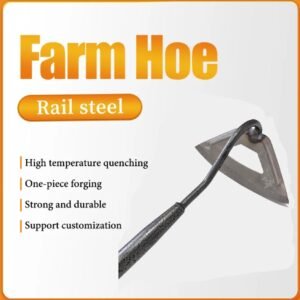
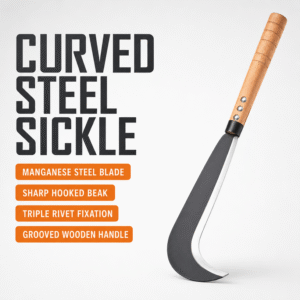
Hooked or curved grass-cutting tools also exist. Their suitability depends on the cutting motion and on what workers already know.
Compare the complete outline with a local reference. Measure blade length, total length, width, and tip shape using the same points.
Ask how the working edge is shaped and where it starts. A broad heavy end does not automatically improve cuts on flexible grass.
Check the side view and thickness. Front photographs do not tell you how much metal workers must swing repeatedly.
If the field is tight, a shorter tool might be easier to handle. Test it rather than assuming more reach is always valuable.
Watch how vegetation reacts during a sample trial. If stems fold without cutting, record the condition of the edge and the user’s motion.
Do not blame blade style alone for a dull edge. Compare samples in equivalent sharpened condition before judging the profiles.
Weigh Comfort Against Cutting Ability
Compare unit weight on the finished tools, including handles. A few repeated swings reveal more than holding a blade for a photograph.
Ask workers whether the weight feels centered or concentrated toward the tip. Forward weight may be unnecessary for mostly soft growth.
Check grip length and surface, especially if hands become wet. Do not describe a handle as “non-slip” without a relevant test.
Examine handle attachment after a realistic trial. A loose joint can undermine an otherwise suitable cutting profile.
Confirm how the edge is delivered. Some products require sharpening before first use; others are prepared for immediate work.
Ask whether crews can maintain the edge with their usual tools. Complicated maintenance can limit adoption even when the first trial goes well.
If corrosion protection matters in storage, specify the finish and packing. A shiny sample alone does not demonstrate batch protection.
A longer trial can expose fatigue and sharpening frequency. Avoid declaring a winner after one easy patch of grass.
Compare the workers’ pace carefully; field density and operator skill can affect it. Do not turn an informal trial into a performance guarantee.
Request a Wholesale Quote:Whatsapp : (+86 13383021196) E-mail : gemlight@ganzhedao.com
Build a Fair Sample Test
Choose a representative patch and let the intended workers compare two or three finished tools under similar conditions.
Record which vegetation was cut, how long the tool was used, and whether the edge needed attention during the trial.
Ask about control near crops, grip comfort, and repeated-use fatigue. These observations can guide a useful change in size or weight.
Inspect the blades and handle joints afterward. Record damage separately from normal edge dulling or inconsistent sharpening.
If the work includes vines, test them too. A tool preferred in open grass may catch or feel awkward in tangled growth.
Repeat the trial if conditions vary greatly between dry and wet seasons. A single field may not represent the market.
Invite retailers to note whether buyers recognize the chosen outline. A technically acceptable model may still need clear positioning on the shelf.
Do not promise that a brief field test proves lifetime durability. It is a way to identify handling mismatches before bulk purchasing.

Write the Wholesale Specification
Attach a local sample or dimensioned drawing. Record blade length, total length, width, thickness, tip, and finished weight.
Specify the handle construction, edge condition, material declaration, finish, and protective packing. Quote like-for-like completed units.
If a tender requires hardness or testing, set the method and acceptance limits explicitly. Avoid unsupported claims about steel performance.
Agree on tolerances and inspection steps before production. Tie the approved sample to a unique model code for repeat orders.
Request alternatives in separate quotations. A heavier brush blade should not silently replace a grass-cutting sample.
For tall grass and soft growth, prioritize controlled repeated cutting over the idea that the heaviest blade must be strongest.
Send your vegetation description and current tool with an inquiry. We can discuss a machete sample suited to that specific work.
Request a Wholesale Quote:Whatsapp : (+86 13383021196) E-mail : gemlight@ganzhedao.com