Quick Answer
A bolo-style blade is suitable when its finished shape, handle and balance help workers perform the specific harvest cut in their available space. Define the crop and cutting sequence, compare the actual blade with a local reference, then trial finished samples over repeated work. Approve the measured model only for tasks it handles well; the name “bolo” alone cannot establish fit.
Key Takeaways
- Commercial bolo-style blades can differ in outline, edge and assembled handle.
- One useful chop does not show how a blade handles repeated harvest work.
- A field trial does not override a tender’s mandatory profile requirements.
- Request a Wholesale Quote:Whatsapp : (+86 13383021196) E-mail : gemlight@ganzhedao.com
Define the Harvest Before Selecting a Bolo
Ask what workers cut: fibrous stalks, flexible stems or surrounding weeds. Record whether they cut at ground level, trim above the crop or separate material after cutting. One plantation may use different tools for harvest and path maintenance.
Observe row spacing and nearby plants. A broad front may help one cut but obstruct precise work near crops. Note when workers switch to another blade for thicker stems or for gathering material.
Keep a locally accepted tool as the reference, whether it is called a bolo, panga or cane knife. A hooked blade and a bolo-style cutting edge do not necessarily perform the same gathering task. If a tender prescribes a profile, check whether alternatives are allowed before trialing one.
For terminology context, a retailer’s bolo category illustrates broad-front examples, but it does not establish the specification or suitability of the supplier’s proposed model.
Request a Wholesale Quote:Whatsapp : (+86 13383021196) E-mail : gemlight@ganzhedao.com
Inspect the Actual Finished Bolo-Style Profile
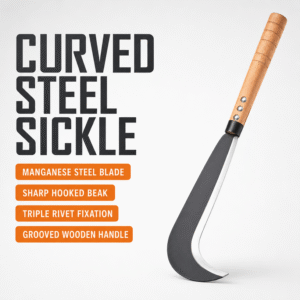
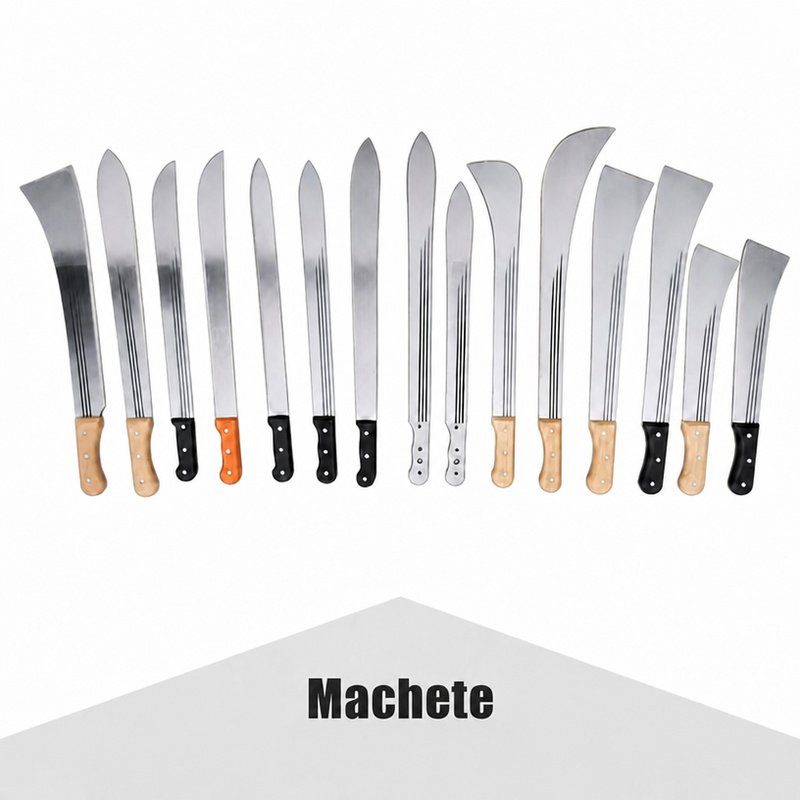
Some bolo examples widen toward the blade front. Request a full-size outline and photograph with a scale; record blade and overall lengths, width at agreed points and tip position. Compare the finished tool, not just a silhouette.
Check assembled weight, balance and where the cutting edge ends. Inspect the handle’s length, shape and attachment. Verify the delivered edge condition: a factory grind may require further sharpening before field use.
Ask the supplier to declare any relevant material and finish. The word “bolo” does not specify a steel grade or corrosion performance. Two offers with the same family name may have different working edges and grips.
| What is known | What to verify | Buyer action |
|---|---|---|
| The crop and intended cut | Row space, nearby plants and any gathering stage | Test only the tasks the bolo is meant to cover. |
| The proposed outline | Width at agreed points, tip and working-edge extent | Approve a dimensioned drawing and finished sample. |
| Initial cutting feel | Control, fatigue and edge upkeep over repeated work | Record feedback from more than one user and working period where practical. |
| A quoted family name | Exact handle, edge finish, packing and model code | Put each alternate design on a separate quote line. |
Test Cutting and Worker Acceptance Locally
Choose representative crop conditions and an accepted local blade. Compare finished candidates in the proposed sales condition with similar edge preparation, vegetation and working time where practical.
Ask whether the front of the bolo assists the intended cut or interferes with control. Watch repeated strokes, movement between plots and any switch back to the existing tool. Keep comments tied to the stage of harvest.
Inspect handles and edges afterward. Record soil, stone or wire contact separately from ordinary cutting before judging damage. Ask whether local sharpening and storage routines suit the preferred sample.
If different crews disagree, compare their tasks instead of forcing consensus. A brief informal comparison may identify a useful niche or a poor fit, but it cannot prove a precise speed gain or a full replacement.
Request a Wholesale Quote:Whatsapp : (+86 13383021196) E-mail : gemlight@ganzhedao.com
Convert a Successful Trial Into a Repeatable Purchase
Assign the accepted bolo one model code and retain its finished sample. Link trial observations to a profile drawing, handle details and inspection points. Do not let a supplier substitute another bolo silhouette under the same name.
RFQ checklist:
- Crop task and tender constraints: identify the cut and mandatory profile rules so an appealing sample is not mistaken for a compliant one.
- Model code and measured outline: define blade length, width, tip and measurement points so the tested geometry can be reproduced.
- Handle, assembled weight and approved sample: identify the complete tool workers held so production does not drift toward a blade-only match.
- Delivered edge and declared finish: state what arrives ready for use and what finishing work is included in the price.
- Wrapping, carton labels and artwork: distinguish variants and approve markings on a production-intent unit before stock is mixed.
- Early-production inspection: compare actual production pieces with the retained sample before releasing a large order.
Request a measured, production-intent bolo sample for the exact harvest task before confirming volume.
Track customer complaints by task and model after the first shipment. Stock variety where demand is demonstrated, not merely because a catalog offers many profiles.
Buyer FAQ
Does a broad front make every bolo better for harvesting?
No. Its effect depends on the finished tool and the required cut; assess control and repeat use in the actual crop space.
Can a bolo replace a hooked cane knife?
Only if the relevant harvest stages are tested. A separate hook or tool may still be needed for moving cut material.
Should trial candidates have identical total weight?
Record assembled weight, but also compare balance and how the handle feels. Total weight alone does not determine suitability.
What if crews prefer different tools?
Map each preference to its task and consider distinct model codes rather than claiming one universal harvest blade.
Request a Wholesale Quote:Whatsapp : (+86 13383021196) E-mail : gemlight@ganzhedao.com