How Do You Choose a Bolo Machete Pattern for Agricultural Retail Channels?
A retailer can stock a bolo machete that looks impressive yet fails to sell. The problem may be the blade, the customer mix, or the way it is presented.
Bolo is a useful pattern name, but it does not define one fixed product. Agricultural buyers need to match an actual model to local work and expectations.
Before ordering cartons, compare user tasks, handling, quality requirements, and the retailer’s selling format. A controlled sample is more useful than a broad label.
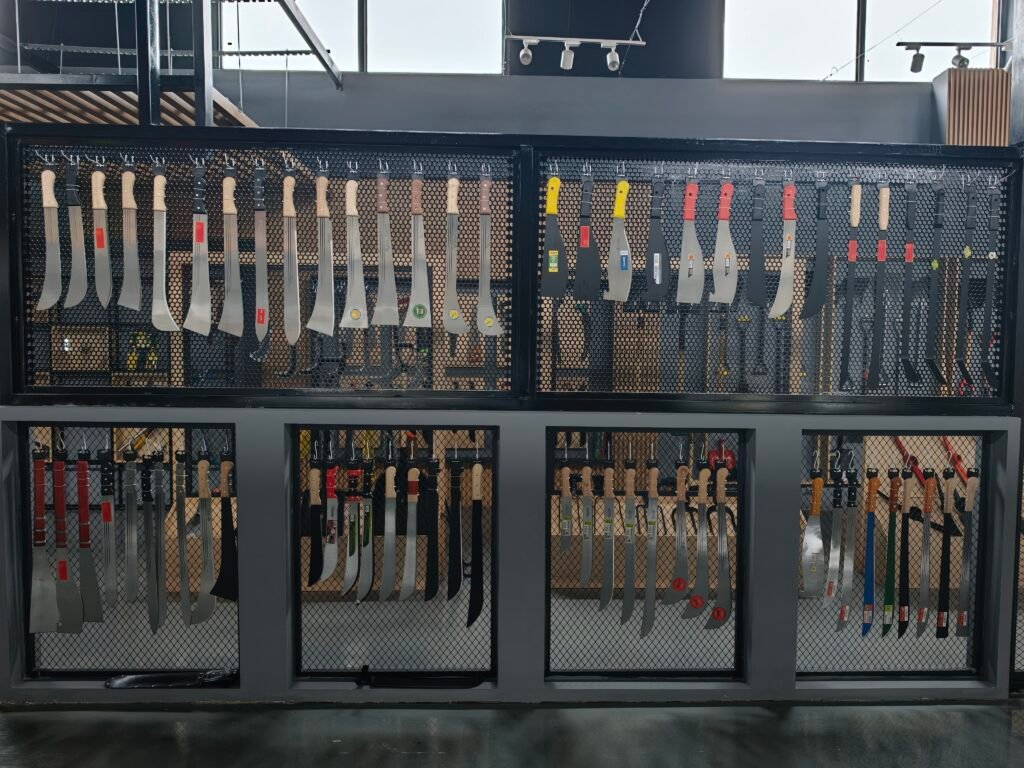
Define the Customers Behind the Retail Shelf
Ask who buys the tool: farm workers, smallholders, estate maintenance crews, or occasional home users. They may expect different weights and grips.
Find out what they cut most often. Weeding around crops, clearing woody growth, and chopping stalks do not impose identical demands.
Ask retailers which locally familiar blades customers replace. A recognizable handle or outline may matter more than an unfamiliar style name.
If stores already sell bolos, inspect the successful model. Record its dimensions, unit weight, and common complaints before seeking alternatives.
If stores have no bolo category, test interest cautiously. An international catalog label alone cannot demonstrate local demand.
Look at competing shelf products as physical examples, not proof of their technical quality. Note displayed length, packaging, and price scope.
A retail buyer often handles a tool before paying. The finished handle and balance therefore deserve as much attention as the front-facing blade image.
For institutional farm buyers, a written requirement may take priority over shelf appeal. Keep that channel separate when forecasting retail stock.
Request a Wholesale Quote:Whatsapp : (+86 13383021196) E-mail : gemlight@ganzhedao.com
Compare Bolo Profiles Without Assuming One Standard
Many commercial bolo-style machetes widen toward the front. That can put more material near the working end and change chopping feel.
But the width, curve, tip, and length vary by model. A factory’s bolo designation is not an approved drawing.
Request flat photographs of the entire blade with a ruler. Also request a side view showing thickness and handle attachment.
Measure blade length separately from overall length. Record width near the handle, in the middle, and at the widest point.
Note where the blade starts widening. Two models with the same maximum width can distribute weight very differently.
Compare the edge and tip shapes. Ask whether the delivered edge is fully sharpened or only prepared for later finishing.
Check finished unit weight and let intended users handle samples. A model described as “heavy” may still feel manageable to one group and tiring to another.
Ask for the steel designation offered, but do not infer durability from a name alone. Handle fastening, geometry, and finishing also matter.
If hardness is a purchase requirement, specify the test method and acceptance range with the buyer. Do not borrow a number from marketing copy.
Make the Retail Package Part of the Decision
Check whether the price includes a sheath, edge guard, hang tag, barcode, and individual wrapping. A bare-tool quote is not a retail-ready quote.
A sheath must fit the actual widened profile. Confirm fit on a finished sample rather than assuming a standard straight cover will work.
Ask stores how customers want to compare sizes. Put blade length and overall length clearly on the product specification.
Keep names consistent between shelf card, carton, and purchase order. Different product codes should identify different blade or handle combinations.
If a brand claim appears on packaging, verify it. Do not print unsupported material, durability, or country-of-origin statements.
Review carton protection so blades cannot damage one another during distribution. Confirm packing configuration and labeling before final pricing.
Consider shelf space and stock turnover. A compact model and a larger model might serve different buyers, but each needs evidence of demand.
Avoid stocking several near-identical variants just to fill a range. Clear differences make sales feedback and reorders easier to interpret.
Request a Wholesale Quote:Whatsapp : (+86 13383021196) E-mail : gemlight@ganzhedao.com
Test a Small Range Before a Bulk Order
Choose a locally familiar reference and a small number of candidate bolo machete models. Give each candidate a separate code and trial record.
Ask workers to use the tools on representative farm jobs, with appropriate training and local safety procedures. Record control and repeated-use comfort.
Ask retailers what customers request after seeing the trial stock. Track repeat purchases and returns, not only first-week curiosity.
Compare shelf conversion with other farm blades, but consider display position and season. A weak trial may reflect presentation rather than the tool alone.
Ask whether shoppers want a field tool or an outdoor accessory. Keep the article and product page focused on agricultural use.
If a model needs final sharpening, label that condition clearly. Returning customers should not discover it only after opening the carton.
Separate complaints about blade shape from complaints about loose handles or poor edge finish. Each needs a different production correction.
Review the price of equivalent finished products. One offer may exclude sharpening or packaging that another includes.
Approve a production sample and drawing once a model earns local acceptance. State dimensions and tolerances that inspectors can actually check.
For reorders, require confirmation that blade profile, handle, finishing, and packing remain unchanged. A familiar name does not prevent specification drift.
If a proposed change might improve the product, test it under a new revision rather than silently altering the accepted SKU.
What Should a Retail Buyer Send for Quotation?
State your market, main farm tasks, intended sales channel, and target customer. Attach a reference blade or a dimensioned drawing where possible.
List sizes, blade profile, handle, finishing, protection, individual packaging, carton quantity, and expected order volume.
Ask for the standard offer and any alternative as separate lines. Require the supplier to flag differences from the reference.
The right retail bolo is not the most dramatic silhouette. It is a repeatable finished tool that your local buyers recognize and use.
Share a locally accepted bolo or your retail brief when requesting a sample and quote. That makes discussion more useful than the name alone.
Request a Wholesale Quote:Whatsapp : (+86 13383021196) E-mail : gemlight@ganzhedao.com