When Does a Heavier Front-Weighted Machete Fit Farm Work?
Some farm buyers ask for the heaviest machete available. Yet a heavier blade can solve one cutting problem while creating another.
Front weighting puts more of the tool’s mass toward the working end. It can change the feel of chopping, but it does not guarantee better results.
Choose it when workers’ usual vegetation and technique benefit from that handling. Compare it with a familiar blade before ordering in volume.
Start With the Material Being Cut
Ask whether the main job is woody brush, firm stalks, soft grass, or a mix. The answer determines what “heavy duty” should mean.
For more resistant growth, users may prefer greater chopping feel. A forward-weighted pattern can be worth testing against their current tool.
For long hours of light grass clearing, extra front weight may feel tiring without helping the main task. Do not make it the default.
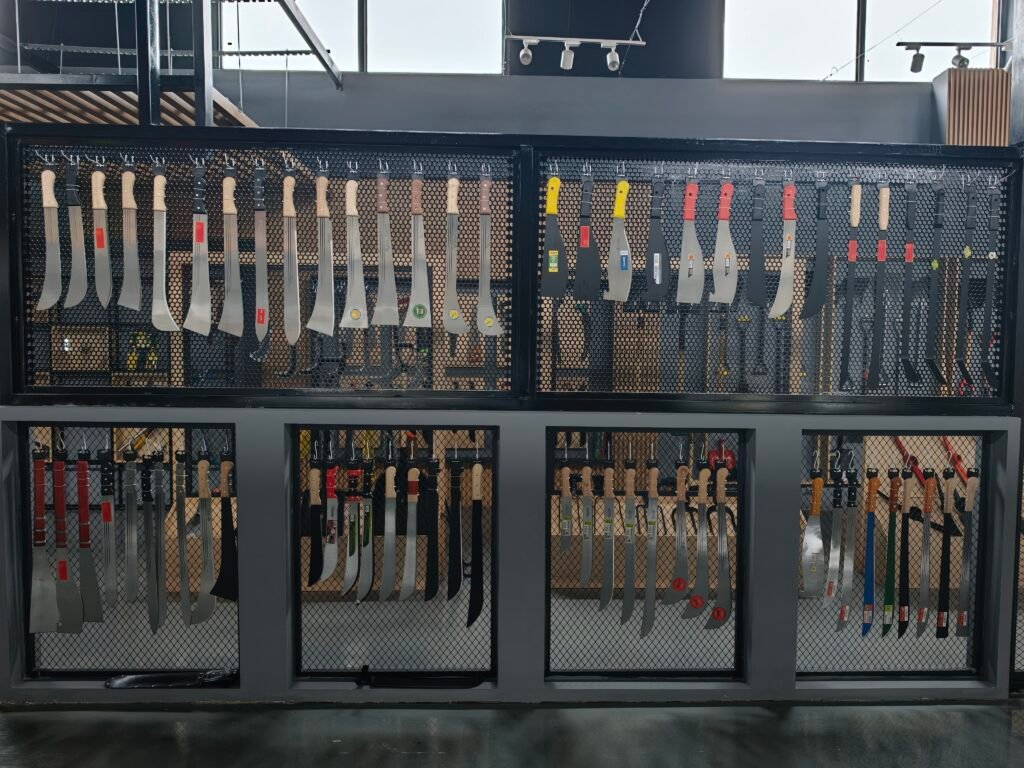
Some commercial bolo and panga patterns place more blade area toward the front. That does not mean every bolo or panga has identical balance.
Likewise, a general-purpose bush machete can come in several weights. Product names are clues, not substitutes for measured samples.
Ask where workers cut: overhead, near soil, or within crowded crop rows. The need for control can outweigh raw chopping feel.
If branches are too substantial for safe hand-tool work, ask whether another tool is appropriate. More blade mass cannot solve every task.
The end user’s present blade is a useful benchmark. Ask what it fails to cut and whether users already complain about fatigue.
Avoid recommending a heavier option based only on one demonstration stroke. The buyer needs a tool that works through the normal shift.
Request a Wholesale Quote:Whatsapp : (+86 13383021196) E-mail : gemlight@ganzhedao.com
What Actually Makes a Blade Feel Front-Heavy?
A wide forward section can place more metal near the tip. Thickness and blade length also affect the balance point.
Two blades can have the same unit weight but feel different because their mass is distributed differently.
Measure blade width near the handle, middle, and tip. Mark the broadest point on a drawing so suppliers use the same profile.
Record thickness at agreed positions. A photograph alone cannot show how much metal sits in the forward section.
Compare finished tools with handles attached. A longer or heavier handle changes the overall balance perceived by the worker.
Ask the supplier to state blade length and overall length separately. A nominal size cannot explain the feel of a completed tool.
Have workers hold the candidates in their normal grip. A showroom balance impression may change with gloves or wet hands.
Inspect the edge geometry and delivered sharpness. A heavy dull blade can perform worse than a lighter blade prepared for the task.
Do not claim an exact balance point without measuring it. When it matters, agree on a repeatable measurement method with the factory.
Compare Cutting Benefit With Fatigue and Control
Ask workers to compare the front-weighted sample and the current model on the same type of vegetation.
Record both the resistant cuts and the lighter repeated cuts. A front-heavy blade may feel helpful on one and awkward on the other.
Listen for feedback on wrist strain, grip confidence, and recovery between swings. Do not convert informal impressions into medical claims.
Check whether the tip reaches into crowded spaces safely. A wider end can make some precise work more difficult.
If workers favor the heavier blade initially, continue the trial long enough to observe repeated use and sharpening needs.
Review whether users can maintain the edge with available tools. An unfamiliar sharpening requirement can erase an apparent buying advantage.
Inspect the handle attachment after trial work. Higher-impact use makes reliable construction important, but no design should be called indestructible.
Do not rely on a vendor’s product weight alone to predict fatigue. User technique, vegetation, and working duration all matter.
When teams use mixed tools, it may be reasonable to stock a lighter clearing option and a heavier chopping option.
Request a Wholesale Quote:Whatsapp : (+86 13383021196) E-mail : gemlight@ganzhedao.com
Specify a Repeatable Heavy Pattern
Attach a full-size profile drawing or approved sample. Include blade lengths, widths at defined points, thickness, tip, and edge location.
State the complete unit weight or agreed range if it is important to users. Inspect assembled tools, not just blade blanks.
Describe handle material, shape, length, and attachment. A changed handle can alter both balance and customer acceptance.
Request the actual steel designation, finish, and edge condition. Unsupported terms like “industrial grade” do not settle material questions.
If the contract requires hardness, set test location, method, and acceptance range. Avoid adding a number without a buyer requirement.
Confirm sheath or edge guard fit. Broad front sections may not fit protection made for a slimmer straight blade.
Ask how batch units will be checked against the approved sample. One attractive prototype cannot guarantee consistent mass distribution.
Put any lighter alternative on its own quote line. Suppliers should not substitute profiles because both are sold as “machetes.”
What Should Buyers Request Before Bulk Production?
Send a photograph of the present tool, vegetation description, intended users, and any known complaints. Explain what heavier handling should improve.
Ask for finished samples with stated measurements and packing. Let workers compare them under local field conditions.
Document whether the candidate improves the important cutting task without causing unacceptable fatigue or control problems.
If the trial supports it, freeze the model code, sample, and drawing. Require written approval before the factory changes the forward profile.
If results are mixed, do not force a single answer. A narrower or lighter model may remain the better everyday tool.
A heavier front-weighted machete fits when its benefits are proven on the buyer’s actual job, not when it merely looks stronger.
Share the current blade and target task when requesting a quote. We can discuss a comparable sample and the tradeoffs openly.
Request a Wholesale Quote:Whatsapp : (+86 13383021196) E-mail : gemlight@ganzhedao.com