Which Machete Blade Features Matter for Clearing Dense Woody Vegetation?
A crew clearing tough brush asks for stronger machetes. Should a buyer simply choose thicker steel or a heavier blade?
No single feature solves every dense-growth problem. Stem size, blade geometry, edge condition, handle security, and user technique all matter.
The buyer’s first job is to define the vegetation and safe working method. Then a finished sample can be tested against a familiar tool.

Define the Limits of the Job
Dense woody vegetation can mean closely packed thin stems or occasional thicker branches. Ask which material actually slows the crew.
Record approximate stem size and working height where possible. A vague phrase like “jungle cutting” cannot guide a reliable quotation.
Find out whether users clear field borders, maintain paths, or open neglected land. These settings offer different swing space and control.
Ask what currently fails: edge dulling, blade bending, handle loosening, or tiring weight. Each complaint points to a different check.
Do not assume a machete should replace every other farm or forestry tool. Work involving substantial wood may require a different tool and training.
Check for stones, wire, hidden debris, and neighboring workers. Tool selection should not be separated from safe site procedures.
Where crews regularly encounter mixed vegetation, identify the dominant job. An occasional extreme branch should not define the whole purchase.
Use local workers’ accepted model as a reference. Their established cutting method can reveal why a seemingly tougher alternative is rejected.
Request a Wholesale Quote:Whatsapp : (+86 13383021196) E-mail : gemlight@ganzhedao.com
Examine the Blade’s Working Geometry
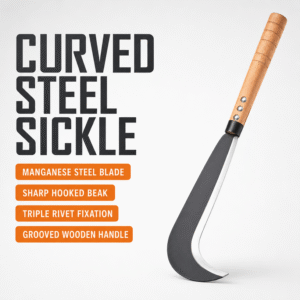
Compare the full front profile, including the widest point, edge curve, and tip. A broad or forward-heavy section may change chopping feel.
A straighter clearing blade may offer different reach and swing rhythm. Neither is automatically superior for every woody plant.
Ask for blade length, overall length, and width at defined locations. The same advertised size can conceal very different working profiles.
Measure thickness at agreed points rather than relying on a single catalog number. Variation along the blade can affect feel.
Ask where the cutting edge begins and how it is finished. A heavy blade with a blunt delivered edge can disappoint immediately.
Compare sharpness under the buyer’s intended maintenance routine. Do not treat a one-time showroom edge as permanent performance.
Check the tip for the actual job. A pointed or hooked end should be requested only when the workers need that geometry.
Record the finished unit weight and let workers assess balance. More weight may assist some cuts while increasing fatigue in repeated work.
Review how the blade behaves near the handle. The connection must remain secure during the use specified by the buyer.
Check Steel, Edge Behavior, and Handle Security
Ask suppliers to name the material offered. Broad phrases such as “premium carbon steel” do not identify a specific production requirement.
If hardness matters, agree on test method, location, and range. A single unsupported claim cannot predict field performance.
Edge chips, rolling, and rapid dulling are different observations. Record the vegetation and impacts before blaming one specification.
Inspect the handle attachment, grip length, and finish on a completed sample. A good blade does not compensate for an unstable handle.
Ask workers to use normal gloves and field conditions during evaluation. A comfortable dry grip may feel different in damp work.
Check whether edge guards or sheaths fit the actual blade. Protection is important for moving and storing tools between jobs.
Specify corrosion protection and packing where tools will be stored in humid conditions. A clean sample alone cannot show shipment consistency.
Do not promise break-proof performance. Use defined tests and acceptance criteria tied to the customer’s application instead.
Separate material defects from misuse during trials. Record circumstances, photographs, and sample identifiers before judging a model.
Request a Wholesale Quote:Whatsapp : (+86 13383021196) E-mail : gemlight@ganzhedao.com
Run a Practical Comparison
Test a locally accepted tool and a candidate on similar woody vegetation. Include the normal mix, not only the thickest available stem.
Ask workers to note control, number of touch-ups, repeated-use effort, and any tendency for the tool to stick or twist.
Inspect the edge and handle joint afterward. A short trial exposes obvious mismatches but cannot prove long-term life.
Repeat the assessment with more than one trained worker where practical. One person’s swing style can bias the result.
Separate bending at the blade from movement at the handle. Both are problems, but they call for different corrective action.
Photograph edge wear before any resharpening. Once the edge is dressed, the original failure can be difficult to evaluate.
If hidden stones or wire are present, document impacts. A design should not be judged solely on unexpected contact with hard debris.
If the sample performs well but feels too tiring, consider a lighter profile before changing steel grade without evidence.
If the edge fails early, document where and how it failed. Suppliers need more than “not strong enough” to propose a correction.
A revised sample should be tested again on the same defined job. Do not assume a change in thickness will leave handling unchanged.
For tender bids, follow the written acceptance procedure. A private field comparison cannot replace mandatory tests or documents.
Write the Supplier Requirement Clearly
Provide a drawing or reference sample, vegetation description, size measurements, steel requirement, handle construction, and edge condition.
State finish, protective packing, quantities, and inspection method. Ask that deviations appear as separate options in the quotation.
If balance or weight matters, describe how it will be measured on finished tools. Preserve the approved version under a unique model code.
Request a preproduction sample before bulk manufacture and compare shipment units with the same reference.
Dense woody growth calls for matching blade geometry and construction to a real task, not buying the largest blade in a catalog.
Send your crew’s current tool and the vegetation it struggles with when requesting a quote. We can discuss a sample against those conditions.
Request a Wholesale Quote:Whatsapp : (+86 13383021196) E-mail : gemlight@ganzhedao.com