How Should a Buyer Select Machetes for Plantation Maintenance Crews?
A plantation maintenance team does not perform one cutting job all day. It may clear paths, trim field edges, and manage mixed growth.
Buying Select Machetes by price alone can leave workers with a tool that suits none of those jobs particularly well.
A practical purchase starts with a task map, then checks user acceptance, sample quality, and consistency across the planned order.
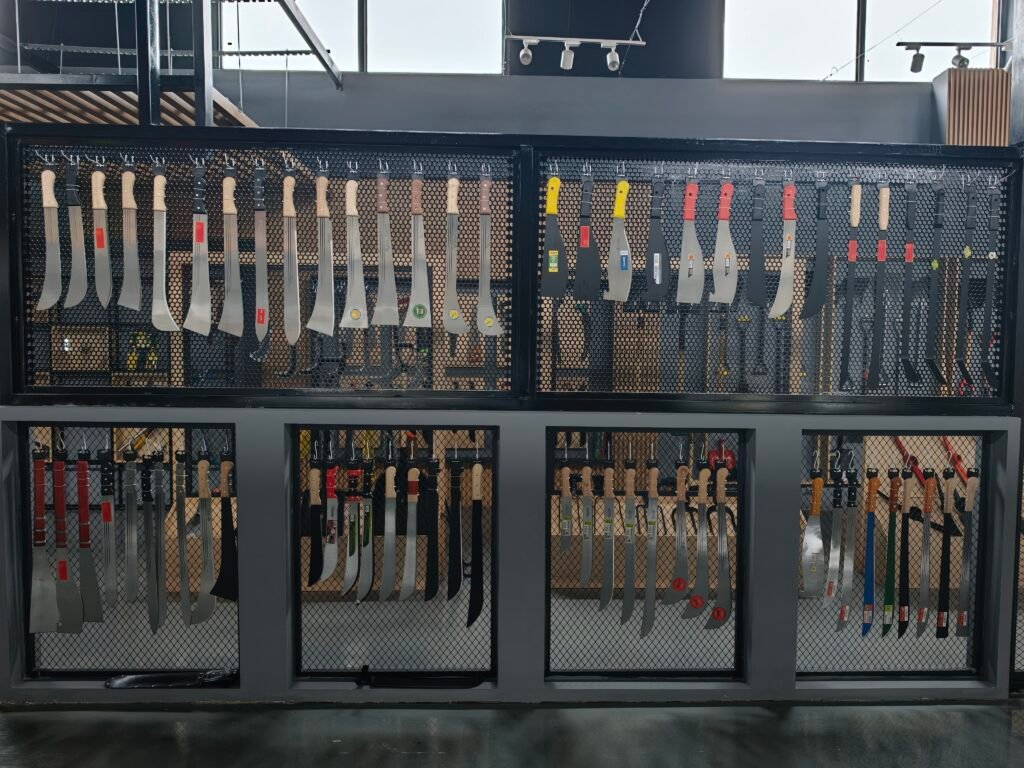
Map the Crew’s Work Before Selecting a Pattern
List the places crews maintain: access roads, drainage edges, crop rows, boundaries, and service areas. Each can involve different vegetation.
Ask which jobs take most working hours. Focus your main tool on repeated everyday tasks, not the toughest stem seen once.
Separate soft grass from woody brush and crop harvesting. These jobs may call for different reach, balance, and edge profiles.
A general bush-style machete can be a candidate for mixed green vegetation. A broader or forward-weighted model may suit selected chopping work.
Those pattern descriptions are starting options, not promises. Local worker technique and plantation conditions can change the preference.
Ask whether workers have room to swing. A long blade may help on an open boundary but complicate cuts beside young crops.
Find out which cutting tools the plantation already issues. A familiar working pattern is useful evidence, even if the current brand disappoints.
Record complaints by task. A loose handle during brush work and slow cutting in grass require different improvements.
If the crew needs dedicated cane-harvesting tools, do not hide that need inside a general maintenance machete order.
Request a Wholesale Quote:Whatsapp : (+86 13383021196) E-mail : gemlight@ganzhedao.com
Balance Worker Comfort and Control
Have workers handle finished samples in their normal gloves. Check grip length, surface, and comfort under field conditions.
Compare unit weight and how the tool feels during repeated strokes. A blade that feels powerful initially may become tiring.
Ask about control near crop stems, pipes, fencing, and colleagues. The widest or heaviest blade is not automatically the safest choice.
Observe where workers grip the handle and whether its attachment feels secure. Photographs rarely reveal these details reliably.
Consider whether the crew carries the tool between sites. A sheath or edge guard may be important for transport and storage.
Ask who sharpens issued tools and how often. The edge supplied and the maintenance method should fit the actual operation.
If a crew contains users with different preferences, test whether a small choice of approved sizes improves acceptance.
Do not assume one worker’s favorite tool will suit every team. Repeatable feedback from representative users matters more.
A trial should include several tasks across a normal maintenance route, not one impressive cut filmed for a product page.
Specify Quality That Can Be Checked
Request a full-length sample and dimensioned drawing. Record blade length, total length, width, thickness, edge, and tip profile.
State finished unit weight or an acceptable range if balance affects user acceptance. Check assembled tools rather than loose blade blanks.
Describe the handle material, fastening, surface finish, and any required guard. These parts deserve inspection alongside the blade.
Ask the supplier to declare the steel actually offered. An unsupported claim of “heavy-duty steel” is not a specification.
If a contract requires hardness, name the test method, position, and allowable values. Never insert an arbitrary target for appearance.
Confirm edge delivery: ready for field use or requiring final sharpening. Make quotations comparable on this point.
Check finish and packing for storage conditions. Moisture exposure during shipment can affect how tools arrive to the crew.
Define the inspection procedure and tolerances before production. A sample only helps if later units can be checked against it.
Keep product code, drawing revision, and approved sample together. Avoid receiving multiple patterns under one general “plantation machete” line.
Request a Wholesale Quote:Whatsapp : (+86 13383021196) E-mail : gemlight@ganzhedao.com
Plan Issuing, Replacements, and Stock
Ask the plantation how tools are issued and replaced. Individual ownership and shared tool stores may create different marking needs.
Track returns by model and crew task. Repeated complaints about the same handle or edge can guide the next order.
Ask how supervisors record tools that are lost, damaged, or worn through normal use. These causes should not be merged into one replacement rate.
Check where tools are kept between shifts. Storage conditions influence whether guards, oiling, or more protective packing are needed.
Schedule periodic review with crew leaders so new growth conditions do not go unnoticed. A tool that fits one season may face different vegetation later.
Choose a stocking strategy with realistic demand for each approved model. An unnecessary range increases complexity for buyers and workers.
If two models serve different tasks, label them clearly. A lightweight clearing option should not be swapped for a chopping blade without notice.
Order spare units against the accepted design, not whichever catalog item happens to be available later. Consistency simplifies training and maintenance.
Agree how the supplier will announce changes to materials, profile, handle, or packing. A repeat order should not silently become a new tool.
For tenders, follow the issuer’s exact requirements. Document alternatives separately and seek approval through the stated process.
Use the crew’s experience to improve specifications, but avoid promising lifetime durability from a short trial.

Select Machetes Build a Useful Plantation Inquiry
Share the plantation’s main crops, maintenance tasks, common vegetation, crew size, and existing tool. Identify the task that causes most complaints.
Request finished samples matched to those jobs. Ask the supplier to list differences from your reference instead of assuming equivalence.
State blade and handle details, edge finish, individual protection, carton packing, expected quantity, and repeat-order expectations.
Ask representative workers to evaluate candidates, then freeze a model code and signed drawing for production and inspection.
The best crew order may include one versatile approved machete or a small set of task-specific tools. The work decides.
Send your maintenance task list and current tool with an inquiry. We can discuss sample options suited to the crew’s real use.
Request a Wholesale Quote:Whatsapp : (+86 13383021196) E-mail : gemlight@ganzhedao.com