How Do Local machete Names for Farm Blades Affect International Purchase Orders?
A trader orders pangas. The export invoice says machete names. The end customer expected a particular cutlass. The shipment can still be wrong despite familiar words.
Regional product names help people ask for tools. They are weaker at telling a factory exactly what to manufacture and ship.
A well-written purchase order keeps the local name, but ties it to a controlled model, drawing, approved sample, and measurable requirements.
Where Does Naming Confusion Begin?
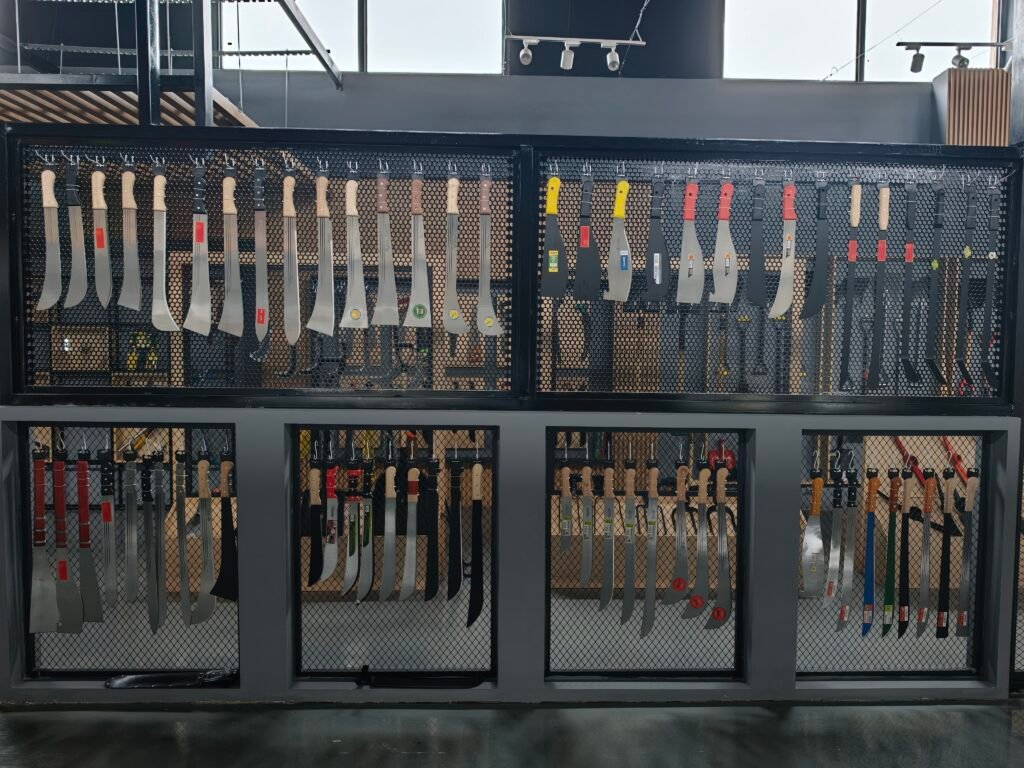
machete Names is often an international umbrella term for long agricultural cutting blades. Local markets may use panga, cutlass, bolo, or cane knife.
These words may overlap in catalogs, but they can point to different expectations about blade profile, tip, grip, and use.
Some names describe a regional tradition. Others emphasize a crop or working task. The same word can also cover multiple modern models.
Translation can widen the gap. A buyer may approve one photograph while the supplier quotes a different item under a plausible English label.
A wholesale trader might request “18-inch panga” without defining blade versus overall length. Both parties may think they understand.
An importer may write “cutlass” because local customers say it. The factory may select its nearest general-purpose machete.
A tender can require a cane knife with a specific tip. A supplier might see “machete” in a translation and omit the specified shape.
These are specification failures, not just vocabulary problems. The shipment should be judged against the agreed product definition.
Treat every local name as a search clue until you have a reference sample or dimensioned drawing.
Request a Wholesale Quote:Whatsapp : (+86 13383021196) E-mail : gemlight@ganzhedao.com
Give Every Physical Model a Stable Identity
Create a unique model code for each blade and handle combination. Keep the code unchanged only while the physical specification stays unchanged.
Put the local market name next to that code. The two serve different purposes: customer recognition and production control.
Attach full-length front and side photographs with a ruler. A cropped image cannot define a tip or handle joint.
List blade length, total length, widths at defined points, thickness, edge location, tip profile, and complete unit weight.
Specify the handle material, shape, length, fastening method, and finish. Different handles can turn one familiar blade into another product.
State steel grade only when it can be supported. If hardness matters, define test method, location, and accepted range.
Clarify whether the edge is ready for field use. A quote for a factory bevel may differ from one for a sharpened finished tool.
List sheath, guard, surface protection, retail marking, and carton packing. These details may matter to the buyer even when blade shapes match.
Identify the approved sample with a date or code. Do not simply say “same as last time” when several variants have been supplied.
Control Names Across Documents
Use the same model code on quotation, purchase order, approved drawing, production sample, invoice, and packing list.
Local labels may differ across markets, but the code should still point to the same approved physical product.
If an invoice description must use a different accepted term, cross-reference the controlled code and provide a clear commercial description.
Do not assume a product name alone decides customs treatment. Check actual goods and destination requirements with appropriate trade professionals.
When the buyer changes a local label but not the product, document that change. When the blade changes, issue a new approval or code.
Require the supplier to disclose proposed substitutions in writing. “Equivalent machete” is not an adequate description of a changed tip.
For a tender, keep the issuer’s exact wording in the compliance response. Attach the model evidence that shows what you actually offer.
If the tender wording conflicts with its photographs or dimensions, ask the issuer for formal clarification rather than making a silent choice.
Confirm which document prevails if the sample, drawing, and text disagree. Set an agreed order of precedence before manufacture.
Request a Wholesale Quote:Whatsapp : (+86 13383021196) E-mail : gemlight@ganzhedao.com
Make the Order Easy to Inspect
Inspectors need measurable acceptance points. Agree on key dimensions, permitted variation, edge condition, handle security, and packing.
Give the inspection team the same approved sample and drawing used by the factory. Otherwise, they may compare different references.
For batch checks, record the tested model code and lot. Mixing visually similar models under one carton label can conceal errors.
Ask for preproduction approval when a supplier changes material, handle, tip, or finishing process. Even small changes can affect user acceptance.
If a problem appears, trace it to the exact lot and approved version. A complaint about “cutlasses” without a model identifier is hard to investigate.
Do not overpromise that a name or sample guarantees quality. An agreed inspection procedure makes the physical requirement enforceable in practice.
A purchase order can include the local term and still remain precise. The model code and specification carry the technical meaning.
Avoid filling the page with synonyms as though they were identical products. Describe each offered tool by its actual pattern and task.
A Better Way to Request a Quote
Write: “Please quote the attached model and state every difference from the approved sample.” Then include market name, task, quantity, and delivery requirements.
Specify what the local buyer calls the tool, but separate that name from mandatory measurements and visual references.
Ask for two quotations if you want a compliant offer and a suggested alternative. This keeps price comparisons honest.
Have the downstream buyer approve the finished sample and product description. Keep that approval with the order documents.
When reordering, ask the supplier to confirm that the same version will be produced. Update drawings and codes if anything changes.
Local names improve communication only when both sides know the physical tool behind them. International purchase orders need that second layer.
Send your local term, reference sample, and destination market with an inquiry. We can help translate the requirement into a clear product specification.
Request a Wholesale Quote:Whatsapp : (+86 13383021196) E-mail : gemlight@ganzhedao.com