A market grows sugarcane, maize, and bananas. Should an importer stock one Agricultural machete pattern for all three? Usually, that is the wrong starting question.
Buyers need to understand each cutting task. The same crop can require different work at harvest, during maintenance, and after harvest.
A pattern name suggests a blade family, not guaranteed performance. Match a sample to the local task before building your purchasing list.

Map Crops to the Actual Cutting Jobs
Start with what workers cut, not the largest crop on a national production chart. That chart cannot reveal manual tool demand.
Ask whether workers clear weeds, trim foliage, cut stalks, or move harvested material. These jobs may use different tools on one farm.
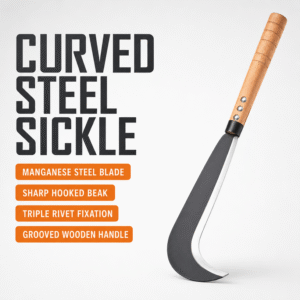
Sugarcane buyers often need a tool for cutting fibrous stalks near their base. Some crews also value a hooked tip for handling cut cane.
Others prefer a straight or broad cane blade. A hook is not a universal requirement, even when a catalog calls both products cane knives.
For maize, a distributor might encounter requests for stalk cutting, field cleanup, or weed clearing. Ask which job drives replacement sales.
Banana-growing areas can need field clearing alongside crop work. Do not infer the preferred blade from the crop name alone.
If brush surrounds cultivated fields, the buyer may need a clearing Agricultural machete as well as a crop-specific knife. Keep these uses separate.
Check whether work is mainly manual. A market using mechanized harvesting may buy fewer hand-harvesting knives than its crop acreage suggests.
Talk to local tool shops, farm supervisors, and users. Their existing tools provide stronger evidence than a supplier’s generic crop list.
Request a Wholesale Quote:Whatsapp : (+86 13383021196) E-mail : gemlight@ganzhedao.com
Compare Patterns by Reach, Control, and Balance
A relatively long, narrow clearing blade can offer reach for repeated cuts through vegetation. It may feel awkward for close crop-base work.
A broader cane blade can provide a different cutting feel around stalks. Whether it suits your customers depends on their method and sample preference.
Some bolo-style models carry more blade width toward the working end. That can change chopping feel without making every bolo suitable for every crop.
A panga or cutlass may be the familiar local name. Neither name alone specifies the exact outline, weight, or best job.
Compare front profiles at the same scale. Then check the side view, since photographs can conceal blade thickness and handle position.
Measure blade length and overall length separately. A product advertised by one nominal size may use a different measurement convention.
Record maximum blade width, tip shape, edge placement, and unit weight. Ask where the weight sits when workers hold the finished tool.
Handle grip matters during repeated cutting. Ask users about hand size, gloves, wet conditions, and how the current model feels after use.
Avoid choosing the heaviest blade as a shortcut to quality. Excess weight can make repeated work harder without improving the handle joint.
Decide Whether One Model Can Cover Several Crops
A general-purpose Agricultural machete can serve several light clearing tasks. That does not mean it replaces a preferred harvesting knife.
Use one common model only when local users accept it for each intended task. A short field trial is worth more than a broad marketing claim.
Ask workers to compare the candidate with their regular tool. Observe grip, control, and whether they repeatedly change their cutting motion.
A model that clears weeds well might still perform poorly close to a cane base. Record each result separately, not as an overall vote.
If needs differ, build a small range: a clearing option and a crop-focused option. Do not create extra models without evidence of distinct demand.
A retailer should ask which tools customers request by name and which they actually buy again. These may not be identical.
A tender bidder has less freedom to simplify. Follow the written specification and approved sample even if another pattern seems more versatile.
Keep product codes tied to distinct profiles. Selling the same blade under several crop names can cause mistaken orders.
Request a Wholesale Quote:Whatsapp : (+86 13383021196) E-mail : gemlight@ganzhedao.com
Verify the Choice Before Ordering Stock
Ask for an unworn local reference sample or clear photographs against a ruler. Used blades may have lost width through repeated sharpening.
Send suppliers a drawing showing the tip, edge, handle, and key dimensions. Request marked deviations instead of a silent “equivalent” offer.
Compare materials and finishing, not only silhouettes. Confirm offered steel grade, thickness, heat-treatment evidence where required, and edge condition.
Check the handle fastening and grip on a finished sample. Bare blade samples cannot answer questions about control in the field.
Define whether each tool needs an edge guard, sheath, oil, or other packing protection. These items can change costs and buyer acceptance.
Agree on dimension tolerances and inspection methods. A pleasing sample is not proof that every item in a shipment will match it.
If customers want an uncommon pattern, test demand with a limited order rather than filling a container based solely on crop acreage.
For contracts, map every offered feature to a tender requirement. Mark any missing evidence and ask the issuer about unclear language.
After launch, track which models sell, which are returned, and why. Feedback from local users should shape your next purchase.
What Should a Crop-Based Inquiry Include?
Name the destination market, main crop, and specific cutting operation. A request for “machetes for sugarcane country” is too broad.
Add the local name for the tool, but attach a reference drawing or sample. Say whether it cuts stalks, clears brush, or handles both.
State blade and handle dimensions, material requirements, finish, packing, and expected quantity. Identify whether alternatives may be quoted separately.
Ask for samples suited to the stated job, then let the intended users assess them. Avoid claiming field suitability before that assessment.
The best pattern is the one that fits the work and earns local acceptance. Crops guide the inquiry; the task and approved sample close it.
Share your crop mix, field task, and current tool when requesting a quote. We can discuss pattern options against that specific requirement.
Request a Wholesale Quote:Whatsapp : (+86 13383021196) E-mail : gemlight@ganzhedao.com