Quick Answer
Field trials help importers choose a panga by comparing finished samples on the main jobs their customers actually perform. Use a local reference blade, comparable vegetation, the same participating users, and a recorded sample code for each model. Observe handling and maintenance across working periods, then turn the preferred design into a measured, approved sample for the order.
Key Takeaways
- The word “panga” does not identify one exact blade profile, handle, or finished edge.
- Comparisons are hard to interpret when users, cutting tasks, or sample preparation differ.
- A local preference cannot guarantee acceptance in another district or crop system.
- Request a Wholesale Quote:Whatsapp : (+86 13383021196) E-mail : gemlight@ganzhedao.com
Define the Panga and the Trial Question
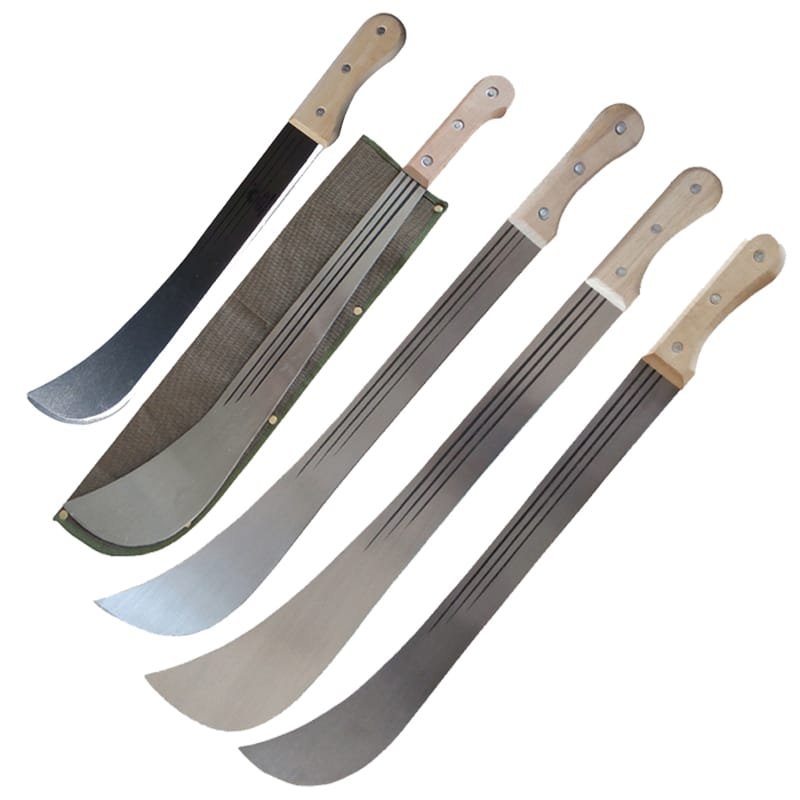
“Panga” is a useful market term, but it is not a finished-product specification. Two blades sold under that name can differ in outline, tip feel, handle, and edge. Decide whether the order replaces a familiar model, adds a size, or tests a new market.
Start with a locally accepted tool as the control. Photograph its outline, measure the finished unit, and record its condition. If repeated sharpening has changed its shape, compare an unused retained sample where possible.
Limit the candidates to a manageable set. Give each a neutral sample code linked to its drawing and supplier model; do not let a marketing name influence the feedback.
Identify the dominant local job—grass clearing, crop stalk cutting, or woody growth—and note row spacing, growth density, and obstacles. Recruit experienced users who resemble the likely customers, rather than relying only on supplier staff. Follow local safety procedures; the trial should not reward risky cutting.
Compare Finished Samples Under Similar Conditions
Inspect each edge before cutting. If a sample needs sharpening, record the condition and agree on consistent preparation. Have the same users try each model on comparable vegetation where practical, rotating order to reduce first-sample advantage.
Record the task beside every assessment. Ask about reach, control, grip, and swing feel, not only an overall rating. Watch for changed grips, avoided cuts, or contact with nearby plants: these observations can explain a preference better than a single score.
Repeat across more than one working period if practical. Keep first-day and later opinions, since fatigue and sharpening needs can change the result. Log soil, wire, or stone contact separately before interpreting edge wear.
After use, inspect the handles and edges. Distinguish a loose joint from normal wear or damage caused by an unusual test incident. Do not turn one worker’s timed bundle into a market-wide productivity percentage.
| Known from the trial | Still to verify | Purchasing action |
|---|---|---|
| Preferred handling for the recorded task | Whether typical buyers share the testers’ preferences | Retest with another user group or setting if the market is broader. |
| Edge condition and sharpening events observed | Maintenance needs in routine longer-term use | Record sharpening frequency during comparable work; do not infer service life from one shift. |
| Approved sample outline and handle feel | Whether the supplier can reproduce the finished model | Approve a production-intent unit and retain a labeled reference sample. |
| Workers’ choice when samples were free to try | Interest at the proposed retail price | Ask whether users would buy the model at the planned price. |
Request a Wholesale Quote:Whatsapp : (+86 13383021196) E-mail : gemlight@ganzhedao.com
Turn User Feedback Into a Model Decision
Ask each worker which sample they would request again for the main task and why. Preserve dissent: two profiles may suit two distinct jobs better than a supposed universal panga.
Compare the favorite with the local control. Did it improve a relevant task, or did a polished finish merely attract attention? Total weight alone does not explain the feel of a finished tool; mass distribution and grip matter too.
Review whether participants share an employer, farming method, or experience level. Experienced users may accept a grip that newer buyers do not. If a wider distribution area matters, run a second trial rather than treating one location as representative.
Finally, test the commercial decision: expected retail price, maintenance burden, and the distributor’s channel. A popular free sample may not be the model customers will buy.

Lock the Accepted Panga Into the RFQ and Order
Give every accepted design one model code. Carry the same code through the request for quotation (RFQ), order, retained sample, and inspection record. A similar catalog image is not evidence that the trial profile can be reproduced.
RFQ checklist:
- Accepted model code and profile drawing: identify the exact outline and tip so the supplier cannot substitute a merely similar catalog shape.
- Finished dimensions, measurement points, and tolerances: define what inspectors will measure; a nominal length alone cannot preserve the accepted geometry.
- Handle material, fit, and finish: confirm the production-intent grip and joint because prototype workmanship may differ from bulk delivery.
- Finished weight and edge condition: request the approved condition where relevant so a quotation does not conceal a changed balance or unfinished edge.
- Production-intent sample and change disclosure: require approval of any departure before pricing or manufacture so the field-tested design remains traceable.
- Guards, packing, and carton labels: specify model identification and protection so the warehouse can separate designs and ship the right unit.
- Early-production check against the retained sample: agree when and how units will be checked before the full order proceeds.
Request production-intent samples against the accepted trial code before confirming volume.
After launch, track returns and repeat requests by model and task. Use that evidence to refine, expand, or stop reordering a design.
Buyer FAQ
Can one short trial establish the best panga for an entire market?
No. It records preferences for the participating users, jobs, and conditions. Test another setting when the distribution area or customer group differs.
Should the lightest sample win?
Not automatically. Compare how the finished tool swings and how users hold it during the dominant job; total weight is only one recorded characteristic.
What if different workers choose different profiles?
Match each preference to its task. A small, clearly labeled range may be more useful than forcing one model onto incompatible work.
Is a supplier’s catalog photo enough to confirm the order?
No. Tie the RFQ and inspection to the agreed drawing, labeled photographs, and approved finished sample.
Request a Wholesale Quote:Whatsapp : (+86 13383021196) E-mail : gemlight@ganzhedao.com