Which Product Photos Help Identify a Bolo, Panga, or Cane Knife?
A catalog shows three attractive angled photographs labeled bolo, panga, and cane knife. Can a wholesale buyer tell which pattern will arrive?
Not reliably. Perspective can hide width, tip shape, and handle attachment. A useful photo set shows the same finished product from controlled views.
Photos identify candidates; measurements and an approved sample settle an order. Ask suppliers for images that answer specific questions about the blade.
Request a Wholesale Quote:Whatsapp : (+86 13383021196) E-mail : gemlight@ganzhedao.com
Start With a Full-Length, Flat Profile
The most useful first image shows the whole blade and handle directly from above or the side that reveals the outline.
Place the tool against a plain, contrasting background. Keep the camera square to the blade rather than using a dramatic diagonal view.
Include a ruler in the same plane as the blade. A floating size graphic added later is less useful for comparing proportions.
For a bolo candidate, look for where the profile widens and how much material appears near the forward section.
That visual clue is not a final classification. Different local bolo models and other forward-heavy patterns may overlap in appearance.
For a panga candidate, inspect the belly, curve, and tip. Some commercial examples have a pronounced upturned point.
Do not assume every locally sold panga follows one illustrated outline. Compare the photo with a buyer-approved local sample.
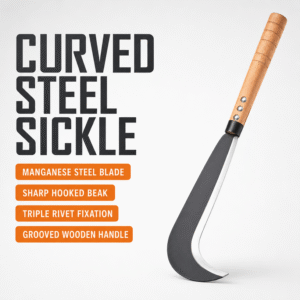
For a cane knife, inspect the broad cutting region and tip. A straight or blunt tip and a hooked tip are both possible.
A cropped photograph showing only the blade center cannot establish whether a cane knife has a hook or what shape it takes.
Ask the supplier to keep the full blade visible, including the narrow region nearest the handle. That area helps explain the whole profile.

Add Close-Ups That Resolve Ambiguity
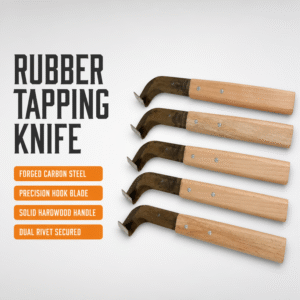
Request a close-up of the entire tip. It should reveal whether the end is straight, blunt, upturned, or fitted with a hook.
If there is a hook, ask for a view of its inside and outside. Clarify whether any surface is sharpened instead of guessing.
Show where the main cutting edge begins and ends. A polished side view can conceal whether the edge was finished for field use.
A handle close-up should show the grip, fastening, and blade junction. Buyers cannot judge attachment from a cropped hero image.
Ask for an opposite-side photograph if the blade is asymmetrical. A single flattering angle can hide different edge or hook details.
A side-on view helps buyers see thickness, curvature out of the blade plane, and whether a handle is offset.
Photograph the finished tool, not only a loose blade blank. Assembly can change balance and what the purchaser actually receives.
Include a full image of any sheath or edge guard fitted to that model. A guard shown beside another blade is not proof of fit.
If several sizes share a catalog page, photograph each physical size separately. Enlarging the same illustration creates false expectations.
Request a Wholesale Quote:Whatsapp : (+86 13383021196) E-mail : gemlight@ganzhedao.com
What Can Photos Not Prove?
Photographs cannot reliably prove steel grade, hardness, finished weight, or tolerances. Ask for measurable specifications and agreed tests.
Lighting can change the apparent finish or color. Confirm coating and surface requirements in writing before approval.
A ruler reveals scale only when it is properly placed. Camera tilt or a curved tool held away from the ruler can distort comparisons.
A single hand holding a blade does not establish exact size. Hand size, viewing angle, and distance vary from image to image.
A sharp-looking reflection does not prove working-edge sharpness. Ask whether factory sharpening is included and inspect a sample.
A product can appear bolo-like from above yet feel unlike the local reference because thickness and finished balance differ.
Likewise, a photograph cannot show if a cane hook actually suits a crew’s harvesting technique. Workers should test a finished sample.
Even genuine sample photos cannot guarantee batch consistency. Set dimensions and inspection points for the order.
Do not infer production origin or material from a stamped name unless supporting documentation and the quotation agree.
Create a Repeatable Supplier Photo Checklist
Request five views for each SKU: full flat profile, opposite face, true side, tip close-up, and handle-junction close-up.
Ask for at least one view with a ruler and a readable model tag. The tag should match the drawing and the quotation.
Have suppliers state blade length, overall length, width at defined points, thickness, and finished unit weight alongside the images.
If profile comparison is critical, ask for a scaled outline or physical sample. Full-size templates can expose differences hidden in photographs.
For two similar products, use matching backgrounds, orientation, and scale. Do not compare one angled marketing shot with another flat technical image.
Save the approved photographs under the model code and revision. Store them with the sample, not in an unrelated marketing folder.
Ask for an image of the tool next to its own retail packaging. It helps reveal a mismatch between catalog label and packed item.
Keep original files rather than screenshots pasted into spreadsheets. Compression can hide edge and handle details needed during review.
Do not rely on a staged pile of identical-looking blades to judge batch consistency. Inspect measured production samples as well.
When a supplier revises the hook, tip, or handle, request new images. Old photography should not silently represent a changed product.
If a tender requires a specific reference, annotate the differences and obtain buyer approval before treating the alternative as equivalent.
The buyer’s goal is not to name a blade by picture alone. It is to identify a repeatable product worth sampling and specifying.
Send your reference blade photographs with the inquiry. We can return matching views and dimensions so you can assess the offered pattern.
Request a Wholesale Quote:Whatsapp : (+86 13383021196) E-mail : gemlight@ganzhedao.com