What Should Importers Ask Farmers Before Choosing Machete Models?
An importer asks farmers, “Which machete do you want?” The replies are panga, cutlass, cane knife, and “the one we used last season.”
Those answers are useful leads, not finished specifications. Farmers describe familiar tools through local names and daily experience.
A better interview finds the work, the current tool, and the failure the buyer wants fixed. That makes a sample request much more precise.
Ask About the Work, Not Just the Product Name
What crops do you grow, and what do workers cut with this blade? Separate harvesting, weeding, path clearing, and boundary maintenance.
Which task uses the most working time? The tool should suit the routine job rather than the toughest branch found once a month.
What vegetation causes trouble: flexible grass, fibrous stalks, vines, or woody regrowth? Ask for photographs if words are ambiguous.
Where do workers cut: open ground, crowded rows, or near irrigation pipes? Working space affects useful reach and control.
Do workers cut at ground level or above it? The working position changes how a blade and handle feel.
How many people use the tool, and for how long during a shift? A brief demonstration may not reveal repeated-use discomfort.
Do they move cut stalks with the blade? If so, ask what a hook or tip must do after the cutting stroke.
What other tools are available for larger branches or mechanized clearing? Do not make the machete solve every task on the farm.
These questions reveal whether one general model is reasonable or whether different crews need separate patterns.
Request a Wholesale Quote:Whatsapp : (+86 13383021196) E-mail : gemlight@ganzhedao.com
Learn From the Tool Farmers Already Use
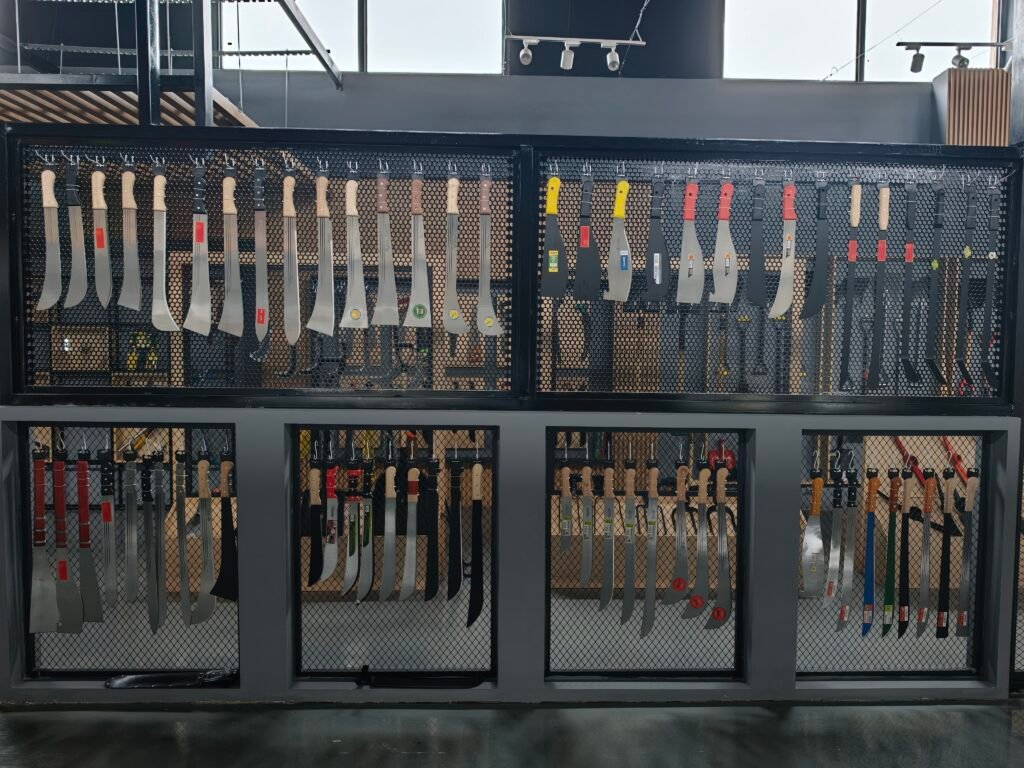
Can a farmer show a locally accepted blade? Photograph the full outline, handle, tip, and edge beside a ruler.
Ask what workers like about it. Familiar balance, length, and grip may explain why a cheaper replacement fails.
Ask what they dislike. Does the edge dull quickly, does the handle loosen, or is the blade awkward in dense rows?
Avoid assuming one complaint identifies its cause. A poor edge finish and unsuitable geometry can feel similar during the first trial.
How is the tool maintained? Ask who sharpens it, which tools they use, and how often it needs attention.
Are tools stored outdoors, moved between sites, or issued individually? These habits affect finish, guards, packing, and identification.
Is the current blade worn down from repeated sharpening? Note that before asking a supplier to copy its present dimensions exactly.
Which local name appears on shop shelves or tender lists? Keep the name for recognition, but define the physical pattern separately.
Ask whether there is an approved government or plantation sample. A written tender may require closer matching than ordinary retail demand.
Ask About Handling Preferences and Buying Constraints
Which blade length gives enough reach without hitting nearby crops? Let workers demonstrate their normal cutting space safely.
Do they prefer forward weight for chopping, or easier repeated swings for softer vegetation? Avoid treating either preference as universal.
What handle shape and surface feel secure with the gloves normally worn? Test finished samples rather than relying on photographs.
Would a projecting hook be helpful or distracting? Ask how workers actually gather and move cut material.
What edge condition should arrive from the supplier? Some farms expect a field-ready blade; others sharpen before issuing tools.
How are knives purchased: by individual worker, farm owner, distributor, or public tender? Each channel has different labeling and documentation needs.
Which costs matter beyond unit price? Ask about broken handles, resharpening time, unsold stock, and replacement frequency without inventing savings.
Are sheaths, edge guards, or individual packs expected? A cheaper bare-tool quote may not meet a retail or crew-issue requirement.
If a local purchaser has rules for materials or tests, get the written requirement. Do not insert unsupported steel or hardness claims.
Request a Wholesale Quote:Whatsapp : (+86 13383021196) E-mail : gemlight@ganzhedao.com
Turn Interview Answers Into a Sample Test
Summarize the most common work and the reference blade. Send suppliers that brief instead of a single broad word such as “machete.”
Ask for two or three finished candidates with distinct model codes. Record blade profile, length, assembled weight, handle, and edge condition.
Have representative users compare candidates with the current tool under local safety procedures. Keep vegetation and sharpening conditions comparable.
Record what each sample improves and what it makes harder. A model for brush may be less welcome beside valuable crops.
Inspect edge and handle condition after use. Note impacts with stone or wire separately from normal cutting observations.
Ask farmers whether they would choose the tool again after repeated work. A first impression may change after a longer trial.
If different groups need different tools, avoid forcing one SKU across every job. A limited, clearly labeled range may be easier to sell.
Tie the accepted sample to a drawing and finished-unit specification before production. Local wording alone cannot keep a reorder consistent.
Review early customer returns by model and task. Correct a verified problem rather than making every blade heavier by default.
What Should Importers Send With an Inquiry?
Include the farmer’s main job, vegetation photos, current tool, local name, preferred handling, and any written purchasing requirement.
State intended quantity, target channel, finish, sharpening, guards, and packing. Ask suppliers to show differences from the reference.
Keep proposed alternatives on separate quote lines. A supplier should not silently substitute a panga pattern for a cane knife.
The best farmer interview turns a vague name into a checkable problem. The eventual order can then specify one accepted solution.
Send the current blade and interview summary with your inquiry. We can discuss sample options grounded in the farmers’ actual work.
Request a Wholesale Quote:Whatsapp : (+86 13383021196) E-mail : gemlight@ganzhedao.com