How Should an RFQ Define “Cutlass” When Buyers Use Different Terms?
One farm buyer asks for cutlasses. A supplier replies with machetes, while another quotes pangas. Are these comparable offers?
They might be, but the words alone cannot establish that. A reliable RFQ defines the physical blade, finished condition, and acceptance process.
Keep the local term “cutlass” so users recognize the requirement. Add measurements and a reference that tell suppliers what they must price.
Request a Wholesale Quote:Whatsapp : (+86 13383021196) E-mail : gemlight@ganzhedao.com
First, Clarify What Local Buyers Call a Cutlass
Ask the end customer to show the tool workers already use. A photograph or physical sample reveals more than a translated category name.
Record the work: field clearing, crop maintenance, or a specific cutting task. A single market can call several farm blades cutlasses.
Avoid treating cutlass and machete as mutually exclusive product families. In some agricultural contexts, one physical model can carry both names.
Avoid the opposite error too. Two suppliers calling their models cutlasses may offer different blade profiles or handles.
If a tender provides a drawing or sample, use it as the primary requirement. A supplier’s familiar catalog term cannot override it.
Write a one-sentence clarification for suppliers: “Cutlass is the buyer’s local name for the blade defined in the attached drawing.”
The sentence does not settle a customs description or legal classification. Those require the appropriate transaction-specific advice.
If the end customer cannot provide a sample, ask for dimensions and photos of an accepted local product before finalizing the RFQ.
When several local terms are used, record them as aliases, not as permission to substitute shapes without approval.
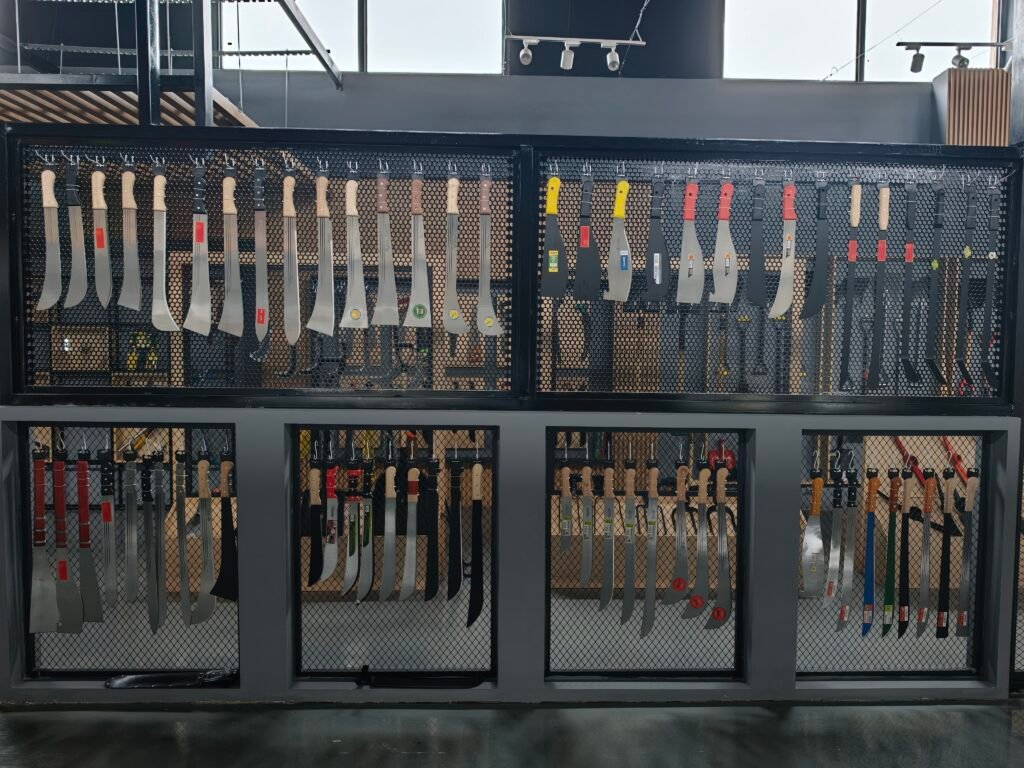
Define the Blade as a Finished Product
Specify blade length and overall length separately. State the measurement start and end points to avoid mismatched quotations.
Define width at the base, middle, and widest forward section. Attach a scaled outline if shape is essential.
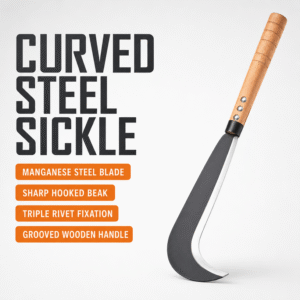
Describe tip profile, edge position, and whether any upper curve or hook is sharpened. A picture alone may not answer this.
Include blade thickness at agreed locations if that is part of the buyer’s acceptance criteria.
State the required finished weight or range when local workers care about balance. Ask suppliers to quote assembled tools.
Describe the handle material, profile, size, fastening, and surface finish. Handle changes can make an otherwise familiar blade unacceptable.
Identify the proposed steel designation where required, but do not invent a grade or hardness merely to make the RFQ look detailed.
If a formal test is required, state method, test location, and acceptance range. Ask for supporting records that relate to the quoted model.
Specify whether factory sharpening is complete, protective oil or coating is applied, and a sheath or edge guard is included.
State packing and carton requirements. A bare tool and a retail-ready unit are different products for pricing purposes.
Request a Wholesale Quote:Whatsapp : (+86 13383021196) E-mail : gemlight@ganzhedao.com
Make Quote Differences Visible
Assign an RFQ item code to the required model. Use that code on drawings, photographs, and the supplier response sheet.
Ask each supplier to quote the exact requirement first. Put any suggested panga or generic machete alternative on its own line.
Require a deviation list: profile, dimensions, handle, material, edge condition, packaging, or sample availability.
This lets buyers compare like-for-like prices. Otherwise a low quotation may omit sharpening, protection, or a specified handle.
If the buyer permits alternatives, say how approvals will be obtained. If alternatives are prohibited, state that clearly.
Do not let a supplier describe a substitute as “same cutlass” without a comparison against the approved profile.
For tenders, follow the issuer’s written rules on equivalents, samples, and documents. An informal verbal acceptance may not be sufficient.
Agree on timing for questions and sample submissions. Ambiguities identified after bulk production are much more expensive to resolve.
Add a response column for “complies,” “deviates,” or “not quoted.” This makes unanswered specification points visible during evaluation.
If units are mixed between metric and imperial catalogs, demand one agreed measurement system in the final quotation.
Ask for separate unit pricing when the guard, sharpening, or retail packing is optional. Otherwise evaluators may compare different finished products.
Ask suppliers to identify the delivered SKU and any revision so sample, invoice, and inspection report can point to the same model.
Connect the RFQ to Production and Inspection
Request a finished preproduction sample representing the quoted configuration. Record the approved sample identifier and drawing revision.
State the number of units to inspect and which dimensions or features the inspection will cover, according to the buyer’s plan.
Do not call a photo an approval sample if the physical grip or edge finish matters. Obtain an actual tool for evaluation where possible.
Before production, confirm the description that will appear on the purchase order and cartons. Keep the technical item code unchanged.
A buyer may prefer “farm cutlass” on shelf labels and “agricultural machete” in supplier files. That can work if the model code stays consistent.
Any change to profile, handle, or packing needs written agreement before manufacture. Regional names should not hide a revision.
Review the first production units against the approved sample. A correct RFQ does not replace production checks.
For repeat orders, check whether the current tool still matches the original reference. A familiar item name can survive unnoticed design drift.
The strongest RFQ makes it easy for supplier, distributor, and inspector to identify one finished blade without debating terminology.
Share a local cutlass reference with your inquiry. We can quote the defined tool and list any alternative openly.
Request a Wholesale Quote:Whatsapp : (+86 13383021196) E-mail : gemlight@ganzhedao.com