How Can Buyers Compare a Cutlass with a Specified Machete Pattern?
A buyer owns a familiar farm cutlass. A supplier proposes a named machete pattern instead. Is it a match, a substitute, or a different tool?
Compare two defined products, not two labels. Keep the local cutlass as the reference and inspect the proposed finished machete against it.
The aim is a decision a wholesaler can explain to workers and put into a purchase order without changing the requested tool by accident.
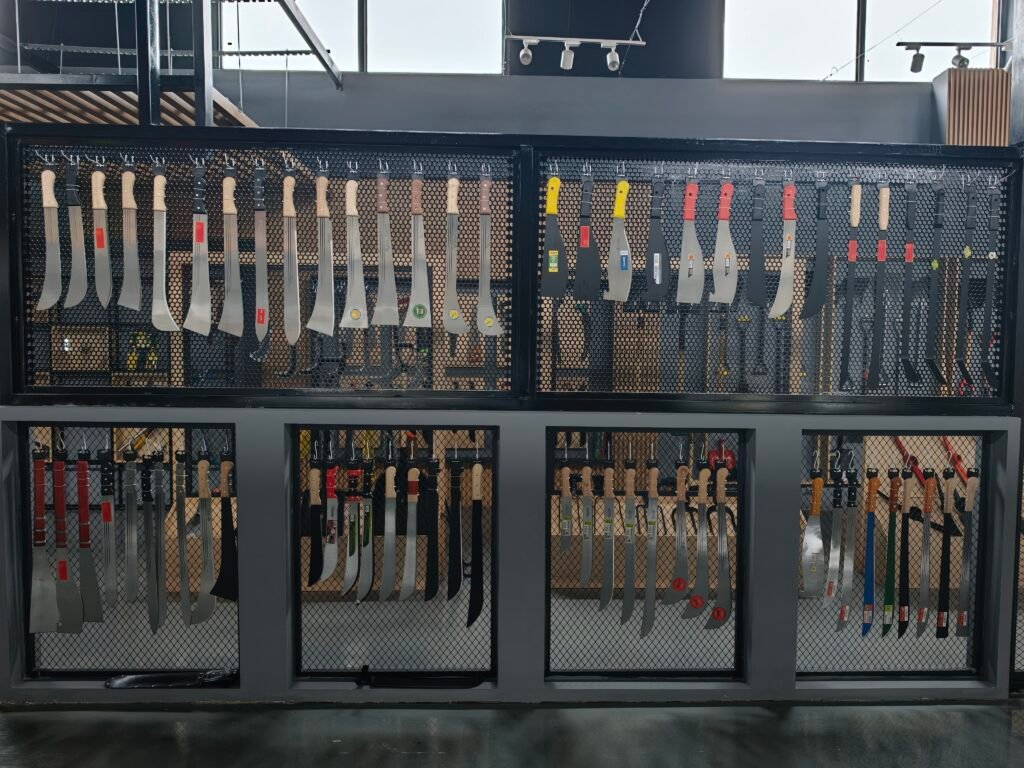
Turn the Existing Cutlass Into a Reference
Start with a current blade accepted by local users. Photograph it from above and from the side against a ruler.
Record the jobs it does well and the complaints buyers want to solve. That tells suppliers whether similarity or improvement matters more.
Measure blade length and overall length separately. Write where each measurement begins and ends.
Mark the blade width near the handle, center, and broadest section. Include thickness at agreed points when it matters.
Describe the tip, edge start, edge condition, and any sharpened curve. These features can distinguish two otherwise similar outlines.
Record finished tool weight and handle details. Workers feel a whole tool, not a disconnected blade silhouette.
If the reference is worn or repeatedly sharpened, note that fact. A used blade may no longer have its original edge profile.
Ask the local distributor whether this sample represents the normal market model. One unusual cutlass should not define a region’s entire demand.
Give the reference its own identifier and retain it. Otherwise later comparisons may quietly switch to a different sample.
Request a Wholesale Quote:Whatsapp : (+86 13383021196) E-mail : gemlight@ganzhedao.com
Describe the Proposed Machete Pattern Precisely
Request an actual finished sample of the supplier’s named pattern. A catalog illustration may show a different size or handle.
Ask for matching measurement points. Comparing one supplier’s blade length against another’s total length creates a false difference.
Overlay scaled outlines or compare full-size paper templates if photographs are insufficient. Match the handle-to-blade junction before judging the tip.
Check whether the proposed blade is straighter, broader at the front, longer, or differently curved than the reference cutlass.
Feel the balance with the handle attached. Identical total weight does not mean identical distribution along the tool.
Compare grip length, handle contour, fastening, and surface finish. A replacement should not ignore workers’ established hold.
Ask whether the delivered edge is sharpened and which section is usable. An unfinished sample can make a fair handling comparison impossible.
Record material designation, finish, sheath or guard, and packing separately. Differences in these do not automatically mean the blade pattern differs.
Make a simple difference list: same, different, or not yet known. Unknown points need answers before claiming equivalence.
Test Against the Work, Not Just the Drawing
Select representative work: tall grass, ordinary brush, or crop-related cutting, depending on what the local cutlass actually does.
Let the intended workers compare both finished tools using normal safety procedures. Do not assume a named pattern performs better everywhere.
Ask which tool gives better control in tight spaces and which feels easier during repeated strokes.
Record whether either blade sticks, needs resharpening sooner, or feels tiring. Avoid treating a brief informal trial as a guarantee.
Inspect blade edges and handle joints afterward. Note any unexpected impacts that might skew the comparison.
If the machete performs differently but better at the target task, it may be a viable alternative. It is still not the same pattern.
If a tender demands an exact profile, better field performance alone may not authorize substitution. Follow the buyer’s stated approval process.
Where several users disagree, test a small additional sample set. A tool popular with one operator might not satisfy a workforce.
Keep the accepted sample and test notes with the purchasing file. They explain why a substitution was approved or rejected.
Request a Wholesale Quote:Whatsapp : (+86 13383021196) E-mail : gemlight@ganzhedao.com
Decide Whether to Match, Substitute, or Stock Both
Choose an exact match when local retail demand or tender specifications require a familiar outline. Label the approved model clearly.
Consider a documented substitute when the end buyer accepts differences in shape and handling for the intended use.
Stock both when they solve different jobs or serve distinct customer preferences. Avoid assigning one code to both products.
Compare like-for-like finished prices. Include sharpening, handle, guard, individual packing, and any agreed inspection costs.
Ask whether the substitute needs new shelf labels or user instructions. The cost of changing a familiar product extends beyond the unit price.
Check stock already in the distributor’s warehouse. Mixing two profiles in one unlabeled carton can create returns even when both are acceptable.
For planned repeat orders, agree on advance notice of profile revisions. The first approved substitute should remain identifiable after launch.
An attractive unit price does not erase the cost of unsold stock or dissatisfied farm workers after a pattern change.
If the local cutlass name covers several market models, explain which one your comparison addresses. Avoid presenting one test as universal.
Communicate the decision to sales staff and distributors. They need to know whether they are selling a match or an alternative.
Photographs on the website should show the approved version. A later catalog image change can restart the naming confusion.

Write the Decision Into the Purchase Order
For a match, state the accepted cutlass reference, model code, drawing revision, dimensions, handle, edge, and packing.
For an alternative, name both the original requirement and the approved machete pattern. Attach the buyer’s written approval where required.
Keep separate SKU and inspection references if stocking both. A generic “cutlass/machete” order line cannot tell the warehouse which to ship.
Review preproduction samples against the right approved tool. Check production units using the same measurement points.
The useful question is not whether cutlass and machete can be synonyms. It is whether these two finished models meet one buyer’s job.
Send the local cutlass reference and the proposed machete sample with your inquiry. We can compare them against one clear specification.
Request a Wholesale Quote:Whatsapp : (+86 13383021196) E-mail : gemlight@ganzhedao.com