Why Should Buyers Specify Blade Pattern Instead of Relying on “Panga” Alone?
An importer writes “panga” on a request for quotation. Three suppliers offer three different blades. Which one is correct?
There may be no single answer. “Panga” is useful buyer language, but it does not fix dimensions, tip, balance, handle, or edge condition.
The buyer’s solution is not to abandon the local name. Keep it, then describe the physical model the end user expects.
Where Does a Panga-Only Request Break Down?
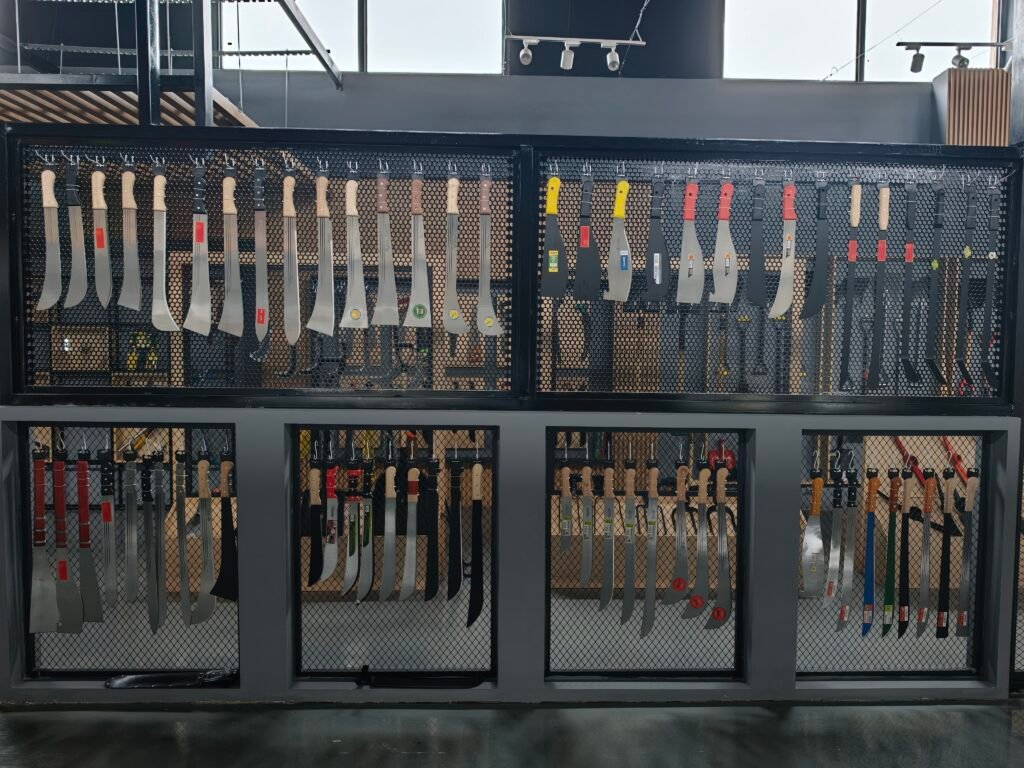
A catalog may show a broad belly and upturned tip. Another supplier may use “panga” for a straighter tool sold in the buyer’s market.
Both descriptions can start a discussion. Neither tells a factory exactly what the importer will accept at delivery.
An RFQ saying “20-inch panga” is still ambiguous. Does 20 inches mean blade length or total length?
The same request may leave the handle material, unit weight, edge finish, and packing open to different assumptions.
A supplier may quote an unsharpened blade while another quotes a finished tool with individual protection. Their unit prices cannot be compared directly.
For tenders, an undefined name can create a worse problem: a bid may satisfy the word yet fail the evaluator’s physical requirement.
On repeat orders, a buyer might receive a new profile under the same name. Without a drawing, the change is hard to challenge.
Local distributors may also disagree about terminology. Ask actual users to show which familiar blade they call a panga.
Treat a name as a lead to the right conversation, not as the end of specification work.
Request a Wholesale Quote:Whatsapp : (+86 13383021196) E-mail : gemlight@ganzhedao.com
Define the Shape in Measurable Terms
Begin with an approved reference sample or a clear, scaled drawing of the entire blade. Include top and side views.
State blade length and overall length separately. Mark the starting and ending points for each measurement.
Record blade width near the handle, at the middle, and near the forward belly or tip. These points reveal profile differences.
Describe the tip shape and whether its upper section is sharpened. Do not infer either detail from a generic panga image.
Measure thickness at agreed locations if it affects acceptance. A single nominal value may not describe the whole blade.
State finished unit weight or a tolerance if local users care about swing feel. Test assembled tools rather than blade blanks.
Describe the main cutting edge, its delivered sharpness, and any portion intentionally left unsharpened.
If the buyer wants a particular balance point, define how it will be measured. “Heavy” and “light” are not reproducible inspection terms.
Use the local sample to check user expectations. A perfect drawing of the wrong local model still makes a poor order.
Specify the Finished Product, Not Just Its Blade
Record handle material, length, shape, fastening, and finish. A familiar blade with an unfamiliar grip may be rejected.
Ask how blades and handles will be joined and checked. A loose handle is not solved by changing the word on the carton.
State the material designation offered and any required test. Do not assume every product sold as a panga uses one steel grade.
If a hardness range matters, agree on method, position, and acceptance criteria. Unsupported figures do not protect the purchase.
Define surface finish, edge protection, individual wrapping, and carton quantity. These details affect retail readiness and landed cost.
Where a sheath is required, test it on the actual sample. Different panga profiles may not fit one generic sheath.
Mark each variation with its own SKU. A wooden handle and a different grip should not be hidden under one vague line.
Ask for a preproduction sample representing the quoted configuration. A sales photograph cannot substitute for a finished approval item.
Check how the proposed packing protects sharpened edges during shipment and warehouse handling.
Request a Wholesale Quote:Whatsapp : (+86 13383021196) E-mail : gemlight@ganzhedao.com
Make Supplier Quotes Comparable
Send every supplier the same specification, reference images, quantity, and intended destination. State the expected finished-unit condition.
Ask each to list deviations openly. A supplier unable to make the exact profile can propose an alternative with a different code.
Compare quotations for the same blade size, handle, edge finish, packaging, and delivery scope. The cheapest headline price may omit work.
Ask whether tooling charges and sample costs are included. A lower unit price may come with separate setup expenses.
Confirm the measurement unit in every quote. A drawing in millimeters and a listing in inches can produce avoidable ordering errors.
If multiple sizes are needed, ask for each size’s weight and carton details. Scaling a picture does not guarantee identical proportions.
Review the actual sample alongside a measurement sheet. Check whether the supplier’s interpretation matches the local buyer’s blade.
Invite representative workers to evaluate handling under safe, relevant farm conditions. Feedback on control may reveal a mismatch drawings cannot show.
Record approved changes in writing. Do not let an email saying “same panga” replace a signed or otherwise accepted specification revision.
Before production, agree on sampling and inspection criteria. Make the drawing and reference sample available to the inspector.
If the destination buyer provides a tender schedule, follow its wording and approval steps. A supplier alternative requires the correct authorization.
What Belongs in the Final Purchase Order?
Use the local name for recognition, followed by model code, approved drawing revision, and the agreed finished-unit specification.
Identify blade dimensions, profile, handle, material declaration, edge condition, finish, packing, quantities, and any inspection plan.
Cross-reference the approved sample so supplier, buyer, and inspector are checking the same physical model.
If an alternative profile was accepted, state it as a documented change rather than silently relabeling it a panga.
The word “panga” helps people find the right category. A precise pattern tells everyone which blade must arrive.
Send a local reference with your inquiry. We can quote a measurable panga profile instead of guessing from a name.
Request a Wholesale Quote:Whatsapp : (+86 13383021196) E-mail : gemlight@ganzhedao.com