How Do You Avoid Mislabeling a Bolo in an Export Catalog?
A supplier adds “bolo” to a product title because the blade looks broad. An importer receives samples and says it is not the local bolo.
Both parties may be sincere. Bolo is a known agricultural blade term, but catalog usage alone does not create a fixed international specification.
Prevent that dispute by matching the label to a visible product profile, a defined model code, and the buyer’s local reference.
Understand What the Word Bolo Can and Cannot Prove
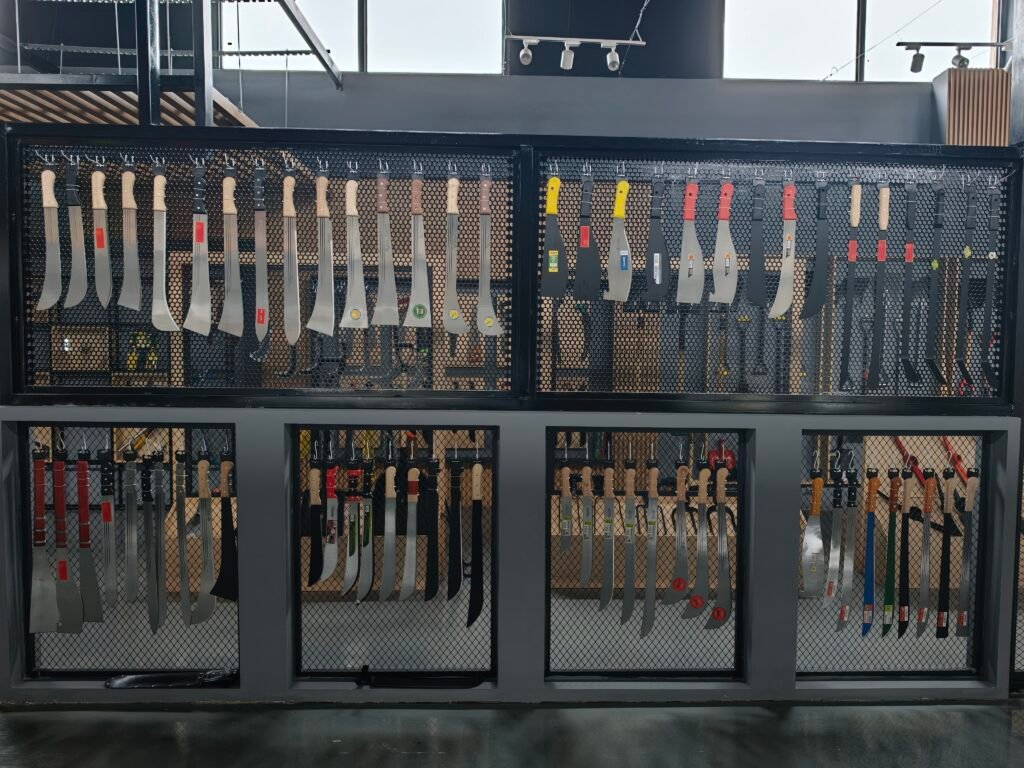
Many retail descriptions associate bolo machetes with a broad front section. That is a starting description, not a promise of exact dimensions.
A product sold as a bolo in one market may not match the blade another market expects under the same name.
Ask your distributor to show a locally accepted example. Record the outline, size, grip, and intended cutting work before naming an export model.
Do not assume every blade with extra width near the tip is a bolo. Some panga or other working patterns also place metal forward.
Avoid announcing a model’s national origin solely from its style name. Design history and actual manufacturing origin are different claims.
If the shape differs from your buyer’s reference, describe it as an alternative rather than quietly using the requested label.
For a new market, use cautious wording such as “bolo-style machete” where appropriate. Show the actual profile beside that wording.
Do not turn the catalog into a taxonomy argument. Buyers want to know whether the sample matches what they can sell or issue.
Request a Wholesale Quote:Whatsapp : (+86 13383021196) E-mail : gemlight@ganzhedao.com
Audit Every Image and Variant Against the Title
Review the hero image, side view, dimensions, and title together. All should describe the same physical SKU.
Photograph the blade from above without a dramatic angle. A curved or widened section can look misleading when shot in perspective.
Include a ruler or dimensioned outline. State blade length separately from overall length so sizes can be compared fairly.
Measure width at the base, midpoint, widest section, and near the tip. Mark those points on the product drawing.
Check thickness and final unit weight on completed tools. Similar silhouettes can produce different handling after assembly.
Show handle shape and fastening. A customer familiar with one bolo handle may reject a very different configuration.
If variants use different profiles, give each a distinct SKU and image. A shared gallery must not imply all sizes have the same outline.
Check the edge status. “Ready to use” and “requires final sharpening” are not equivalent conditions for a retail order.
Avoid using a sample photo supplied by a third party unless it truly depicts the product being quoted and you have permission to use it.
Use a Model Code and Controlled Reference Sample
Create an internal model code tied to one approved drawing. Keep the buyer-facing name as a separate field that can vary by market.
Label the finished sample with that code and revision. Photos in the quotation should carry the same identifier.
If the buyer sends a reference blade, record where the offered product differs. Small changes to the forward bulge may matter to local users.
Define dimensional tolerances at measurable locations before production. A general promise to match the photograph is hard to inspect.
If material or hardness is required, specify how it will be verified. Do not insert an unsupported steel grade to make the page look technical.
Record the handle, edge, finish, sheath or guard, and packing. A correct blade profile can still become a wrong finished retail product.
Keep the approved sample available for preproduction and shipment checks. The catalog page alone is not an inspection plan.
When revising the profile, update code or revision, photographs, and catalog sheet together. Outdated PDFs often keep an old description alive.
For repeat orders, ask whether the tooling or handle supplier changed. Names stay constant even when production details shift.
Request a Wholesale Quote:Whatsapp : (+86 13383021196) E-mail : gemlight@ganzhedao.com
Check the Catalog in a Buyer’s Workflow
Ask a distributor to find the model using the local name. Observe whether the displayed product answers their actual request.
Then ask them to compare it with the local reference without seeing the catalog title. This helps expose a misleading name.
Review the product card and downloadable PDF as a wholesaler would: Can they identify one code, one shape, and one packed unit?
If different pages describe the same SKU as bolo, panga, and generic machete, explain the regional terms rather than presenting three physical products.
If there are three products, give three sets of photos and measurements. A buyer should not discover the differences only after requesting samples.
Avoid unsupported claims such as “traditional” or “universal.” Describe what the blade actually looks like and how the buyer should evaluate it.
Check packaging and carton marks against the current model. The buyer must be able to connect the website listing to the delivered units.
Log recurring questions from importers. Confusion about tip shape or blade width signals that the catalog needs a clearer image or measurement.
Check translated captions against the English model sheet. A shortened local title should never hide a change in blade profile.
Ask sales staff to flag inquiries where the buyer says “not this bolo.” Collect the reference images that reveal the mismatch.
What Should an Exporter Send With a Bolo Quote?
Provide the exact model code, dimensioned profile, photographs of the finished sample, material declaration, handle details, and edge condition.
List the quoted size options individually, including finished weight and packing. Note deviations from any buyer-supplied reference.
Invite a sample comparison under local working conditions before committing to a large order. Local acceptance is stronger than a label.
Use the word “bolo” to help buyers find a real model, not to hide uncertainty about what the factory will make.
Send your market’s accepted bolo photo or blade sample with an inquiry. We can compare it against a defined profile before quotation.
Request a Wholesale Quote:Whatsapp : (+86 13383021196) E-mail : gemlight@ganzhedao.com