A buyer in East Africa asks for pangas. A supplier replies with a machete catalog. Is that the same product, or a misunderstanding?
The short answer: a panga can be treated as a machete-type agricultural cutting tool in many catalogs. Yet “panga” is not a reliable specification.
For procurement, these words overlap without making every machete interchangeable. The customer’s familiar panga pattern, not your catalog category, defines the order.
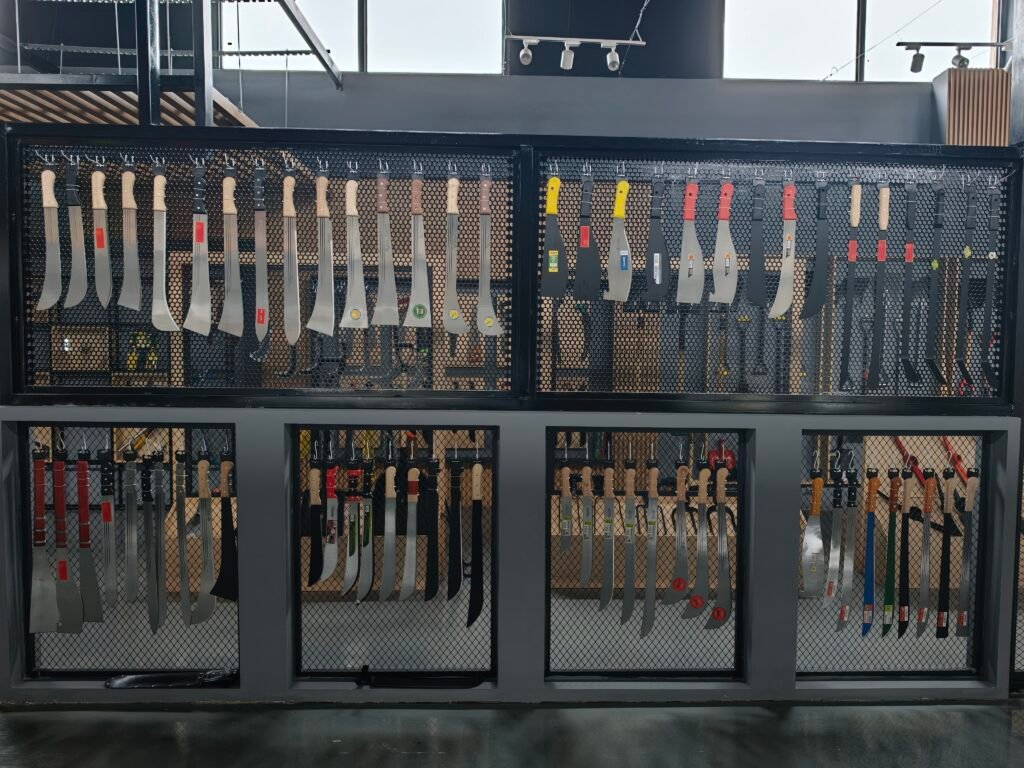
Where the Two Names Overlap
Panga is an established name for a broad cutting knife associated with East Africa. Dictionaries also connect the term with the machete family.
That explains why a supplier may place pangas under “machetes” on an export site. Broad categories help organize products for international buyers.
At the market level, however, “panga” may carry stronger expectations. Buyers can expect a particular silhouette, handling feel, or locally familiar size.
Those expectations are not universal. One distributor’s panga may differ from another’s, even in the same country.
There is no need to force a rigid either-or answer. It is practical to call panga a regional product name within the broader machete category.
For stock control, a trader may still keep panga as its own category. That is a merchandising decision, not proof of a universal blade standard.
The risk arises when a supplier hears “machete” and offers any long blade. A technically related tool can still be commercially wrong.
Request a Wholesale Quote:Whatsapp : (+86 13383021196) E-mail : gemlight@ganzhedao.com
Why a Generic Machete May Not Match a Panga Order
Look first at the outline. Some panga-style products have a broader working section or distinctive tip. Others are closer to straight clearing blades.
Compare the cutting edge, tip, and spine on full-length images. A product photograph cropped at the tip can hide a decisive difference.
Then compare length and width. Two tools listed at the same nominal size may measure differently if one seller counts blade length and another counts overall length.
Weight distribution matters as much as total weight. A broader far end can feel different during chopping, even when the product weights match.
Look at the handle, too. Shape, grip length, surface finish, and fastening method affect control and user acceptance.
Avoid saying every panga has a hook or the same blade curve. The name alone cannot support that claim.
Even the intended job can vary. A customer may need brush clearing, crop work, or general farm maintenance. Ask before suggesting a replacement.
The selling price of two products can reflect different materials, finishing, and packing. Compare equivalent specifications before concluding one quote is cheaper.
How Should an Importer Compare Samples?
Ask the customer for an approved local sample, not just a name. A used example can reveal the pattern people actually buy.
Measure blade length from the handle to the tip and record the method. Also measure overall length and the widest blade point.
Photograph both faces and the side profile against a ruler. Document the tip shape, edge line, handle joint, and any markings.
Note the tool’s unit weight. If possible, let end users handle both the local sample and the proposed import sample side by side.
Check fit for the customer’s real work. Cutting feel and grip preference are harder to infer from photographs than from a field trial.
Request stated material and production details from the supplier. If hardness or thickness is required, ask how each value will be verified.
Confirm finishing and packing. A sample that looks right can still arrive with inconsistent edges, exposed blades, or a different handle finish.
For a tender, map each requirement to an evidence item. Use the written specification first, then the reference sample where the document allows it.
If the buyer permits alternatives, submit one clearly labeled alternative. Do not replace the requested panga pattern without approval.
Request a Wholesale Quote:Whatsapp : (+86 13383021196) E-mail : gemlight@ganzhedao.com
How to Write a Clear Panga Purchase Order
Start with the local sales name: “panga.” Add a model identifier so both sides can track the exact variant.
Follow with a drawing or approved sample number. State blade length, overall length, width, thickness, edge type, and target unit weight.
Describe the handle and joint. If a certain finish or sheath is needed, state whether it is included in the quoted unit price.
Define acceptable manufacturing variation rather than relying on “standard quality.” Agree how samples and bulk goods will be checked.
Ask the supplier to flag every deviation before accepting the order. Silence should never be interpreted as approval of a substitution.
Your catalog can use both terms, such as “panga machete,” if local buyers use them. The description should still show the actual pattern.
Avoid promising that one model meets every East African market’s preference. Local wholesalers can confirm what their customers recognize.
A short supplier request might say: “Please quote pangas matching the attached sample. State all size, handle, and blade-profile differences in your offer.”
That sentence prevents a common mistake: asking a broad question and receiving a broad answer. It also makes competing quotes easier to evaluate.
Which Category Should a Trader Use?
If your website serves international buyers, use machete as the broad navigation category and panga as a precise subcategory or product term.
If your local customers search only for panga, lead with their language. Add the broader term naturally where it helps them understand the tool.
Do not create separate listings for identical goods merely by changing synonyms. Make each page useful through a real difference in pattern or purpose.
A category name helps people discover the product. A photograph, measurement sheet, and approved sample help them buy the right one.
So, is a panga a machete? Often yes in broad trade language. Is it safe to ship any machete against a panga order? No.
Send your destination market, local reference sample, and target use when requesting a quote. We can then discuss the specified panga pattern rather than assuming one.
Request a Wholesale Quote:Whatsapp : (+86 13383021196) E-mail : gemlight@ganzhedao.com