An importer searches for cutlasses and finds both farm tools and historical swords. That is a language problem with a practical sourcing cost.
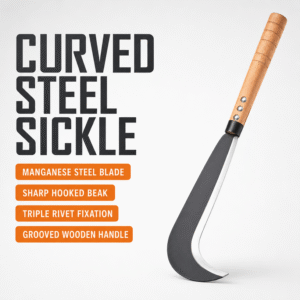
In some agricultural markets, “cutlass” means a hand-held vegetation-cutting tool similar to what other buyers call a machete. Elsewhere, the word suggests something else.
For farm-tool orders, the buyer’s market and blade specification matter more than a dictionary label. Clarify the intended product before requesting prices.
Why Does “Cutlass” Cause Confusion?
In general English, cutlass often refers to a short sword associated with sailors. Search results can therefore mix agricultural tools with unrelated products.
In parts of the English-speaking Caribbean, cutlass can name an everyday agricultural blade. Some African buyers also use cutlass for farm-clearing tools.
These uses are not contradictory. Words travel across trades and regions, while suppliers group products for their own catalogs.
Do not assume every country within a region uses the term equally. Customers, importers, and tender writers may prefer different words.
Also do not assume a “cutlass” order means one exact outline. A supplier might offer several blade patterns under that label.
For search and catalog work, explain that your page concerns farm tools. That qualification filters out readers seeking decorative or historical blades.
For purchase orders, replace ambiguity with measurements and an approved reference. A product name can remain on the document, but it should not stand alone.
Request a Wholesale Quote:Whatsapp : (+86 13383021196) E-mail : gemlight@ganzhedao.com
What Does a Farm Buyer Usually Need to Know?
Ask what vegetation workers cut. Light grass, dense brush, and crop stalks place different demands on a cutting blade.
Find out whether users need long reach, controlled cuts, or stronger chopping action. One blade cannot be assumed best for all three.
Ask which cutlass workers currently buy and what they dislike about it. Their answer can reveal a handle problem rather than a blade-shape problem.
A distributor may care about familiar shelf appearance. An institutional buyer may care more about measurable compliance with tender requirements.
Both groups need clear delivery expectations. Packaging, protective covers, surface finish, and labeling can affect acceptance even if the blades are correct.
Ask whether the local label must say “cutlass.” Packaging can use local terminology while the internal product code keeps the specification stable.
Never rely on a front-facing picture alone. It cannot reliably show thickness, handle fastening, or side curvature.
An existing sample is useful, but record its dimensions. Used tools may be worn down, sharpened repeatedly, or fitted with replacement handles.

How Can Importers Compare Cutlass Offers?
Give each supplier the same measurement sheet. Record blade length, overall length, maximum width, thickness, tip shape, and edge placement.
Include a full-size outline or scaled drawing if the pattern matters. Mark measurement points so different factories use the same method.
State the handle material and attachment method. A blade quotation that omits handle details may not be comparable to a complete-tool quote.
Request the quoted unit weight and a physical sample. Compare handling with a familiar local tool before ordering bulk quantities.
Ask the supplier to identify the steel grade and finish actually offered. Broad phrases like “premium steel” are not verifiable specifications.
If your tender names hardness, request the test method and acceptance range. Do not assume a sales claim proves that the delivered batch complies.
Request photographs of the sample’s front, side, tip, and handle joint. Use these to check that later samples match what you approved.
Separate required features from preferences. If substitutions are permitted, list them as alternate offers rather than quietly changing the base quotation.
Confirm edge condition and packaging before shipment. A quote for unsharpened bulk blades is not equivalent to one for finished, protected tools.
Request a Wholesale Quote:Whatsapp : (+86 13383021196) E-mail : gemlight@ganzhedao.com
How Should a Supplier Describe a Farm Cutlass Online?
Lead with the term your target buyers use, then explain the agricultural job. “Farm cutlass for brush clearing” is clearer than “cutlass” alone.
Show full-length photographs against a neutral background, plus a handle close-up and dimensions. Give the reader enough information to reject a mismatch.
Use regional names cautiously. “Also called a machete in some catalogs” can help, but it should not erase the product’s local identity.
Avoid one page that repeatedly lists cutlass, panga, bolo, and cane knife as if all were identical. Each term may point to a different buyer need.
If you sell several cutlass patterns, give each a distinct model code and practical use description. This helps traders select a range.
Do not claim your product fits every country without local validation. Buyer language is evidence to collect, not a universal rule to announce.
A helpful product page answers: What is it for? What are its dimensions? How is the handle fixed? What arrives in the carton?
When you publish a blog, explain the word’s regional ambiguity first. Then give buyers a checklist they can use in a real supplier inquiry.
What Should a Tender Bidder Put in Writing?
Copy the tender’s official wording, including “cutlass,” into your compliance response. Then identify the precise model and reference drawing.
Show each required dimension, material, finish, and package item alongside supporting evidence. Record exceptions explicitly if the tender permits them.
If a requirement is vague, ask the issuing organization for clarification through its official process. Do not make an unapproved interpretation silently.
Check whether the sample, written specification, or both control acceptance. The document’s rules determine which reference takes priority.
Before quoting, confirm the supplier can reproduce the approved sample consistently. A one-off sample does not by itself prove repeatable bulk output.
The practical answer is simple: “cutlass” can be an agricultural name, but it is not a complete global product standard.
If you source cutlasses for a named market, send the local reference photo, required use, and tender document. We can discuss a matching specification before quotation.
Request a Wholesale Quote:Whatsapp : (+86 13383021196) E-mail : gemlight@ganzhedao.com