A quotation says “bolo machete,” but the photograph shows a straight blade. Another supplier offers a broad-tipped model under the same name.
Which one belongs in your order? Start with the actual outline and intended work, not the word printed above the photograph.
Bolo is a term associated with Philippine cutting tools. Export catalogs also use “bolo pattern” for certain machetes, but that label does not guarantee one standard shape.
What Makes a Bolo Pattern Recognizable?
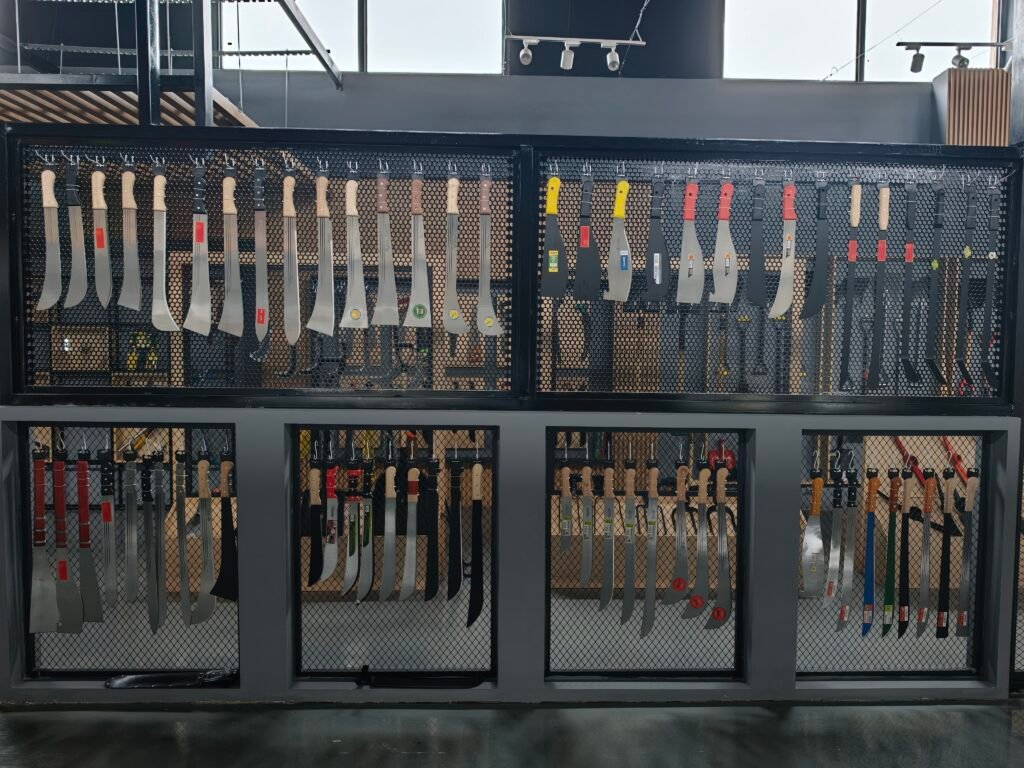
In many commercial descriptions, a bolo-style blade becomes broader toward the working end. That extra area can shift more of the weight forward.
This can suit stronger chopping strokes. It does not mean every forward-heavy blade is a bolo, or every traditional bolo shares one silhouette.
Philippine bolo traditions include varied forms. Treat a market’s requested pattern as a specific product, not as a single universal cultural design.
Compare the blade’s width near the handle with its width farther forward. Note where the profile expands and how the edge approaches the tip.
Then look at the spine and tip. A small change in either can alter both appearance and how the tool reaches into vegetation.
A straight, evenly narrow blade may be sold under a general machete category. A bolo-style option may be shorter and broader at the far end.
These are useful comparison clues, not pass-fail rules. The approved sample and agreed measurements should settle the order.
A label on a marketplace listing is only a claim. Clear front and side views let importers evaluate what is actually offered.
Do not compare drawings at different scales by eye. Ask for the same measurement points on both profiles, or print the outlines at actual size.
If a customer says only “bolo,” ask for a reference before recommending stock. A local distributor may be describing a familiar retail shape rather than every tool sharing that name.
Request a Wholesale Quote:Whatsapp : (+86 13383021196) E-mail : gemlight@ganzhedao.com
How Does It Compare With Other Farm Blades?
A long, relatively narrow clearing blade may favor reach and repeated swings through lighter growth. Its shape and balance differ from many bolo-style offers.
A cane knife focuses on harvesting stalks. Some versions use a hook, while others use broad straight or curved blades.
A panga is often discussed as an East African cutting tool. Its name alone cannot tell you whether its profile matches your target bolo.
Cutlass can be a regional agricultural name. It also does not specify a single balance or blade outline.
Avoid a simple ranking such as “bolo is stronger than machete.” Performance depends on the specific steel, heat treatment, geometry, and task.
Nor does a wider tip automatically make a tool better. It may improve one chopping task while feeling less suitable for controlled, repeated cuts.
If workers already use a preferred tool, compare proposed blades against that tool’s job. The best catalog description is not a field test.
A photograph from a distant angle can distort width. Request a flat, full-length view with a ruler before comparing patterns.
Which Measurements Matter for a Bolo Order?
Record blade length from the handle junction to the tip and overall length separately. Do not let a nominal size replace measured dimensions.
Measure width near the base, at the widest point, and close to the tip. State where those measurements are taken on your drawing.
Include thickness, edge line, and tip contour. Front views alone may hide blade taper or a raised section of the profile.
Record unit weight and, if important, balance position. Two similar outlines can feel different when handle and blade thickness change.
Identify steel grade, surface finish, and edge condition in the specification. A convincing silhouette cannot tell you whether those items match.
Inspect the handle’s grip shape and fastening. A buyer may accept a familiar blade outline but reject an uncomfortable handle.
If sheaths or edge protectors are required, list them separately. Suppliers may otherwise quote only the bare tool.
For tender bids, show the requested measurements next to the offered values. Flag any change in pattern as a proposed deviation.
Ask how batch inspection will compare the finished tools with the approved sample. A single photo cannot verify production consistency.
Request a Wholesale Quote:Whatsapp : (+86 13383021196) E-mail : gemlight@ganzhedao.com
How Can You Confirm the Pattern Before Bulk Production?
Send one reference drawing or a physical sample to every shortlisted supplier. Consistent input makes their quotations genuinely comparable.
Ask them to return marked drawings showing every difference. This can reveal a changed tip or shorter handle before sample making begins.
Approve a finished sample, not just an unhandled blank. Grip, finish, and total weight matter to the end user.
If possible, let the intended workers try the sample on the target vegetation. Ask whether chopping, control, and fatigue feel acceptable.
Record feedback clearly. “Feels wrong” is useful as a warning, but “handle too short for gloves” is easier to correct.
Freeze the final drawing and sample identifier before placing the bulk order. Specify how future changes must be approved.
Do not accept an unannounced switch between bolo-like and straight patterns because both appear under “machetes” in a catalog.
Your own website can clarify the distinction by showing side-by-side outlines of products you actually sell, with measurements and use cases.
Avoid posting a generic diagram as proof that all bolos are identical. Show model-specific information and explain which comparison it supports.
The sourcing rule is straightforward: “bolo” is a useful search term, but the approved profile is the purchasing instruction.
For a quote, send your bolo reference image or drawing, destination market, and intended crop or clearing task. We can discuss a matching sample.
Request a Wholesale Quote:Whatsapp : (+86 13383021196) E-mail : gemlight@ganzhedao.com