Quick Answer
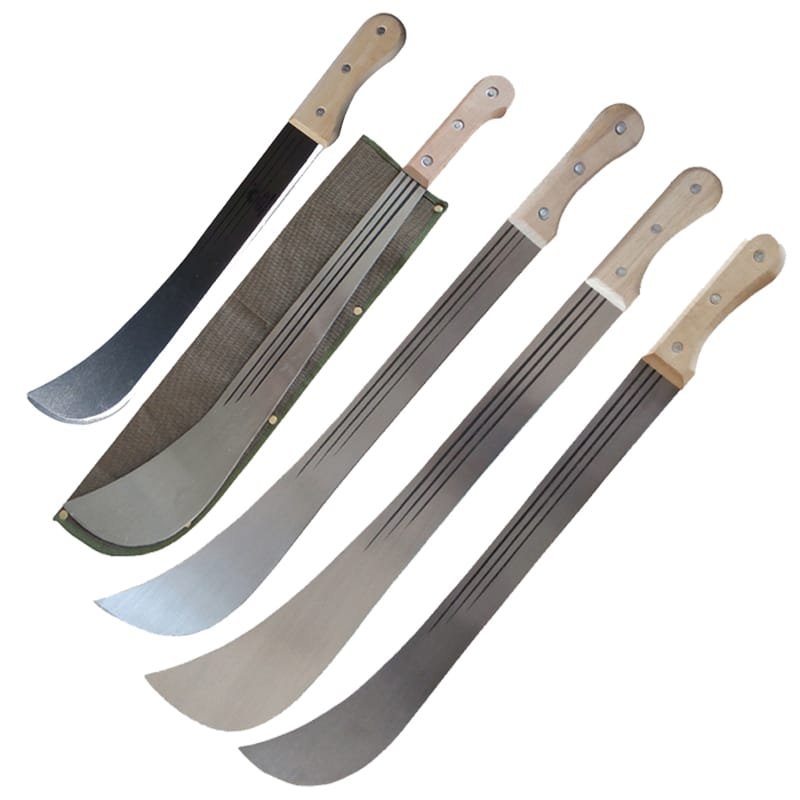
Compare farm machete handles as finished assemblies, not material labels alone. Test wood and molded or covered grips for shape, texture, joint stability, weight and control in the local working conditions. Inspect multiple production-intent units and compare repair and packing needs. Approve a separate model code for each accepted version, then check carton samples against the retained tool.
Key Takeaways
- Handle shape and attachment can change the feel even when the blade profile is unchanged.
- A finished wooden handle is not automatically subject to the rules for wooden shipping pallets.
- One showroom sample cannot establish production consistency across a lot.
How Do Wood and Molded Handles Feel in Local Work?
Ask whether workers cut with wet hands, gloves or changing grips. Compare handle length, cross-section and texture on completed tools.
Wood may be familiar, but species, drying, grain and finish vary. Molded plastic also varies in formulation, texture and molding quality. Covered or composite grips need their own cost and attachment check.
Observe slippage and pressure points during representative work; record the task and how long a worker used each sample. Compare assembled weight and balance as well as first impressions.
Request a Wholesale Quote:Whatsapp : (+86 13383021196) E-mail : gemlight@ganzhedao.com
What Should Buyers Inspect at the Handle Joint?
On riveted wood, examine fit, rivets, splinters and exposed sharp edges. On molded versions, examine how the grip holds the tang and whether any flash, cracks or gaps occur.
Inspect multiple units after ordinary use. Ask whether local replacement handles or complete replacement tools are available; repair expectations vary by channel.
| Option | Needs verification | Buyer action |
|---|---|---|
| Wood | Species, source, drying, grain, rivets and finish | Inspect multiple assembled units and local feel. |
| Molded plastic | Tang grip, texture, defects and dimensional consistency | Trial production-intent samples. |
| Covered/composite grip | Layer attachment, cleaning and cost | Assess channel demand and replacement needs. |

How Do Packing, Storage and Import Needs Change the Decision?
Confirm handles are clean and dry before packing. Check whether guards rub the grip or trap moisture at the steel joint during transport.
For wood, obtain declared material and origin where relevant and check the actual destination’s product rules. Do not transfer wood-packaging rules to a finished handle without checking scope.
Ask separately about wooden pallets or crates; those packaging materials may face different controls. Compare landed cost, warehouse damage and customer maintenance.
Request a Wholesale Quote:Whatsapp : (+86 13383021196) E-mail : gemlight@ganzhedao.com
How Should Buyers Specify the Approved Handle?
RFQ checklist:
- Handle material and origin: identify the offered version and relevant import checks.
- Dimensions, profile and texture: reproduce the locally accepted grip.
- Attachment and defect criteria: control loose joints, cracks or splinters.
- Complete-tool weight and balance: compare meaningful finished samples.
- Finish, guard and packing: prevent storage and shipment damage.
- Model code and substitution notice: stop unapproved handle changes in repeat orders.
Request matched samples with the same blade and edge wherever feasible.
Buyer FAQ
Is wood always a better farm grip?
No. Compare species and finish with the exact molded alternative in local conditions.
Do ISPM 15 pallet rules automatically apply to a finished handle?
No. Check product and wood-packaging requirements separately for the destination.
Can a material swap keep the same SKU?
Only if the buyer explicitly approves the revised finished tool and identification.
Request a Wholesale Quote:Whatsapp : (+86 13383021196) E-mail : gemlight@ganzhedao.com