Quick Answer
A machete hardness claim is useful only when it names the finished model, valid test scale and location, actual readings, sample selection and production lot. Ask how thin or curved blade surfaces were prepared and supported. Match reports to shipped cartons and compare them with an agreed acceptance range. Hardness alone neither proves steel grade nor guarantees cutting performance.
Key Takeaways
- A single HRC figure without test location and blade identity cannot support lot acceptance.
- Thin sharpened edges may be unsuitable for direct Rockwell indentation.
- Material chemistry and finished hardness answer different verification questions.
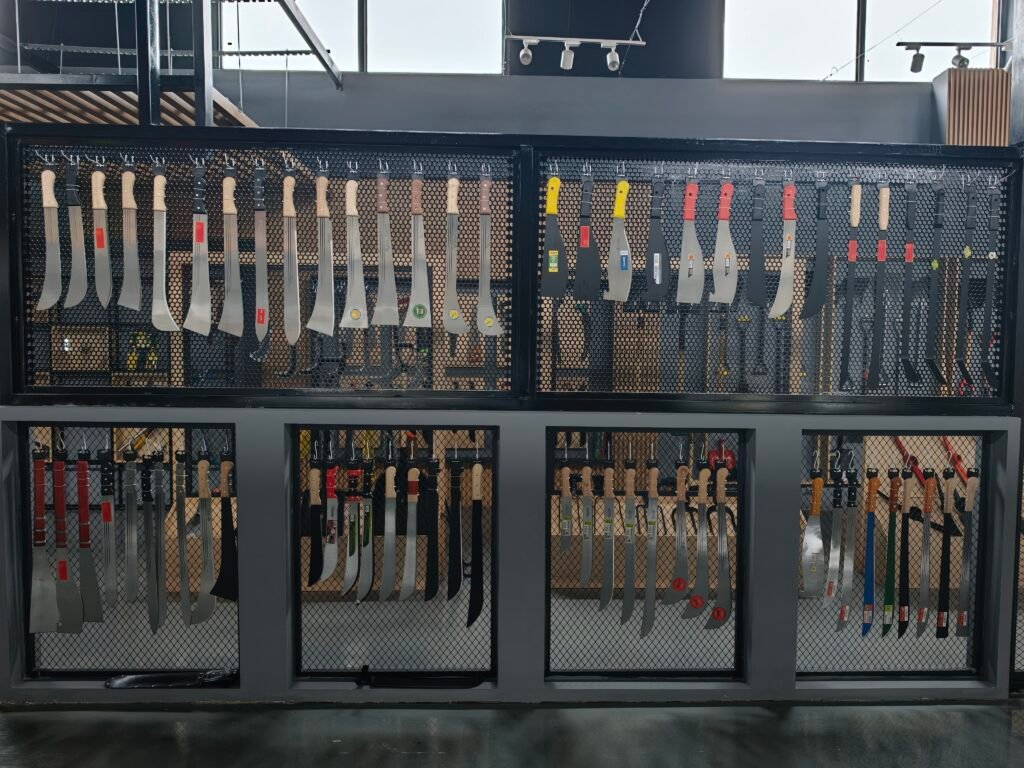
What Makes a Quoted Hardness Claim Unsupported?
“High hardness” has no scale, range or sample identity. Even a single number such as “50 HRC” says little without stating where, when and how the finished blade was tested.
A photo of a tester, certificate for another model or steel-chemistry sheet does not prove the hardness of the quoted lot. Ask whether results refer to incoming stock, a special sample or normal production.
Do not invent a universal ideal HRC value. Start with the approved tool and any contractual range, then define valid comparison conditions.
Request a Wholesale Quote:Whatsapp : (+86 13383021196) E-mail : gemlight@ganzhedao.com
Does the Test Method Fit the Blade?
Request scale, procedure, surface preparation, exact test zone and support method. Buehler’s Rockwell guidance explains why thickness, support, surface condition and test position affect validity.
A thin sharpened edge may not sustain a meaningful direct indentation. Ask a qualified laboratory for an appropriate nearby zone or alternative validated method instead of demanding a convenient number.
Specify multiple readings and how outliers or failures will be reviewed. Preserve the individual results rather than only a pass stamp.
| Claim or record | Needs verification | Buyer action |
|---|---|---|
| “High hardness” | Scale, range and test zone absent | Request a measurable specification. |
| One HRC reading | Blade thickness, support and location | Obtain valid method and repeated readings. |
| Supplier certificate | Model, sample and lot linkage | Match records to cartons. |
| Material sheet | Whether it reports chemistry or finished hardness | Keep grade and hardness evidence separate. |

How Should Results Represent the Shipped Lot?
Define the lot by model, steel source and heat-treatment batch where practical. Agree who selects samples from actual production cartons.
If the shipment includes multiple process batches, request matching reports for each represented batch. Record test locations on a drawing and preserve readings with carton identifiers.
Plan how to handle conflicting readings or a process change before shipment. Field chips or bending can prompt investigation, but do not alone diagnose heat treatment.
Request a Wholesale Quote:Whatsapp : (+86 13383021196) E-mail : gemlight@ganzhedao.com
What Belongs in a Supportable Hardness RFQ?
RFQ checklist:
- Model and contracted range: anchor the claim to an approved finished tool.
- Test scale and method: ensure the measurement is technically valid.
- Location and preparation: enable repeatable results on the blade.
- Sample count and selection: define what each batch result represents.
- Original readings and traceability: connect reports to production cartons.
- Failure and retest rules: avoid ad hoc acceptance after delivery.
Request a representative sample report before awarding high-risk volume.
Buyer FAQ
Does a higher HRC always mean a better machete?
No. Edge geometry, task and resistance to damage also matter.
Does hardness prove the steel grade?
No. Grade verification needs suitable composition evidence and traceability.
Should the cutting tip be tested directly?
Only if a qualified method suits its thickness, support and test location.
Request a Wholesale Quote:Whatsapp : (+86 13383021196) E-mail : gemlight@ganzhedao.com