Quick Answer
Choose a factory-sharpened machete when the channel expects a ready-to-use tool and the maker can reproduce its approved edge safely. An unfinished blade can suit distributors that reliably sharpen locally. Define exactly which bevel, edge areas, guards and protective finish are delivered. Compare local labor and rejects with factory cost, then assign separate SKUs and carton labels to each condition.
Key Takeaways
- “Unsharpened” does not say whether a primary bevel is already ground.
- A factory-finished edge may require a different guard and handling method.
- Local grinding cost and rejects must be included when comparing unfinished blades.
What Do Factory-Sharpened and Unfinished Actually Mean?
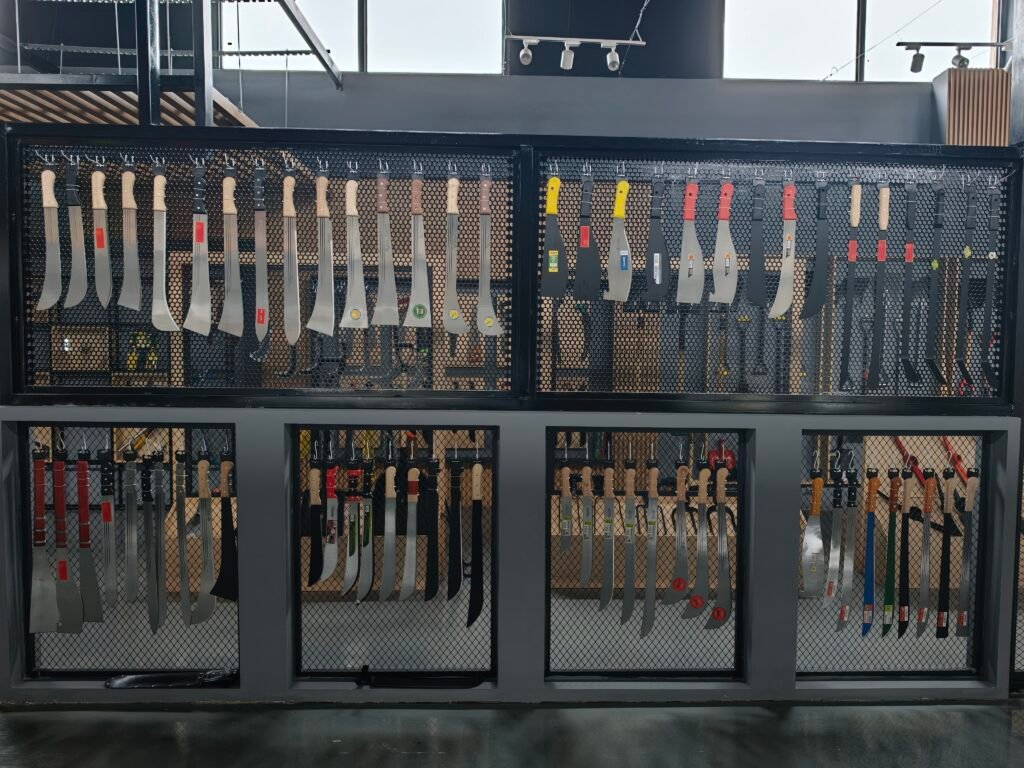
For a sharpened version, mark the working-edge start and end and state whether tip, belly or hook is finished. Agree on bevel, burr and grind-mark acceptance with a retained sample.
For an unfinished version, state whether the factory still makes a primary bevel, leaves a rough grind or supplies an unprepared edge. Replace “semi-sharpened” with a sample and drawing.
Ask whether coating or protective oil covers the final edge. Catalog photographs cannot prove delivered sharpness.
Request a Wholesale Quote:Whatsapp : (+86 13383021196) E-mail : gemlight@ganzhedao.com
Which Delivery Condition Fits the Sales Channel?
A retail customer may expect use immediately after unpacking. A farm distributor with a finishing service may instead tune the edge to local tasks.
Ask who sharpens the tool, where, when and at whose cost. For remote users or tenders with delivery-condition requirements, an assumed local service may not exist.
Trial both conditions on representative vegetation. Check whether buyers accept the result, without claiming that a short trial proves durability.
| Delivered version | Needs verification | Buyer action |
|---|---|---|
| Factory-sharpened | Working edge, burrs, guard and repeatability | Approve finished sample and safe pack. |
| Factory pre-ground | Remaining local grinding work | Price labor and final inspection. |
| Unprepared edge | Local equipment, capacity and waste | Specify responsibility before award. |
How Should Importers Compare Total Cost and Risk?
Quote the same blade, steel and handle with only edge condition changed where possible. Add guard, wrap, exposed-edge rust protection, local grinding, equipment, rejects and inspection costs.
Check that local sharpening does not narrow the blade or remove its protective finish unexpectedly. Track complaints and returns by edge condition rather than combining both SKUs.
At pre-shipment inspection, compare blades from actual cartons with the approved edge and guard. Distinct carton and invoice descriptions prevent mixed shipments.
Request a Wholesale Quote:Whatsapp : (+86 13383021196) E-mail : gemlight@ganzhedao.com
What Should the RFQ Specify for Each Edge?
RFQ checklist:
- Edge start, end and bevel state: remove ambiguity about finished areas.
- Burr and visual criteria: let inspectors compare production to the sample.
- Local finishing responsibility: establish who completes the tool.
- Guard, wrap and edge protection: account for safe shipping and storage.
- Separate SKU, cartons and invoice wording: stop channel mix-ups.
- Production-intent samples and acceptance: ensure the priced finish is repeatable.
Ask for side-by-side samples and complete quotes before selecting a delivery condition.
Buyer FAQ
Is a factory-sharpened blade always retail-ready?
No. Inspect the edge, guard and local customer expectation.
Can an unfinished version ship without a guard?
Not by assumption. Assess its actual bevel and transport risk.
Can one SKU cover both finishes?
Separate codes and cartons make fulfillment and returns easier to control.
Request a Wholesale Quote:Whatsapp : (+86 13383021196) E-mail : gemlight@ganzhedao.com