Quick Answer
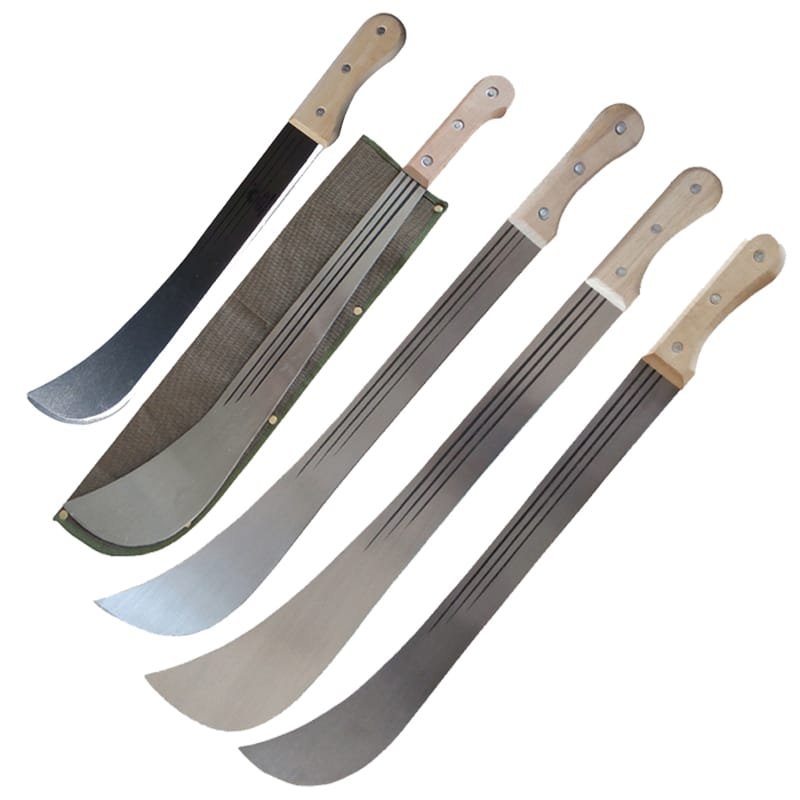
Blade profile helps distributors separate machetes by the farm jobs they actually perform rather than by overlapping regional names. Compare the finished outline, width distribution, tip and working edge with local reference tools. Add a model only when its users, task and field trial distinguish it from existing stock; then assign a unique SKU, approved sample and repeat-order specification.
Key Takeaways
- One regional product name can describe more than one blade outline.
- Equal nominal lengths do not establish equal width, tip or finished edge.
- A useful new SKU needs a distinct buyer task or demonstrated market need.
Which Farm Jobs Justify Different Profiles?
Map demand by clearing, brush work, crop harvesting and maintenance near standing plants. One crop can involve more than one cutting sequence.
Ask dealers which models customers request again, which sit unsold and which draw complaints. Segment by task and region before treating every requested name as a separate SKU.
Photograph and measure a locally accepted tool for each important job. A worn reference should be recorded as worn rather than copied blindly.
Check seasonal growth and any required guard or sheath. An accessory or task-specific profile affects both shelf price and packing.
Request a Wholesale Quote:Whatsapp : (+86 13383021196) E-mail : gemlight@ganzhedao.com
Which Profile Differences Should Buyers Compare?
Measure blade length, width at agreed stations, belly position, edge curve, tip, stock thickness and sharpened section on completed tools. Show silhouettes at the same scale.
A straight-back bush pattern, forward-bellied bolo-style blade and hooked cane knife may serve different jobs. Their names alone do not specify the delivered outline.
Compare finished handles, edge condition and weight as well. Have intended users try coded samples on ordinary vegetation over comparable periods.
| Candidate difference | Needs verification | Buyer action |
|---|---|---|
| Forward belly | Repeated-use chopping feel on target growth | Compare finished samples with current stock. |
| Narrower outline | Clearance near crops without sacrificing required cuts | Trial in crowded rows and open ground. |
| Hooked tip | Actual cut-and-gather sequence and guard fit | Approve a dimensioned tip and working edge. |
| Similar profile, new name | Distinct task or market demand | Reuse an existing SKU if physically equivalent. |
How Can the Range Avoid Redundant Models?
Write each proposed model’s buyer, task and reason to exist. If two tools answer the same need, review sales, field feedback and stock complexity.
Do not replace a familiar product just because another outline looks fashionable. Pilot new variants against the nearest existing SKU while keeping the accepted model available.
Keep useful local-language names for recognition, but give truly different outlines separate model codes. Where one physical tool serves two markets, localized descriptions need not create duplicate inventory.
Review sell-through, returns, storage and reorder demand by model, not just initial unit sales. Tender-compliant lines must remain distinct from retail preferences.
Request a Wholesale Quote:Whatsapp : (+86 13383021196) E-mail : gemlight@ganzhedao.com
How Should an Accepted Profile Enter the RFQ?
Retain a finished reference and one-page model sheet. Require the supplier to identify any substitution before repricing or changing tooling.
RFQ checklist:
- Buyer group and target task: explain why the model belongs in the assortment.
- Dimensioned outline and width stations: distinguish it from similar nominal lengths.
- Edge, tip, handle and finished weight: preserve the trialed complete tool.
- Guard and packing: make shelf price and delivery condition comparable.
- Model code and accepted sample: tie quote, carton and inspection to one design.
- Deviation and reorder controls: prevent silent tooling or handle changes in later lots.
Request the target vegetation and current blade alongside every proposed new SKU.
Buyer FAQ
Is one profile always best for cane work?
No. Test the local cutting and handling sequence with finished tools.
Can two local names share one SKU?
Yes, if the physical product and packing are the same and descriptions remain accurate.
Must every new handle be a new model?
Use a distinct variant code where receiving and reordering need to separate handles.
Blade-pattern context: Machete type guide.
Request a Wholesale Quote:Whatsapp : (+86 13383021196) E-mail : gemlight@ganzhedao.com