Quick Answer
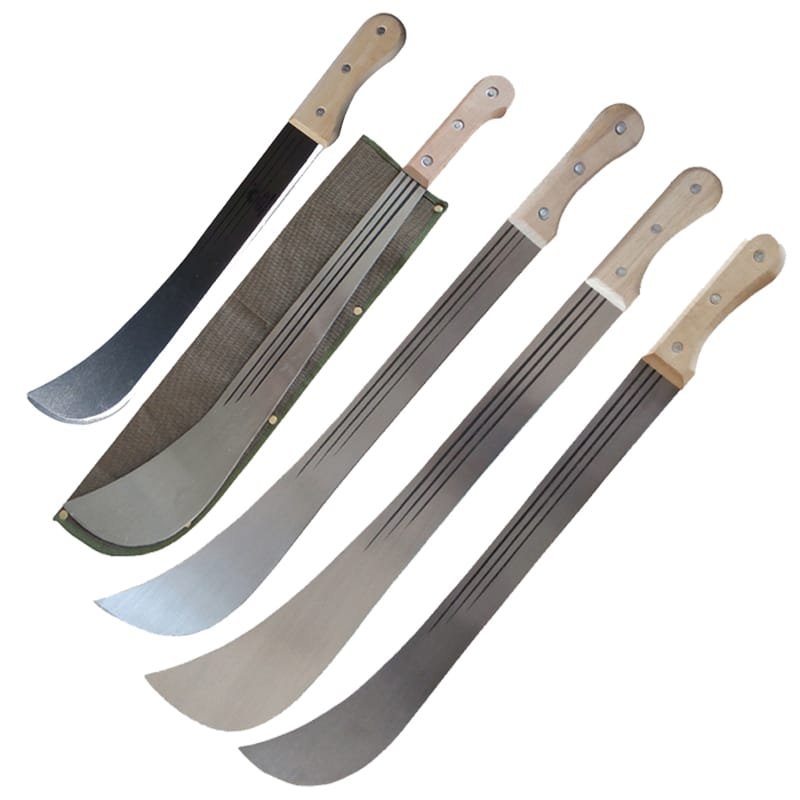
Compare finished machete samples with the same scale, grip reference and safe static balance-point method, then test how intended users start, stop and redirect each tool. Record profile, handle, edge condition and task for every observation. A balance point or total weight alone cannot predict cutting comfort; retain the accepted finished sample and inspection method for repeat production.
Key Takeaways
- Tools of equal total weight can feel different when their mass is distributed differently.
- A static balance point does not describe every dynamic swing characteristic.
- A bare blade blank cannot stand in for an assembled sample in a handling trial.

What Makes Samples Comparable?
Start with complete tools, final handles and comparable edge preparation. Remove guards from the in-hand test, but keep them for packing and storage checks.
Give each model and revision a code. Weigh tools on the same scale, measure blade and overall lengths at agreed points, and compare flat outlines at the same scale.
Check handle joints before handling. A loose grip can feel like bad balance and also creates a safety concern.
Request a Wholesale Quote:Whatsapp : (+86 13383021196) E-mail : gemlight@ganzhedao.com
How Can Buyers Record a Static Balance Point?
Use a stable support in a controlled area and protective equipment; do not balance a sharp edge on an unprotected finger. Mark the point on the complete tool.
Measure from the same reference, such as the front of the handle, and repeat the check. Document whether the guard was removed and whether support slipped.
A point farther toward the tip suggests a different distribution but is not a productivity score. Two tools may share the same point yet differ in mass or forward width.
| Check | Record | Do not infer |
|---|---|---|
| Finished mass | Scale and model revision | Handling quality from weight alone |
| Static balance point | Support and measurement reference | Dynamic swing or cutting output |
| Repeated field handling | Task, users, order and edge state | Market-wide productivity percentage |
| Production check | Drawing, handle, weight and reference sample | That a printed SKU proves physical identity |
Which Field Checks Reveal Practical Control?
Use intended workers, a local reference blade and representative vegetation. Rotate sample order where feasible and keep work periods and edges comparable.
Ask separately about placement near crops, recovery after a stroke, repeated-use comfort and daily carrying. One overall “balance” rating hides trade-offs.
Record grip changes and uneven ground. A short trial indicates local acceptance, not certified safety or output per hour.
Recheck after ordinary sharpening when relevant; a worn reference should not become the specification for new stock.
Request a Wholesale Quote:Whatsapp : (+86 13383021196) E-mail : gemlight@ganzhedao.com
How Can the Approved Feel Be Ordered Again?
RFQ checklist:
- Finished model and handle: compare assembled tools, not blanks.
- Blade outline, lengths and edge state: preserve the geometry tested in the field.
- Weight and static-point method: make repeated readings comparable.
- Accepted sample and drawing: give inspection a physical and measured reference.
- Production sample and tolerance plan: detect shifts in the first lot without pretending one reading proves equality.
- Change notice and carton code: flag substitutions before shipment and trace complaints.
Send a profile drawing and retained finished tool when requesting comparable offers.
Buyer FAQ
Is a farther-forward balance point always better?
No. It may suit one task and reduce control in another.
Does equal weight mean equal feel?
No. Distribution, grip and blade shape also matter.
Can a quick field test prove productivity gains?
No. Record local feedback without publishing unsupported general percentages.
Pattern context: Machete styles and uses.
Request a Wholesale Quote:Whatsapp : (+86 13383021196) E-mail : gemlight@ganzhedao.com