Quick Answer
Blade width and curvature should be chosen for the vegetation, available cutting space and workers’ normal stroke, not from a catalog silhouette alone. Measure width at several points and distinguish the edge curve from the spine and tip. Compare finished tools with similar sharpening on representative tasks, then preserve the accepted outline in a drawing and sample.
Key Takeaways
- One maximum-width figure cannot show where a machete’s widest section sits.
- A curved edge, curved spine and upturned tip describe different features.
- A short local trial cannot establish universal cutting productivity.
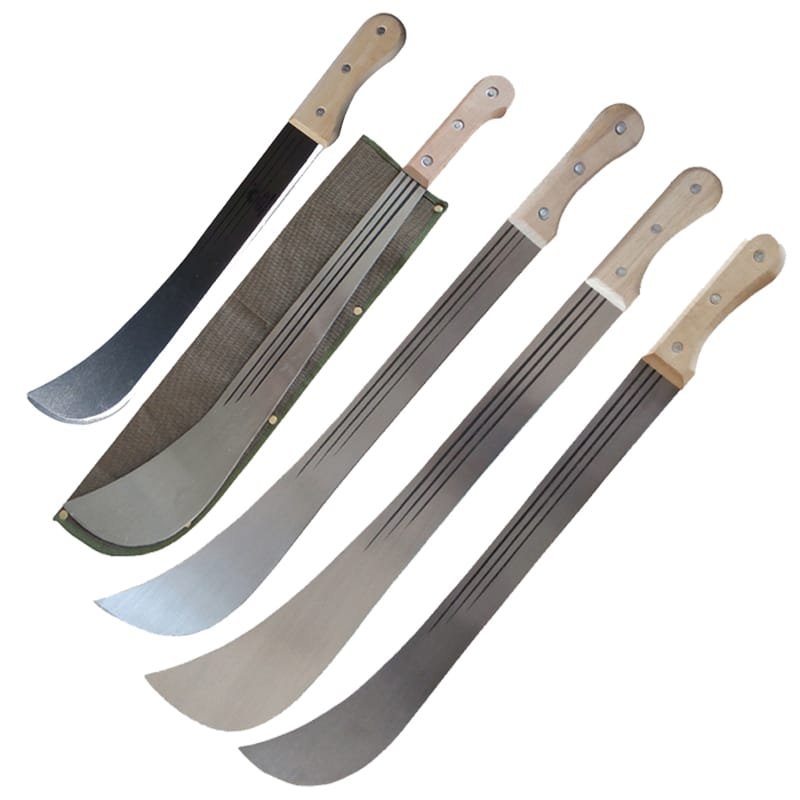
How Should Buyers Read Blade Width?
Measure the distance between spine and cutting-edge regions at agreed stations near the handle, middle and working front. Record each station’s distance from a common starting point.
Two equal-length blades may have the same maximum width in different places. A forward belly can shift material toward the tip, but thickness and handle construction also affect handling.
A narrower outline may offer clearance near crops; a broader working section may suit another task. Neither result follows from one dimension without testing the finished tool.
Request a Wholesale Quote:Whatsapp : (+86 13383021196) E-mail : gemlight@ganzhedao.com
Does “Curved” Describe the Edge, Spine or Tip?
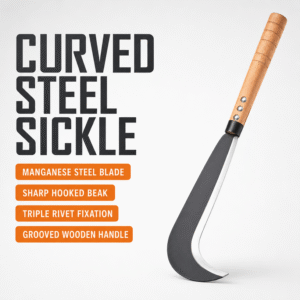
Ask suppliers to mark the main cutting edge, spine, blade sweep and any upturned or hooked tip separately. A gently curved edge does not imply a hooked tip.
Use a flat profile drawing with a baseline and offsets at agreed positions. Mark the sharpened section’s start and end. A perspective catalog photo cannot control production geometry.
| Feature | Needs verification | Buyer action |
|---|---|---|
| Blade width | Width at several named stations; widest location | Attach a dimensioned full-length silhouette. |
| Edge and spine curves | Offsets from one baseline, not a vague style name | Compare the same reference points on each sample. |
| Tip and working edge | Tip shape, clearance and sharpened endpoints | Record the approved finished condition. |
| Assembly | Thickness, handle and finished weight | Trial completed tools, not blade blanks. |
Which Outline Fits the Actual Farm Task?
Compare coded, equally prepared samples against a local reference on the target vegetation. Note stem type, density, row spacing and nearby obstacles.
Ask representative workers about reach, control, contact with standing plants and comfort over repeated use. Record observations by task rather than reporting an unsupported productivity percentage.
Check the handle, carrying guard and sharpening practice. If different jobs favor different outlines, consider separate model codes instead of claiming one universal machete.
Names for blade patterns may overlap by region; this machete-style guide illustrates the variety without establishing a universal width or curve.
Request a Wholesale Quote:Whatsapp : (+86 13383021196) E-mail : gemlight@ganzhedao.com
How Can the Accepted Profile Become a Repeatable Order?
Approve one finished sample and drawing revision for each model. Inspect production units at the same measurement stations rather than checking maximum width alone.
RFQ checklist:
- Task and local reference: show why the requested outline is relevant to the customer’s work.
- Blade length and width stations: distinguish profiles with the same nominal length or maximum width.
- Edge, spine and tip offsets: preserve the chosen curve and sharpened section.
- Thickness, handle and edge finish: ensure quotes cover the same completed tool.
- Guard and packing: confirm the accessory fits the accepted blade outline.
- Sample, tolerances and change notice: provide an inspection reference and catch tooling changes before repeat orders.
Request a measured, production-intent sample for the stated cutting conditions before placing a bulk order.

Buyer FAQ
Is a wider machete always better for thick growth?
No. Compare thickness, edge, handle and the intended task on finished samples.
Can a photo establish blade curvature?
No. Use a flat profile, baseline and measured offsets for inspection.
Will a curved edge always cut faster?
No. Results depend on vegetation, stroke and user; informal trials cannot prove general productivity.
Can one SKU cover two preferred profiles?
Keep materially different outlines under separate codes so a reorder does not substitute the wrong pattern.
Request a Wholesale Quote:Whatsapp : (+86 13383021196) E-mail : gemlight@ganzhedao.com