What Is the Difference Between a Cane Knife and a Hooked Cane Knife?
A buyer asks for cane knives. One supplier shows a broad straight-tipped blade; another shows a blade with a projecting hook. Are both valid?
Yes. A hooked cane knife is one design within a wider cane-knife group. The hook changes what the tool may help workers do after cutting.
It does not make every hooked model better for every sugarcane crew. Start with the crew’s actual cutting and handling routine.
Request a Wholesale Quote:Whatsapp : (+86 13383021196) E-mail : gemlight@ganzhedao.com
What Does the Hook Change?
A cane knife is generally made for manual work on cane or similar stalks. Commercial models differ widely in outline, length, handle, and edge.
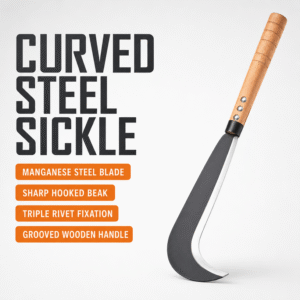
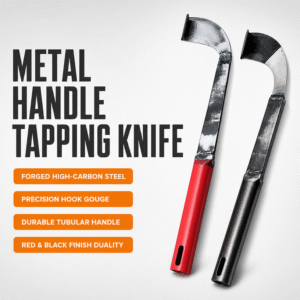
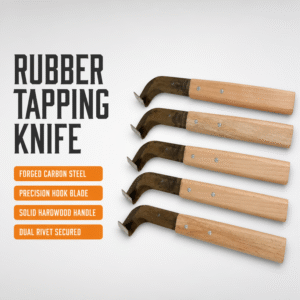
Some have a straight or blunt front. Others have a hook extending from the tip or a more pronounced hooked blade profile.
A projecting hook can help move or gather cut stalks, depending on how the crew works. That is different from the main cutting edge.
Do not assume the hook is sharpened. Ask whether it is blunt, sharpened inside, or finished in another way on the offered model.
Nor should buyers assume the hook always helps cutting at the stalk base. Its purpose depends on the shape and local technique.
A protruding end can affect the blade’s reach and control near standing cane. Workers accustomed to plain tips may need a trial.
A straight cane knife can still do the primary cutting job. The presence of a hook is not a universal test of authenticity.
Likewise, two hooked knives may differ greatly in hook opening, direction, edge location, and handle length. Their names do not establish equivalence.
A supplier photograph should show the full tip clearly. If the hook is hidden or cut off, request another image before quoting.

Compare the Whole Blade, Not Just the Tip
Ask for blade length, overall length, widest blade width, thickness, and finished unit weight. Use the same measurement points across offers.
A broad blade can concentrate mass forward. But a long handle changes how the whole tool feels, even if the blade outline matches.
Compare the main cutting edge’s position. Some product pages describe a factory grind that still requires sharpening before first field use.
Specify the condition required at delivery. A quote for a prepared blank should not be compared directly with a fully finished edge.
Check how the blade joins the handle. Inspect fit, fastening, and grip with the intended workers rather than relying on pictures.
If a sheath or edge guard is needed, confirm that it covers the hooked profile. Protection made for a straight tip may not fit.
Ask about material designation and finish only as verifiable specifications. A claim that the knife is “high quality” does not settle either.
If hardness is in a tender, state the test method, test position, and acceptable range. Do not borrow a figure from another product.
Price comparisons should include handle, sharpening, guard, coating, packing, and carton quantities. A hook alone does not explain total cost.
Request a Wholesale Quote:Whatsapp : (+86 13383021196) E-mail : gemlight@ganzhedao.com
When Might Each Pattern Suit a Crew?
Find out whether workers cut stalks and then reposition them with the same tool. A hook may be useful if that movement is routine.
Ask whether stalk handling is performed separately. If another person or tool moves cane, a hook might add little to the main cutter.
Observe how the team works near adjacent rows. A projecting hook can feel unfamiliar in a tight space, even when it has value elsewhere.
Check the crew’s current blade. Replacing an accepted straight tip with a hook may change handling more than the buyer expects.
Conversely, removing a familiar hook can slow a crew that uses it frequently to position cut stalks. Do not delete it to simplify manufacturing.
A worker may prefer a longer or shorter handle regardless of the tip. Avoid attributing every trial result to the hook.
Test each finished option on representative cane under local procedures. Ask workers about control, repeated use, grip, and stalk handling.
Record which jobs benefit from the hook and which become harder. A brief demonstration cannot establish long-term durability or productivity.
If feedback differs between crews, consider separate approved patterns rather than promising one design will fit every plantation.
How Should a Bulk RFQ Define the Knife?
Write “straight-tip cane knife” or “hooked cane knife” only after confirming which sample the buyer wants.
Attach a front-on photograph and a dimensioned drawing. Mark the hook opening, its projection, and any sharpened surface when applicable.
Use one model code per distinct profile. A straight version and hooked version should never be interchangeable under one unexplained item number.
Specify blade and overall length separately. State handle type, edge condition, surface finish, protective packing, and expected quantity.
Ask suppliers to list deviations openly. If they can make only a different hook shape, request a separate sample and quotation line.
Identify the approved sample in the purchase order. Inspect production units against it, including hook geometry and handle construction.
If the buyer supplies a tender drawing, follow its dimensions and approval process. A similar-looking catalog knife is not automatically compliant.
Confirm what “cane knife” means in the destination market before printing cartons. Local naming should connect to an exact physical SKU.
The best choice comes from the way workers cut and handle cane, not from a belief that a hook automatically improves every knife.
Send a reference photo or sample with your inquiry. We can discuss a straight or hooked option against the same measurable specification.
Request a Wholesale Quote:Whatsapp : (+86 13383021196) E-mail : gemlight@ganzhedao.com