An all metal spade is a durability-focused solution for professional environments where traditional handle materials cannot meet workload intensity or service life expectations. For your business, this product represents a low-failure, high-trust tool category designed for continuous use in agriculture, construction, landscaping, and infrastructure projects. When you source a properly engineered all metal spade, you strengthen your portfolio with a tool that delivers structural integrity, long-term reliability, and predictable performance under harsh working conditions.
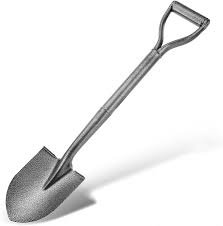
An all metal spade is specifically designed for tasks where joint failure, handle cracking, or material fatigue is unacceptable. In agriculture, it is widely used for soil turning, trench digging, land preparation, and irrigation channel work. Because there is no wood or composite handle, the tool performs reliably in wet, muddy, or high-impact environments.
Moreover, construction and infrastructure crews rely on all metal spades for excavation, backfilling, and site preparation. Landscaping contractors also prefer these tools when working in rocky or compacted soil. As a result, demand remains stable across multiple industries, providing your business with consistent sales opportunities.
Structural advantages of all metal construction
The defining feature of an all metal spade is its integrated, one-piece or welded structure. This design eliminates weak points commonly found in traditional blade-to-handle connections. Therefore, the risk of loosening, cracking, or handle separation is significantly reduced.
Additionally, metal handles offer superior load transfer during digging. Force applied by the user is transmitted directly to the blade without energy loss. For professional users, this means higher efficiency and less downtime caused by tool failure. For you, it means fewer complaints and stronger buyer confidence.
Material selection and steel performance
Material quality is critical in determining the performance of an all metal spade. High-carbon steel is often selected for its excellent strength, wear resistance, and impact tolerance. Through controlled quenching and tempering, the steel achieves a balanced structure that resists bending while maintaining sufficient flexibility.
Furthermore, consistent steel composition ensures uniform performance across large production batches. For bulk buyers, this consistency protects brand reputation and simplifies quality assurance across repeated orders.
Blade geometry and penetration efficiency
Even with full metal construction, blade design remains essential. An all metal spade typically features a sharpened edge and optimized curvature to ensure effective soil penetration. Proper blade geometry allows users to dig efficiently without excessive force.
Moreover, reinforced blade thickness improves resistance against deformation when encountering stones or compacted soil. This durability is especially valuable in professional environments where tools are subjected to daily heavy use.
Surface treatment and corrosion resistance
All metal tools are frequently exposed to moisture, soil chemicals, and outdoor storage conditions. Therefore, surface treatment plays a vital role in extending service life. Polishing reduces soil adhesion and improves cleaning efficiency.
Additionally, protective coatings such as painted or anti-rust finishes enhance corrosion resistance. For wholesalers and distributors, consistent surface quality also improves visual appeal and perceived value at the point of sale.
Handle design and user comfort considerations
Although metal handles prioritize strength, ergonomic design remains important. Proper handle diameter and grip shaping improve control and reduce hand fatigue during extended use. Some designs include textured or coated grip areas to enhance comfort and slip resistance.
As a result, professional users can work longer hours without sacrificing efficiency. When ergonomics are addressed alongside strength, the all metal spade becomes a more versatile and widely accepted tool.
Manufacturing processes for integrated strength
A reliable all metal spade is produced through controlled manufacturing processes such as forging, stamping, welding, or integrated forming. These methods ensure dense steel structure and precise geometry.
Heat treatment processes further refine mechanical properties, improving toughness and resistance to fatigue. Additionally, standardized production lines ensure uniformity across high-volume orders, which is essential for B2B supply stability.
Quality control standards for wholesale markets
Quality control is especially important for all metal spades due to their intended heavy-duty use. Inspections typically include dimensional checks, hardness testing, weld integrity inspection, and surface evaluation.
Moreover, load and impact tests confirm structural reliability under professional working conditions. For your business, consistent quality control reduces risk and supports long-term cooperation with downstream buyers.
Packaging solutions for metal-only tools
Because all metal spades are heavier than traditional designs, packaging must be optimized for strength and efficiency. Reinforced cartons or bundled packing methods protect tools during transportation and handling.
Additionally, compact stacking layouts maximize container utilization, reducing freight cost per unit. Clear labeling supports inventory management and smooth distribution through your supply chain.
Bulk purchasing advantages for importers and distributors
From a commercial perspective, an all metal spade offers strong long-term value. Its durability reduces replacement frequency, making it attractive to professional buyers focused on total cost of ownership.
Furthermore, bulk purchasing lowers unit cost and ensures consistent supply. When paired with stable production capacity, this product becomes a reliable contributor to predictable margins and inventory turnover.
OEM customization for brand positioning
OEM cooperation allows you to customize the all metal spade according to your brand strategy. Surface color, handle finish, blade markings, and packaging design can all be tailored to your market positioning.
Additionally, private labeling strengthens brand recognition and customer loyalty. This customization enables differentiation without altering core structural performance.
ODM development for specialized requirements
ODM capabilities allow deeper customization for specific industries or applications. Blade size, handle length, and reinforcement structure can be adjusted to meet regional or professional standards.
As a result, you can offer market-specific solutions that competitors may not provide. This strategic flexibility enhances your value proposition and supports premium positioning where durability is critical.
Adaptability across global markets
An all metal spade is suitable for diverse geographic markets. In agricultural regions, durability and resistance to moisture are key drivers. In construction-focused markets, structural strength and reliability take priority.
By maintaining core quality while adjusting specifications, you can serve multiple regions with minimal product variation. This adaptability supports scalable expansion without excessive complexity.
Cost-performance balance for professional buyers
Professional buyers evaluate tools based on lifetime performance rather than initial purchase price. A durable all metal spade reduces downtime, maintenance, and replacement costs.
Therefore, positioning your product as a long-term investment strengthens purchasing confidence. When buyers experience consistent performance, reorder cycles become shorter and order volumes increase.
Sustainability through long service life
Durable, long-lasting tools contribute to sustainability by reducing waste and material consumption. An all metal spade aligns with growing expectations for responsible sourcing and extended product life cycles.
Additionally, stable manufacturing partnerships support consistent supply and responsible production planning. For your business, this reliability enhances long-term operational stability.
After-sales stability and reduced disputes
Because all metal spades have fewer failure points, after-sales issues are significantly reduced. This stability protects margins and lowers administrative workload.
Moreover, satisfied buyers are more likely to establish long-term cooperation. Over time, reliability becomes a competitive advantage that strengthens your market position.
Strategic portfolio value for tool suppliers
Adding an all metal spade to your professional tool lineup strengthens your offering with a heavy-duty, low-risk product. It complements agricultural and construction tools, enabling cross-selling and higher average order values.
Furthermore, this product integrates easily into existing distribution channels, making it a practical addition for scalable growth.
Long-term cooperation and production scalability
Reliable manufacturers support your growth by scaling capacity as demand increases. Consistent quality, transparent communication, and flexible production planning form the foundation of sustainable partnerships.
As order volumes rise, production efficiency improves, lowering costs and enhancing competitiveness in global markets.
Final value perspective for B2B buyers
An all metal spade is more than a traditional digging tool. It is a strength-driven, professional solution designed to deliver durability, efficiency, and stable returns for importers, wholesalers, distributors, and brand owners. By focusing on material integrity, manufacturing control, and bulk purchasing advantages, you secure a product that performs reliably in demanding environments. Choosing the right all metal spade positions your business for long-term success and consistent growth.