Cutlass vs Machete:Understanding the Real Differences for African Users
| Feature | Cutlass | Machete |
|---|---|---|
| Typical Blade Length | 14 to 20 inch | 18 to 30 inch |
| Common Sizes in Africa | Short and compact | 22 24 30 inch machete |
| Blade Shape | Shorter wider slightly curved | Longer straighter or Panga style |
| Weight | Lighter easy to control | Heavier stronger chopping power |
| Balance | Handle balanced wrist control | Front weighted for impact force |
| Steel Thickness | Thinner steel easier sharpening | Thicker steel higher durability |
| Main Uses | Weeding harvesting light bush | Heavy bush clearing land prep |
| Common Regions | West and Central Africa | East and Southern Africa |
| User Type | Small farmers daily use | Professional farms contractors |
| Durability | Moderate frequent sharpening | Long term heavy duty use |
| Price Positioning | Entry level high volume | Mid to high value better margins |
| B2B Advantage | Low cost fast turnover | Strong differentiation higher profit |
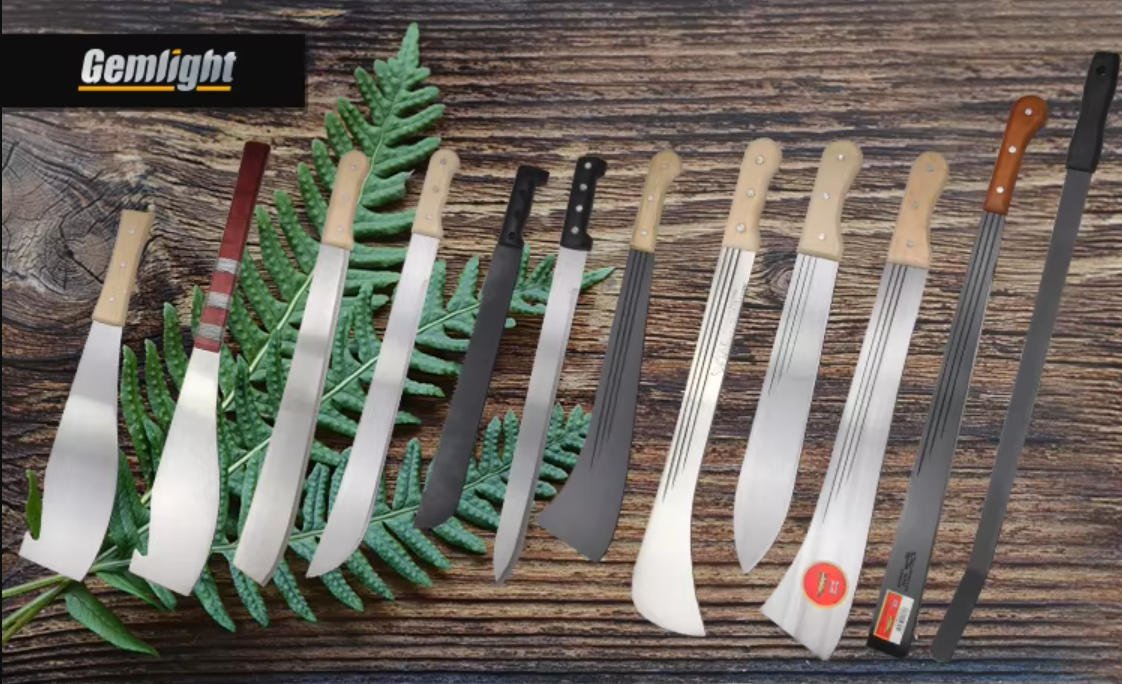 In many African countries, the terms cutlass and machete are often used interchangeably.
However, in professional trade, agriculture, and tool sourcing, there are real differences worth understanding cutlass vs machete. This guide explains cutlass vs machete from a practical African market perspective.
What Is a Cutlass
A cutlass is traditionally a short, broad blade tool derived from naval and agricultural use. In West and Central Africa, the cutlass is commonly associated with farm clearing, cocoa harvesting, and daily bush work. It is usually lighter and shorter than a standard machete.
Cutlasses are widely used in countries such as Nigeria, Ghana, and Sierra Leone. Many local buyers prefer cutlasses for quick hand control and repetitive cutting tasks. The design favors speed rather than deep chopping power.
What Is a china Machete
A machete is a longer, heavier blade tool designed for tougher vegetation and extended outdoor work. In Africa, common types include Panga Machetes, Latin Style Machetes, and Bush Machetes. These are built for clearing thick bush, sugarcane, and farmland preparation.
Machetes are more common in East and Southern Africa, such as Kenya, Tanzania, Zambia, and Mozambique. They are preferred for heavy-duty agricultural and rural use. The longer blade provides greater reach and cutting force.
Blade Length and Shape Differences
Cutlasses usually range from 14 to 20 inches in blade length. The blade is often wider near the tip and slightly curved, allowing efficient slicing of weeds and crops. This makes them ideal for close-range farm work.
Machetes typically range from 18 to 30 inches, with popular sizes being 22, 24, and 30 inch machete models. The blade is longer and straighter, providing more momentum during swings. This shape is better suited for clearing thick grass and woody plants.
Weight and Balance Comparison
Cutlasses are generally lighter and easier to handle for long working hours. The balance is closer to the handle, giving better wrist control. This is important for farmers doing repetitive cutting motions.
Machetes are heavier and front-weighted. The added weight increases chopping power but requires more physical strength. For professional land clearing or plantation work, this trade-off is acceptable.
Material and Steel Quality
Both cutlasses and machetes are commonly made from high carbon steel or medium carbon steel. Cutlasses often use slightly thinner steel to reduce weight and improve speed. This makes sharpening easier but may reduce edge retention.
Machetes usually use thicker steel for durability and impact resistance. High-quality Panga Machetes and Latin Style Machetes are heat-treated for toughness. This is important for African environments with hard vegetation and dry soil.
Handle Design and Comfort
Cutlass handles are often simple wooden or plastic grips. The design focuses on lightness and easy replacement. In many local markets, handle durability is less important than blade performance.
Machete handles are more varied and robust. Common options include hardwood, rubberized grips, and full-tang designs. For export and B2B buyers, ergonomic handles are a major selling point.
Main Agricultural Uses in Africa
Cutlasses are widely used for weeding, harvesting crops, and light bush clearing. They are ideal for cocoa farms, palm plantations, and vegetable fields. Many smallholder farmers rely on cutlasses for daily tasks.
Machetes are preferred for heavy bush clearing, sugarcane cutting, and land preparation. They are essential tools for rural development projects and commercial farms. In many regions, machetes are considered primary farm tools.
Durability and Lifespan
Cutlasses are effective but may wear out faster under heavy use. The thinner blade can bend or lose its edge more quickly. This is acceptable for users who sharpen frequently.
Machetes are built for long-term use in harsh conditions. Thicker steel and stronger construction improve lifespan. For wholesalers and distributors, machetes offer better long-term value.
Cutlass vs Machete for B2B Buyers
For African importers and distributors, choosing between cutlass vs machete depends on the target market. Cutlasses sell well in regions with small-scale farming and high price sensitivity. They are easier to ship in bulk due to lighter weight.
Machetes perform better in professional and institutional markets. NGOs, farms, and contractors often prefer heavy-duty machetes. Larger blade sizes also allow better product differentiation.
Price and Market Positioning
Cutlasses are usually positioned as entry-level agricultural tools. They are affordable and sell in high volume. This makes them suitable for open markets and local hardware shops.
Machetes are positioned as mid to high-value tools. Different styles such as Panga Machetes or Bush Machetes allow tiered pricing. This helps distributors build stronger margins.
Final Thoughts on Cutlass vs Machete
Both cutlass and machete play important roles in African agriculture. The choice depends on work type, user strength, and regional preference. Understanding these differences helps buyers make smarter sourcing decisions.
For B2B suppliers, offering both options is often the best strategy. A balanced product range meets diverse African market needs. In the end, the right tool is the one that works best for the local environment.

Why Choose Gemlight for Your Machete factory Needs?
- Over 30 Years of Manufacturing Expertise
With more than three decades in agricultural tool production, Gemlight has established a strong reputation for precision craftsmanship, advanced technology, and consistent product quality. Our well-known 1200 Series machetes exemplify our commitment to innovation, durability, and reliability in every tool we manufacture. - Extensive Machete Range – 130+ Product Series
Gemlight offers one of the most comprehensive collections of machetes in the industry, featuring over 130 product series and 1200 shovel models. From traditional garden spades to specialized field blades, our portfolio covers every agricultural and outdoor application, ensuring the right tool for every professional. - Global Market Reach – Trusted in 150+ Countries
Our machetes are trusted by farmers, distributors, and retailers around the world. We proudly export to more than 150 countries, including Africa, South America, and Southeast Asia, delivering reliable tools that meet the demands of professional users globally. - High Production Capacity – Over 7 Million Tools Exported Annually
With an annual export volume exceeding 7 million spades, shovels, and machetes, Gemlight is a leading supplier in the global agricultural tool industry. Our large-scale production ensures timely delivery and consistent quality for both bulk and small orders. - Certified Quality – ISO9001, TUV, and SGS Approved
Every machete we produce is manufactured under strict international standards and undergoes rigorous testing. Our ISO9001, TUV, and SGS certifications guarantee superior durability, sharpness, and reliable performance in the field, giving our clients peace of mind with every purchase. - Contact Us for Machete Inquiries
Explore our shovel heads and machete series for sale. For any questions or bulk order inquiries, feel free to reach out: -
WhatsApp: (+86 156 3224 5103)
-
E-mail: ganzhedao@gmail.com