Quick Answer
Spine thickness measures the steel near the back of a machete at a defined station. Thickness behind the edge is taken at an agreed distance above the cutting edge; it is not the microscopic apex. Two blades with the same stock thickness may cut differently because their grinds differ. Specify both locations, finishing stage and inspection method when the distinction matters.
Key Takeaways
- One spine or stock-thickness number does not describe the near-edge cross-section.
- Thickness behind the edge changes with the chosen offset and sharpening stage.
- Thickness alone cannot establish hardness, edge retention or field performance.
Where Are Spine and Near-Edge Thickness Measured?
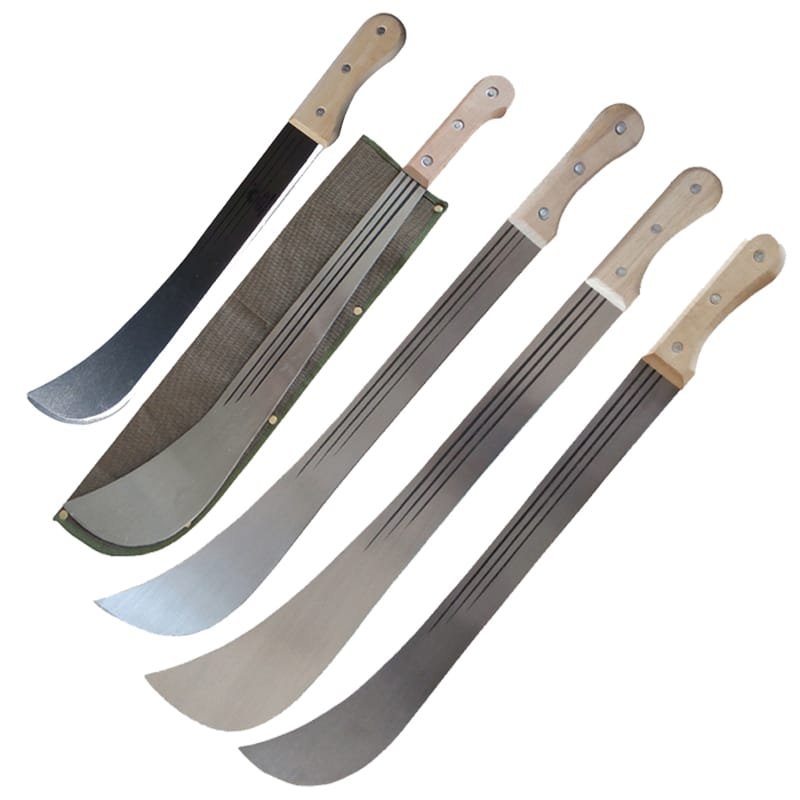
The spine is the back opposite the main cutting edge. State where along the finished blade steel thickness is taken; a supplier may otherwise quote raw stock at the base.
For thickness behind the edge, mark a fixed offset above the sharpened edge and an along-blade station. This is not a practical measurement of the tiny cutting apex.
Identify whether the blade is only primary-ground, ready for final sharpening or delivered with a working edge. These stages can change the near-edge reading.
Request a Wholesale Quote:Whatsapp : (+86 13383021196) E-mail : gemlight@ganzhedao.com
Why Can Matching Spine Numbers Cut Differently?
Spine or stock thickness contributes to the blade’s structure and mass. Grind and bevel shape determine how much steel remains near the working edge.
A thicker section behind the edge may resist some cutting tasks; a thinner section may have different durability trade-offs. Steel, treatment, angle, vegetation and technique also matter.
Repeated sharpening changes the edge profile. Use an unmodified reference if the order must reproduce the new blade’s finished condition.
| Term | What to define | Buyer action |
|---|---|---|
| Stock/spine thickness | Finished or blank stage; exact position along blade | Put the station and unit on the drawing. |
| Thickness behind edge | Offset from edge, along-blade station and final grind | Agree on a reproducible method or sample section. |
| Edge finish | Primary grind versus ready-to-use sharpened edge | Price and inspect the delivered state. |
| Field result | Vegetation, sharpening, damage and technique | Trial matched samples; do not infer performance from a number. |

How Can Suppliers Give Comparable Data?
Request a simple cross-section sketch with the spine measurement point and behind-edge offset. If the blade tapers, record multiple stations along its working length.
Agree on units, measuring tool, tolerance and whether inspection could damage the finished edge. If so, use an agreed section or controlled sample record.
Compare equally sharpened, finished samples on representative vegetation. Hardness and edge-retention claims need separate, relevant methods.
Request a Wholesale Quote:Whatsapp : (+86 13383021196) E-mail : gemlight@ganzhedao.com
What Should the RFQ and Inspection Agree On?
Keep each grind variant under its own code and retain an unmodified finished reference. Review production samples if sharpening operations change.
RFQ checklist:
- Job and vegetation: explain why near-edge geometry matters for the specific order.
- Spine and stock stations: prevent one supplier’s blank reading from being compared with another’s finished blade.
- Behind-edge offset and positions: make near-edge measurements reproducible.
- Grind and delivered edge: align quotations for primary grind versus working edge.
- Method, tolerance and sample: set inspectable limits without guessing impossible precision.
- Change notice and sampling: detect cross-section drift during production or reorders.
Ask for a labeled cross-section and finished sample before approving bulk manufacturing.

Buyer FAQ
Is thickness behind the edge the apex thickness?
No. It is measured at an agreed offset above the cutting edge.
Does equal spine thickness mean equal cutting feel?
No. Grind, edge condition, steel and the material being cut can differ.
Can a thinner near-edge profile guarantee longer edge life?
No. Edge retention requires its own relevant test and usage context.
Should every batch be measured by cutting up finished blades?
Not by default. Agree on a non-damaging method or sacrificial sample if needed.
Request a Wholesale Quote:Whatsapp : (+86 13383021196) E-mail : gemlight@ganzhedao.com