Two blades are both labeled “panga,” yet one sells steadily and the other sits in a distributor’s warehouse. Why?
Local buyers recognize a familiar tool by more than its name. Outline, balance, grip, finish, and price all shape whether they accept a model.
Distributors should document what users already prefer, test a small set of alternatives, and turn those findings into separate product codes.
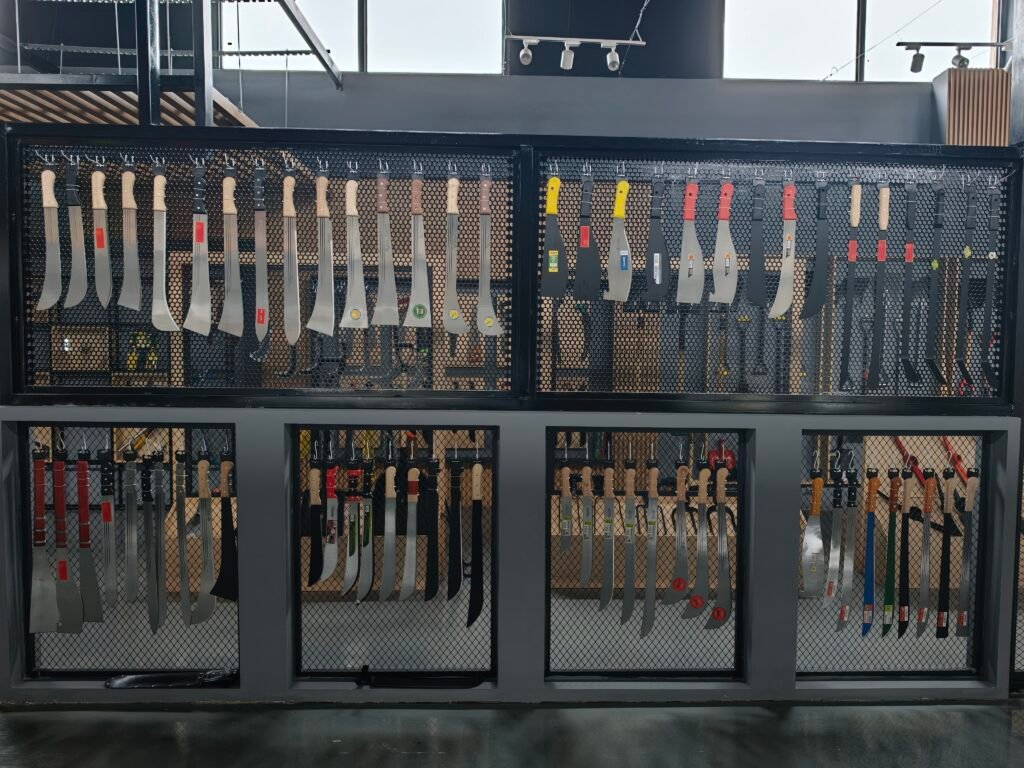
Learn What “Panga” Means in Your Market
Panga is a familiar name for a broad cutting knife associated with East Africa. Export catalogs may group it under machetes.
That broad classification is useful for search, but it does not define a single approved shape across customers or countries.
Visit retailers and ask which models move repeatedly. Look at the actual tools, not only the names on their cartons.
Speak with farm workers and supervisors where possible. Ask what they cut, how often they sharpen, and what causes them to replace a tool.
One customer may value reach for clearing vegetation. Another may prefer a shorter, more controlled blade around planted crops.
Watch for terms that mean different things locally. A request for “heavy panga” might describe blade feel, not a measured weight.
Ask users to show an example they trust. A reference sample settles more questions than a translated product label.
If the tool is worn, estimate which parts remain original. Repeated sharpening may make the blade narrower than it was when purchased.
Keep preferences segmented by user group. A retail customer’s needs may differ from a farm cooperative’s tender specification.
Request a Wholesale Quote:Whatsapp : (+86 13383021196) E-mail : gemlight@ganzhedao.com
Compare Shape and Handling Before Price
Photograph the local reference tool from the front and side beside a ruler. Include the tip and handle joint in the frame.
Measure blade length, overall length, widths at defined points, thickness, and finished unit weight. Note the measurement method.
Compare handle length and shape. A buyer may reject a new model because the grip feels wrong, even when blade measurements match.
Check balance in the hand. Two pangas of similar weight can swing differently if the blade widens in different places.
Record whether the model has a particular tip shape or edge line. These features may matter more than an extra marketing label.
Examine fastening and finish on a finished sample. A good silhouette cannot make up for a loose handle or rough edge.
Ask suppliers to state the offered material and edge condition. A low price may omit sharpening, surface protection, or packing items.
Use a separate quotation line for each variant. Otherwise, a supplier might replace a popular local profile with a cheaper near match.
If your buyer requires tests, define the method and evidence. Do not let unverified hardness claims drive a stocking decision.
Test Models With the People Who Use Them
Begin with the existing best seller as a control. Compare one or two new models rather than presenting a confusing catalog wall.
Let intended users handle and cut with finished samples under similar conditions. Ask specific questions about reach, control, and fatigue.
Find out whether sharpening and routine upkeep fit current habits. A new edge design may not be welcome if users cannot maintain it.
Ask shopkeepers what customers return and why. Returns caused by handle problems require a different response from complaints about blade pattern.
Do not treat one enthusiastic comment as market proof. Seek feedback from more than one buyer type before committing to stock.
A limited market trial can help. Keep variants clearly labeled so the sales results tell you which exact tool people chose.
Track repeat orders, not only first-month curiosity. A trial model may sell initially because it is new, then fail to earn replacement demand.
If feedback conflicts, consider whether there are two real customer segments. One model should not be forced onto every user.
Use local distributors’ language in listings, but show the blade image and dimensions. Accurate descriptions reduce mismatched sales.
Request a Wholesale Quote:Whatsapp : (+86 13383021196) E-mail : gemlight@ganzhedao.com
Turn Preferences Into a Reliable Purchase Order
Assign a unique code to each accepted panga outline and handle combination. Do not recycle the code after changing the pattern.
Attach the approved sample or signed drawing to your order. Mark tip shape, key widths, handle details, and edge condition.
State acceptable dimensional variation and how inspection will be done. Without these, a supplier may deliver units that only broadly resemble the sample.
Ask for preproduction samples if the factory must make a change. Approve the change in writing before it appears in bulk.
Specify labels, protective packing, and carton quantities. Retailers may need a different pack presentation from institutional buyers.
Compare total landed offerings on equal terms. A cheap bare tool and a protected retail-ready tool are not the same purchase.
For public or commercial tenders, the issued specification overrides your normal stock preference. Document any proposed deviation openly.
Ask the factory what it can reproduce consistently, not only what it can make once. Repeatability matters when local users expect the same model.
How Many Panga Models Should You Stock?
Start with the distinct tasks and user groups you can verify. A broad range creates inventory risk if differences are only cosmetic.
One trusted general model may be enough for a small market. A separate clearing or crop-focused model may deserve space when demand supports it.
Review returns, seasonal orders, and worker comments before expanding. Avoid assuming every customer needs the heaviest or longest option.
Use one catalog page per genuinely different model, with clear dimensions and photos. Do not duplicate a listing just to target another synonym.
Panga is a useful local name, but the accepted sample is your true product definition. The distributor’s job is to connect the two.
Send a reference panga, target market, and user feedback when requesting a manufacturing quote. We can discuss a pattern that matches that evidence.
Request a Wholesale Quote:Whatsapp : (+86 13383021196) E-mail : gemlight@ganzhedao.com