A hole digging spade is a core productivity tool in professional agricultural and infrastructure markets. For your business, it is not simply another item in a catalog, but a high-frequency, high-demand product that supports stable turnover and long-term customer relationships. When you source the right hole digging spade, you equip your buyers with a tool designed for precision excavation, reduced labor intensity, and reliable performance under repeated heavy use. This makes it a strategic asset for importers, wholesalers, distributors, and tool brands focused on scalable growth.
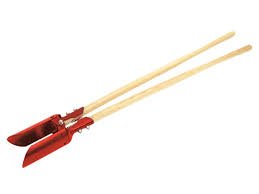
A hole digging spade is specifically designed for tasks that require vertical penetration and controlled soil removal. In agriculture, it is widely used for planting trees, installing fence posts, digging irrigation holes, and preparing foundations for crops. As a result, demand remains consistent across planting seasons and land development cycles.
Moreover, landscaping contractors rely on hole digging spades for precise excavation in confined spaces. Municipal and infrastructure projects also require this tool for signage installation, drainage preparation, and utility groundwork. By offering a hole digging spade built for professional use, you serve multiple industries with one dependable product line, increasing your market reach without expanding inventory complexity.
Precision-focused design advantages for end users
Unlike general-purpose spades, a hole digging spade is optimized for depth control and clean excavation. Its narrow blade profile allows users to dig straight holes with minimal soil disturbance. Therefore, tasks can be completed faster and with greater accuracy.
Additionally, this precision reduces rework, which directly improves labor efficiency. For your buyers, faster job completion translates into lower operating costs. When your product consistently delivers this advantage, it becomes the preferred choice for professional users, strengthening repeat orders through your distribution channels.
Blade material selection and structural strength
Material choice is critical in determining whether a hole digging spade can withstand repeated impact with compacted soil, clay, or gravel. High-carbon steel is commonly selected for its superior hardness and wear resistance. Through controlled heat treatment, the blade achieves a balance between rigidity and flexibility, preventing cracking while maintaining cutting efficiency.
Furthermore, proper blade thickness ensures resistance to bending under vertical pressure. For bulk buyers, this durability minimizes return rates and protects brand credibility. When your hole digging spade maintains its shape and edge after extensive use, your customers recognize its value immediately.
Surface treatment and corrosion resistance
Professional tools are often exposed to moisture, soil chemicals, and outdoor storage conditions. Therefore, surface treatment plays a key role in extending service life. Polished finishes reduce soil adhesion, while protective coatings enhance corrosion resistance.
Additionally, consistent surface quality improves visual appeal, which matters for wholesale presentation and brand positioning. When your hole digging spade arrives with uniform finishing, it supports premium perception without increasing production risk.
Handle length and ergonomic efficiency
The handle of a hole digging spade directly affects user comfort and digging efficiency. Longer handles provide increased leverage, reducing physical strain during deep excavation. As a result, workers can maintain productivity over extended periods.
Wooden handles offer natural shock absorption and are favored in many agricultural regions. Meanwhile, fiberglass or composite handles deliver enhanced durability and moisture resistance. Offering multiple handle options allows you to adapt to regional preferences while maintaining core performance standards.
Secure assembly and joint reliability
A common failure point in digging tools is the blade-to-handle connection. For a hole digging spade intended for professional use, secure assembly is essential. Reinforced sockets, precise fitting, and strong fastening methods prevent loosening during repeated impact.
Moreover, reliable joints reduce safety risks and downtime for users. For your business, this translates into fewer complaints and stronger trust from downstream buyers. Assembly consistency is a non-negotiable factor in bulk procurement.
Manufacturing processes that ensure uniform quality
Behind every reliable hole digging spade is a controlled production process. Forging or precision stamping ensures consistent blade geometry and strength. Heat treatment processes such as quenching and tempering refine the steel’s mechanical properties.
Additionally, standardized assembly lines and inspection checkpoints guarantee repeatability across large order volumes. For wholesalers and importers, this consistency simplifies quality control and supports long-term supply planning.
Quality control standards for wholesale buyers
In B2B supply chains, quality control protects both reputation and profitability. Hole digging spades should undergo dimensional checks, hardness testing, and handle pull tests. Visual inspection ensures surface consistency and proper assembly.
Moreover, documented inspection procedures reduce disputes and build confidence over repeated orders. When quality performance is stable, your purchasing decisions become faster and more strategic.
Packaging solutions optimized for bulk logistics
Packaging affects transportation efficiency and landed cost. Hole digging spades are typically packed in bundles or reinforced cartons designed to maximize container utilization. Protective measures prevent blade damage and handle abrasion during transit.
Additionally, clear labeling supports inventory tracking and downstream distribution. Efficient packaging reduces handling time and minimizes losses, directly improving your operational efficiency.
Bulk purchasing value for importers and distributors
From a commercial standpoint, a hole digging spade offers predictable demand and stable margins. Its specialized function ensures continuous need across agricultural and infrastructure sectors. Therefore, inventory turnover remains healthy throughout the year.
Furthermore, bulk purchasing lowers unit cost, enabling competitive pricing without sacrificing quality. When combined with reliable manufacturing capacity, this advantage strengthens your position in price-sensitive markets.
OEM customization for brand differentiation
OEM cooperation allows you to transform a standard hole digging spade into a branded product aligned with your market strategy. Custom blade finishes, handle colors, and packaging designs reinforce brand recognition.
Additionally, private labeling and specification control help you stand out in crowded markets. When customization is supported at scale, your brand gains a unique identity without increasing operational complexity.
ODM development for market-specific needs
ODM capabilities enable deeper product differentiation. Blade dimensions, handle length, and material combinations can be adjusted for specific soil conditions or regional usage patterns.
As a result, you can offer tailored solutions that competitors cannot easily replicate. This strategic flexibility enhances customer loyalty and supports premium positioning in select markets.
Adaptability across global markets
A hole digging spade is relevant across diverse geographic regions. In agricultural economies, durability and affordability are key drivers. In infrastructure-focused markets, precision and strength take priority.
By maintaining core quality while adjusting specifications, you can adapt one product category to multiple regions. This adaptability supports expansion without excessive product diversification.
Cost-performance balance for professional users
Professional buyers evaluate tools based on long-term performance rather than initial price alone. A durable hole digging spade reduces replacement frequency and labor interruptions.
Therefore, positioning your product as a high-value solution strengthens purchasing confidence. When buyers experience consistent performance, reorder cycles shorten and order volumes increase.
Sustainability through durability and longevity
Durable tools contribute to sustainability by reducing waste and resource consumption. A long-lasting hole digging spade aligns with growing expectations for responsible sourcing.
Moreover, stable production partnerships ensure continuity of supply even during market fluctuations. For your business, this reliability supports long-term planning and risk reduction.
After-sales stability and operational efficiency
Consistent quality minimizes after-sales issues and warranty claims. This stability protects margins and reduces administrative workload.
Additionally, satisfied buyers are more likely to maintain long-term partnerships. Over time, this reliability becomes a competitive advantage that supports organic business growth.
Strategic portfolio value for tool suppliers
Adding a hole digging spade to your professional tool lineup strengthens your overall offering. It complements agricultural and construction tools, enabling cross-selling and higher average order values.
Furthermore, this product category is easy to integrate into existing distribution networks, making it a low-risk, high-return addition.
Long-term cooperation and scalability
Reliable manufacturing partners provide scalability as your order volumes grow. Capacity expansion, consistent quality, and transparent communication support sustainable cooperation.
As demand increases, production efficiency improves, lowering costs and strengthening your competitive position in the market.
Final value perspective for B2B buyers
A hole digging spade is more than a basic excavation tool. It is a dependable, high-demand product that supports efficiency, durability, and stable returns for your business. By focusing on material quality, manufacturing control, and bulk purchasing advantages, you secure a product that delivers measurable value across professional markets. Choosing the right hole digging spade positions your supply chain for long-term success and consistent growth.