Quick Answer
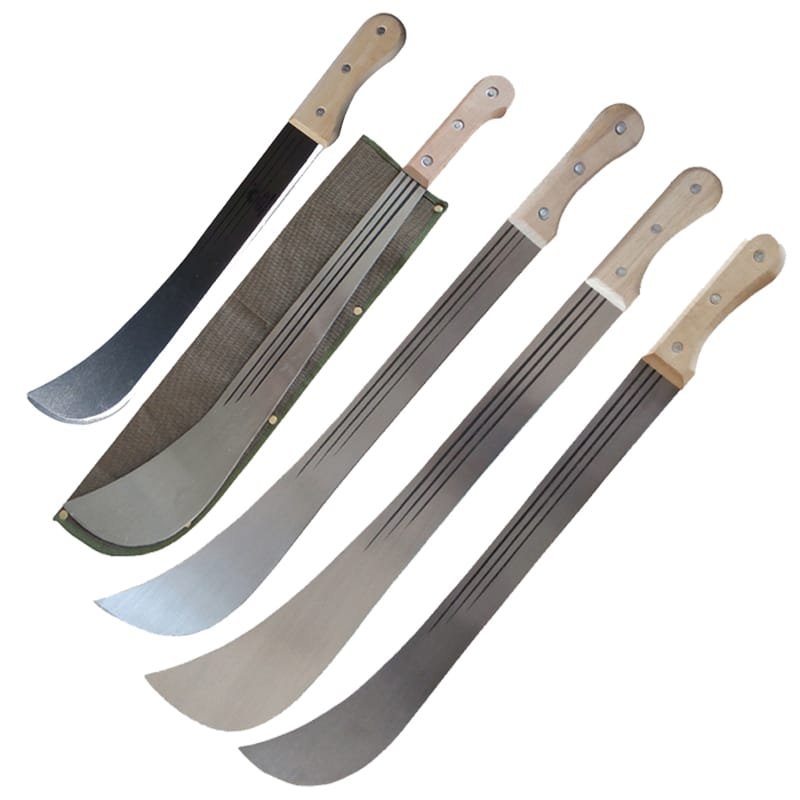
No. A thicker machete blade can change weight, balance and edge entry, but it does not automatically improve farm work or durability. Compare finished dimensions at agreed points, the same edge and handle, and representative cutting tasks. Let intended users evaluate control and fatigue across realistic periods. Then approve a production-intent sample and record the selected thickness with tolerances.
Key Takeaways
- Spine thickness and thickness just behind the edge describe different geometry.
- Thicker stock is not a substitute for specified steel and heat-treatment checks.
- A brief chopping trial does not prove long-term durability.
- Request a Wholesale Quote:Whatsapp : (+86 13383021196) E-mail : gemlight@ganzhedao.com
What Does the Quoted Thickness Measure?
Specify the spine location and measurement method. A blade may taper toward its tip, so one nominal reading cannot describe every working section.
Thickness behind the edge reflects grind geometry and differs from spine thickness. Compare blade width, profile, length and assembled weight as well; workers swing the complete tool, not a sheet of bare steel.
Ask whether a quote refers to steel stock or finished blade dimensions. Agree on measurement points and tolerances before approving production.
| Known item | Needs verification | Buyer action |
|---|---|---|
| Spine thickness | Location and taper | Mark several measurement stations. |
| Behind-edge thickness | Grind shape and cutting entry | Compare approved finished samples. |
| Overall mass | Profile, handle and balance | Weigh complete assembled tools. |
| Material and treatment | Batch evidence and suitability | Verify separately from thickness. |
Which Farm Job Benefits From More Material?
Repeated cuts through soft growth may favor easier redirection and lower fatigue. Dense brush may demand different chopping feel, but profile, mass distribution and edge design matter alongside thickness.
Extra weight can complicate control near standing crops or tire users over a full shift. A thinner blade is not necessarily weak; conversely, a thick blade cannot be assumed to resist misuse or impacts.
For distinct tasks such as boundary clearing and crop harvesting, two accepted profiles may serve better than one thickness labeled universal.
How Can Buyers Isolate Thickness in a Trial?
Where practical, compare identical blade outlines, lengths, handles, steel and edge finish while changing thickness. Record any supplier differences that cannot be held constant.
Have intended users assess cutting entry, control around crops, fatigue and resharpening over comparable tasks. Inspect bends, chips and joints afterward, noting any contact with soil, wire or stone.
Compare quoted unit price, cartons and shipping weight. If a thicker model is accepted, retain the production-intent sample and trial reason. A named product such as Tramontina’s 18-inch machete illustrates that thickness is product-specific, not a universal benchmark.
Request a Wholesale Quote:Whatsapp : (+86 13383021196) E-mail : gemlight@ganzhedao.com
What Should the Order Lock Down?
RFQ checklist:
- Finished thickness by marked station: prevent incomparable supplier numbers.
- Blade outline, length and width: control the working geometry.
- Steel and treatment evidence: separate material quality from blade thickness.
- Handle and finished weight: preserve accepted handling.
- Edge finish and guard fit: keep cutting and packing consistent.
- Sample, tolerance and inspection plan: check bulk units against the chosen design.
Require written approval and new samples if the factory changes stock after acceptance.

Buyer FAQ
Does a thick spine guarantee a durable edge?
No. Edge geometry, steel, heat treatment and use also matter.
Can a lighter blade suit dense work?
It may, depending on the complete design and trial results; test rather than infer from weight.
Is one thickness reading enough?
No. Mark locations on the finished blade and record taper where applicable.
Request a Wholesale Quote:Whatsapp : (+86 13383021196) E-mail : gemlight@ganzhedao.com