Quick Answer
Use an approved machete reference sample as a physical benchmark during pre-shipment batch inspection. Compare random sealed-carton samples directly against the signed master sample for blade outline, critical dimensions, handle assembly tightness, edge grinding, surface coating, and carton markings. Document all variances photographically and calculate defect thresholds against agreed AQL standards before signing the lot release certificate.
Key Takeaways
- Inspect only random samples drawn from sealed master cartons across the entire production lot.
- Superimpose production blades directly over the approved sample silhouette to verify profile curvature.
- Classify defects into critical, major, and minor categories under agreed AQL sampling thresholds.
Establish the Master Reference Baseline Before Inspection
A signed reference sample connects approved engineering design to mass production. Keep the signed sample in clean, dry storage with its revision tag, drawing number, and purchase order reference intact. Confirm that the inspector holds the active revision, as an outdated prototype cannot verify a redesigned blade.
Bring the approved technical drawing and specification sheet along with the physical sample. Photograph the reference tool under calibrated lighting beside a precision scale. Define which features must match the sample exactly (such as handle profile and blade silhouette) and which allow stated engineering tolerances.
Request a Wholesale Quote:Whatsapp : (+86 13383021196) E-mail : gemlight@ganzhedao.com
| Inspection area | Critical checkpoint vs. master sample | Verification tool and method |
|---|---|---|
| Blade geometry | Profile outline, width at 3 stations, spine gauge | Silhouette overlay, calibrated digital calipers. |
| Handle & assembly | Tight fit, flush rivet seating, no splintering | Visual check, manual pull and torque verification. |
| Cutting edge & finish | Uniform primary bevel, complete varnish coverage | Bevel angle gauge, surface coating visual check. |
| Packaging & markings | Carton labels, SKU barcodes, VCI anti-rust wrap | Barcode scanner, carton gross weight scale. |
Draw Random Samples from Sealed Production Cartons
Inspectors must never evaluate only pre-selected display tools laid out in a factory showroom. Select master cartons at random from completed, packaged production lots using a recognized statistical sampling standard such as ANSI/ASQ Z1.4 or ISO 2859-1. Ensure sampled cartons represent early, middle, and late manufacturing runs.
Inspect carton strapping, double-wall corrugated strength, and outer markings against the purchase order before unsealing. Pull finished machetes from top, middle, and bottom carton layers, confirming that inner counts and protective blade dividers match the packing list exactly.
Compare Physical Profiles and Manage Lot Release
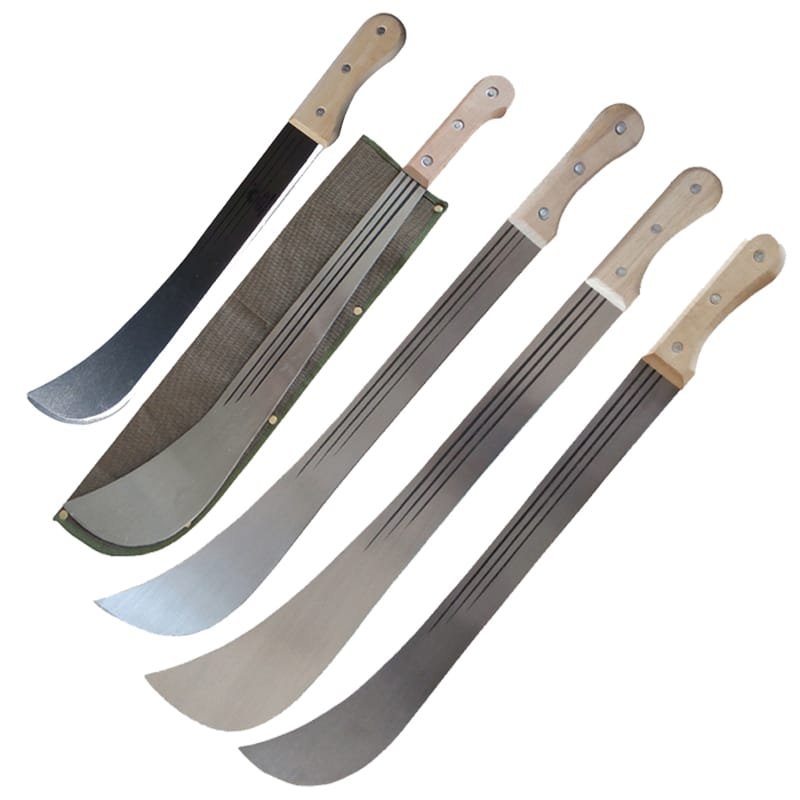
Place production blades directly over the approved sample silhouette to catch curvature drift, tip distortion, or improper belly grinding. Measure spine thickness, blade length from the handle shoulder, and forward width using calibrated micrometers. Examine handle scales for flush rivet seating, tight tang joints, and absence of sharp mold flash.
Classify findings into critical (loose handles, cracked steel), major (incorrect profile, out-of-tolerance thickness), and minor defects (cosmetic varnish runs). Calculate totals against agreed AQL thresholds. If a lot fails, issue a formal non-conformity report requiring root-cause analysis and full-batch re-inspection before signing release documents.
Request a Wholesale Quote:Whatsapp : (+86 13383021196) E-mail : gemlight@ganzhedao.com
Batch-Inspection RFQ Checklist
- Signed master reference sample: maintain tagged, revision-controlled physical samples.
- Statistical sampling standard (AQL 1.0/2.5): define sampling size and defect limits.
- Profile overlay comparison protocol: verify blade curvature and forward width.
- Calibrated measuring instruments: use verified calipers, micrometers, and hardness testers.
- Handle joint and rivet integrity checks: ensure no loose fasteners or split scales.
- Formal non-conformity and re-sampling rules: prevent unapproved lot release.
Buyer FAQ
Can an inspector evaluate pre-selected factory display tools?
No. Reliable inspection requires random sampling from sealed master cartons in the finished warehouse.
What happens if a production lot fails AQL inspection?
The lot is quarantined; the supplier must perform full sorting/rework and submit to a complete re-inspection.
Does an older prototype sample remain valid after a drawing revision?
No. Any technical change requires a newly signed reference sample reflecting active drawing revisions.
Request a Wholesale Quote:Whatsapp : (+86 13383021196) E-mail : gemlight@ganzhedao.com