Quick Answer
Protect export machetes at three levels: fit each finished blade with a guard that covers the edge and tip, separate tools inside the carton, and keep the load dry and stable. Approve a complete packed sample, then trial-handle sealed cartons and a loaded pallet. Inspect cartons from different models and lots before shipment; pallet wrap cannot replace internal blade protection.
Key Takeaways
- A guard sized only by blade length may leave a hook exposed.
- Unsharpened blades still need separation against abrasion.
- A handling trial exposes obvious weakness but cannot guarantee every transport condition.
Where Can Damage Start?
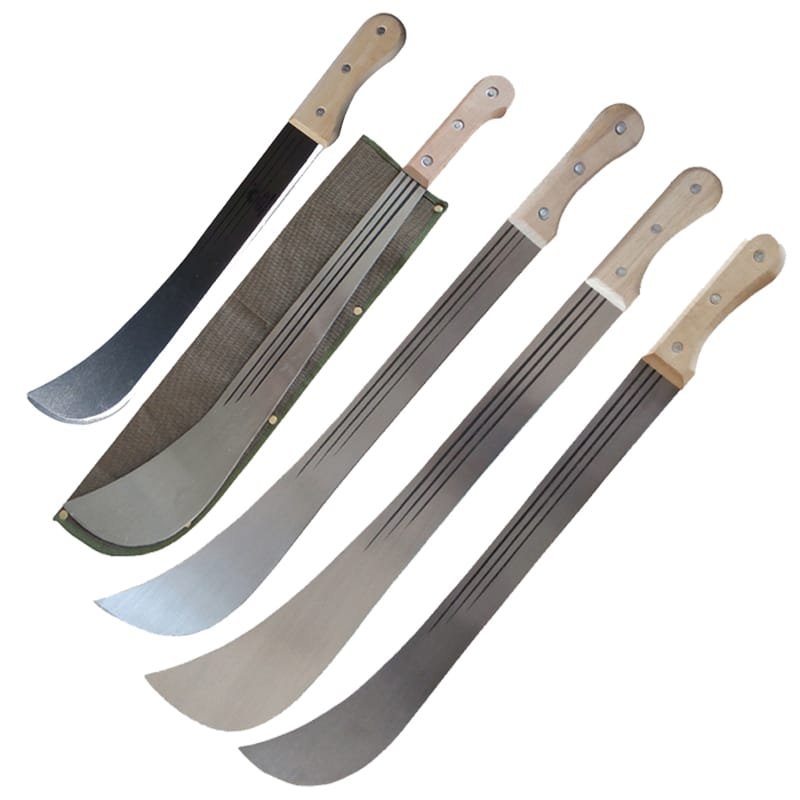
Mark the sharpened edge, tip, hook and exposed steel on a profile drawing. A broad bolo tip may require different protection from a straight blade; handles or rivets can also press against neighboring surfaces.
State whether the order is retail-ready or destined for local repacking. A display sleeve is not necessarily a secure shipping guard, and a finished edge can cut through thin film during normal movement.
Request a Wholesale Quote:Whatsapp : (+86 13383021196) E-mail : gemlight@ganzhedao.com
| Risk | Verify | Buyer action |
|---|---|---|
| Edge and tip contact | Guard coverage and retention | Approve protector on finished profile. |
| Tool-to-tool rubbing | Movement inside closed carton | Add divider or fixed orientation. |
| Moisture | Dry goods, coating and pack compatibility | Approve dry packed sample. |
| Stack pressure | Bottom cartons and pallet gaps | Trial-stack actual cartons. |
How Should Each Tool and Carton Be Protected?
Fit a retained sheath, edge guard or sleeve to the actual profile. Keep blades from striking each other and protect the first and last tools in a stack. Agree on inner and master-carton counts to avoid crushing handles or dislodging guards.
Dry steel before wrapping. Where oil, barrier film or desiccant is proposed, check compatibility with grips, labels and retail packs. Do not seal moisture inside a sleeve and assume a desiccant fixes it.
How Do Buyers Verify the Packed Shipment?
Seal and reopen a trial carton after normal handling. Check guards, cardboard cuts, rubbed coating, chipped tips and unit count. Measure final carton size and gross weight after every protective material is included.
Trial-stack production-intent cartons; check the bottom case, pallet support, labels after wrapping and route-specific pallet requirements with the forwarder. At pre-shipment inspection, sample sealed cartons across SKUs and lots, then link any damage to carton and lot codes before rework.
Request a Wholesale Quote:Whatsapp : (+86 13383021196) E-mail : gemlight@ganzhedao.com
Export-Packing RFQ Checklist
- Blade drawing and edge state: fit protection to the actual tip.
- Guard material and retention: prevent edge exposure in transit.
- Inner separation and orientation: prevent rubbing and cuts.
- Dryness and rust treatment: limit corrosion without staining packs.
- Carton count, size and weight: plan safe stacking and freight.
- Packed trial and inspection rule: check shipment against the approved unit.

Buyer FAQ
Does pallet wrap protect individual blades?
No. Fit and separate the tools inside each carton.
Can one guard fit every model?
Only after tip coverage and retention are proven on each profile.
Does a dry-looking pallet prove the blades are dry?
No. Check the packed units before sealing.
Request a Wholesale Quote:Whatsapp : (+86 13383021196) E-mail : gemlight@ganzhedao.com