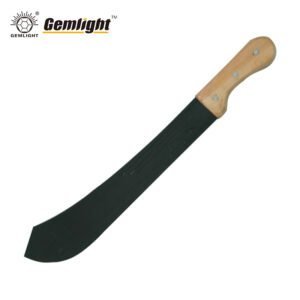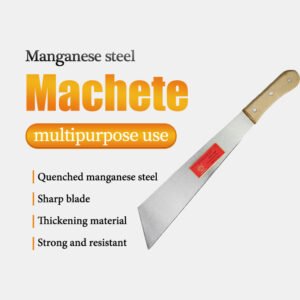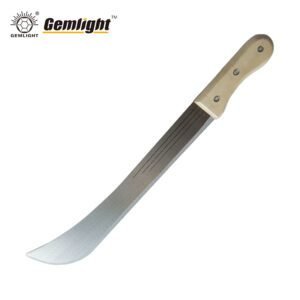

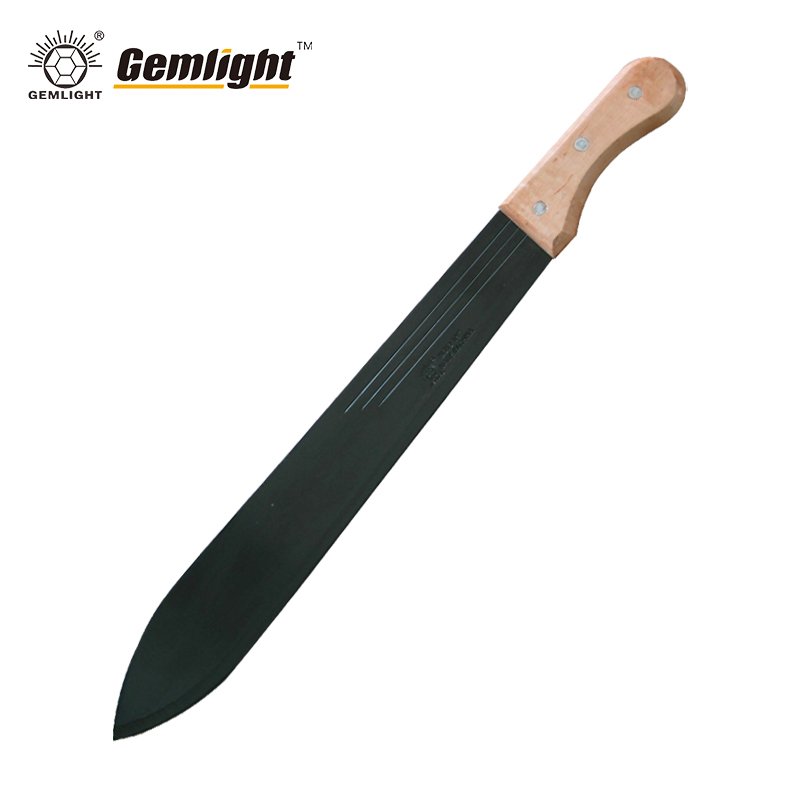


The black machete is not just a visual statement—it’s a reliable tool designed for the rigorous demands of outdoor and industrial use. Characterized by a black-coated blade, these machetes are preferred by professionals in agriculture, forestry, landscaping, and field survival due to their utility, durability, and low-maintenance qualities.
The core function of a black machete remains the same across applications: to cut, clear, chop, and slash effectively. However, its visual design—particularly the black blade—adds functional advantages such as reduced glare under sunlight, better corrosion resistance, and reduced visibility in tactical scenarios.
There are several distinct categories of black machetes, ranging from lightweight, fast-handling tools for garden and vegetation management to heavier-duty models for chopping hardwood or clearing dense bush. Straight-bladed machetes are often used for precise, repetitive cuts, while curved or hooked versions, like the Panga or Billhook, offer increased power on follow-through swings.
Understanding how form meets function is key for professionals who rely on their tools daily. Whether clearing sugarcane in Southeast Asia or prepping trails in Africa, the right black machete can drastically improve efficiency and safety. This chapter lays the foundation for informed selection, helping users distinguish between appearance and true utility in the field.
The durability of a black blade machete depends largely on its material composition and the quality of its manufacturing. The most common material used is high-carbon steel, known for its balance between hardness and flexibility. Black steel machetes made from 1055 or 65Mn carbon steel are especially popular due to their edge retention and ease of sharpening.
A key component of the black blade machete’s identity is its finish. The black coating isn’t merely aesthetic—it often consists of a heat-treated or powder-coated finish that increases corrosion resistance and provides a tactical, non-reflective surface. Some machetes are blackened through chemical treatments or protective lacquers, which help protect against humidity and wear.
Blade thickness and grind also contribute to performance. A thinner blade excels in slicing vegetation, while a thicker spine supports chopping denser material. Professionals must consider these variables based on their environment: jungle terrain, agricultural fields, or dry, brush-heavy areas all demand different specifications.
Handle materials further enhance usability. Ergonomic grips made from polypropylene, rubber, or hardwood provide stability during long working hours. A full tang construction—where the blade extends through the handle—adds strength and durability, which are critical for repeated, high-impact use.
By understanding the materials and production techniques behind black blade machetes, buyers can make smart decisions that maximize performance and longevity. It’s not just about how the machete looks—it’s about what it’s made of and how well it’s built.
Dingzhou Gemlight Cutting Tools Co., Ltd. stands at the forefront of black steel machete production, with over 30 years of experience in manufacturing and more than two decades of export success in Africa, Southeast Asia, and Latin America. As a direct factory supplier, we combine heritage craftsmanship with modern production technologies to deliver robust, cost-effective solutions for professional buyers.
Our product line includes a wide range of black carbon steel machetes, tailored to diverse operational needs. From our best-selling Black Bolo Machete for agricultural use to the Heavy-Duty Panga Machete designed for clearing heavy brush, each model undergoes rigorous quality control to ensure consistent performance in the field.
Key offerings include:
We also provide flexible OEM/ODM services, including logo engraving, custom handle materials, and packaging solutions tailored to regional markets. Whether you’re sourcing for resale, institutional use, or NGO distribution, our factory supports bulk orders with competitive lead times and global shipping.
With ISO and SGS-certified facilities, Gemlight is committed to delivering consistent quality and professional service. When you choose a Gemlight black steel machete, you’re not just buying a tool—you’re investing in performance, reliability, and a trusted manufacturing partner.
In Africa, the machete is more than a tool—it’s a cultural and agricultural necessity. Known by various local names depending on the region, the African machete takes on several unique forms, each adapted to specific cutting tasks and environmental conditions.
One of the most well-known types is the Panga machete, characterized by its broad, forward-weighted blade and strong chopping power. Widely used across East and Southern Africa, the Panga is ideal for clearing underbrush, harvesting crops, and even processing meat. In West Africa, variants such as the Gator machete or regional “Sime” types may appear, each crafted with local input and preferences in mind.
These African machetes are often black-coated to withstand heat, humidity, and extended field use. As such, black machete models with regional blade geometry have become increasingly popular in African markets, where durability and edge retention are key purchasing criteria.
At Gemlight, we work closely with African distributors and agricultural cooperatives to offer tailored machete models that meet local standards. Our factory produces black steel machetes modeled on traditional designs but upgraded with modern materials and ergonomics. This fusion of tradition and innovation ensures high user satisfaction and long-term performance.
Understanding what an African machete is called—and how it’s used—enables buyers to select culturally appropriate, highly functional models. Whether labeled Panga, Gator, or locally specific names, the essence remains the same: a black steel machete designed to handle the demands of the land and the hands that use it.
Choosing the right black steel machete starts with understanding your intended use. Agricultural professionals may need a long, thin blade for sugarcane or maize harvesting, while forestry workers or land clearers will benefit more from a heavy, thick-bladed Panga or Kukri-inspired design. Survivalists and outdoor guides often look for tactical models with sawback edges, integrated sheaths, or multi-functional features.
Key factors to consider include:
Maintenance is also vital. Black-coated blades resist corrosion better, but regular cleaning and occasional oiling will extend lifespan. Sharpening should be performed with proper tools to maintain edge geometry.
Buyers sourcing for organizations, NGOs, or commercial distribution should also consider ease of bulk logistics, packaging preferences, and after-sales support. Working with a direct factory like Gemlight ensures these factors are addressed proactively, with customization options built into production planning.
By aligning blade characteristics with usage requirements, field professionals can confidently select a black steel machete that delivers lasting performance and value. The right tool in the right hands makes all the difference in field productivity and worker safety.