How Can We Use a Hoe? – Discover the Ultimate Tool for Garden Maintenance
In any gardener’s toolbox, one of the most versatile and indispensable tools is the humble hoe. Whether you are an amateur hobbyist or an experienced green thumb, knowing how to use a hoe can elevate your gardening game by helping you maintain soil health, remove weeds, and prepare your garden for planting. From long, sweeping motions to detailed, precise actions, the hoe offers a wide range of uses that make gardening tasks more efficient and less labor-intensive. In this guide, we’ll explore how a hoe can be used for various gardening tasks, highlight the different types available, and provide expert tips to ensure you get the most out of this essential tool.
The Importance of a Hoe in Your Garden
The hoe is a classic gardening implement that has been used for centuries. Its simplicity and efficiency make it an essential tool in the gardening world. Hoes are primarily used for weeding, loosening soil, and preparing planting areas, but their versatility extends far beyond just these functions.
A well-chosen hoe can help you save time and energy, ensuring your garden thrives without the backbreaking effort that comes with hand weeding or tilling the soil with a shovel. Hoes allow you to work efficiently, especially when your garden grows large, with different crops or areas that require regular upkeep.
But how exactly can a hoe be used effectively? Let’s dive into the different tasks you can accomplish with this handy tool.
1. Weeding Made Easy: Clearing Weeds Without Breaking a Sweat
Weeds are a gardener’s biggest enemy, but with a hoe in hand, managing weeds becomes far easier. The key is to use the hoe to cut off weeds at ground level, severing their roots just beneath the soil’s surface. When done correctly, the weeds will dry out and die under the sun, keeping your garden looking pristine.
For larger areas, the Dutch hoe is an excellent choice. Its flat, angled blade allows for easy slicing action that works well for cutting weeds just below the surface. Use the sweeping motion of the Dutch hoe to glide over the soil, effectively cutting off weeds without disturbing the surrounding plants. This method requires very little force but is highly effective when the hoe is kept sharp.
For areas with more persistent weeds, such as those that have deeper roots, a draw hoe is the go-to tool. Its flat, rectangular blade allows you to pull the hoe towards you, cutting through soil and weed roots in one smooth motion. The slicing motion is perfect for tackling weeds that are stubbornly rooted in place.
Pro Tip:
To keep your hoe working at its best, always sharpen the blade before each use. A sharp hoe makes the work easier, more efficient, and ensures weeds are severed cleanly from their roots without regrowing.
2. Loosening Soil and Aerating the Garden
Proper soil aeration is key to creating a healthy environment for your plants. By loosening compacted soil, you allow water, air, and nutrients to penetrate deep into the ground, promoting healthier root growth.
Using a draw hoe for loosening soil works effectively in both vegetable beds and flower gardens. By pulling the hoe towards you, you can break up large clumps of soil, turning over the earth and ensuring good aeration. This action also helps incorporate organic matter like compost into the soil, enriching its texture.
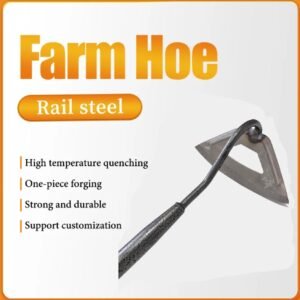
Another great option for soil loosening is the razor hoe. This tool is particularly effective for getting into tight spaces between plants, allowing you to clear soil without disturbing delicate root systems. The narrow, beak-like blade helps remove small clumps of dirt while keeping the surrounding plants safe from damage.
Pro Tip:
When loosening soil, make sure to avoid using your hoe on wet soil, as this can lead to clumping. It’s best to hoe the soil when it’s dry, as the friction will create a dust mulch, which helps prevent weed regrowth.
3. Planting and Creating Seed Drills
A well-tilled and weed-free bed is essential for starting seeds and transplanting young plants. One of the most important tasks a hoe can assist with is making seed drills (or shallow planting trenches).
The Dutch hoe is perfect for creating neat, uniform rows where you can plant seeds. Simply use the hoe to push it through the soil and form a shallow trench. This method is especially beneficial for seeds that need to be buried deeply or covered with soil after planting. Once the seeds are in place, you can cover them with soil using a draw hoe, reducing the need to bend over.
When sowing large seeds such as peas, beans, or carrots, a draw hoe comes in handy to cover the seeds evenly with soil. Simply use the hoe to drag soil over the top of your seeds in one smooth motion. This technique reduces strain on your back, allowing you to work for longer periods without discomfort.
4. Covering Seeds and Soil Maintenance
Once you’ve planted your seeds, you’ll want to ensure they’re properly covered to keep them moist and protected from birds and other pests. A draw hoe is great for covering seeds after sowing them into drills. This method allows you to cover the seeds efficiently, all while keeping a comfortable posture.
Moreover, hoes can also be used to maintain soil structure and help break up clumps that form after watering. This aerates the soil and prevents it from becoming compacted, keeping the root systems of your plants healthy.
5. In Tight Spaces: The Onion Hoe and Other Smaller Tools
When working in smaller, tightly-packed garden areas, you need tools that can maneuver around plants without causing damage. The onion hoe is a small, short-handled hoe perfect for this job. Its smaller head allows for more precision, enabling you to weed or till areas
In addition, a razor hoe with a small, beak-like blade is also ideal for delicate
Choosing the Right Hoe for Your Needs
With all the different types of hoes available, it’s important to select the one best suited to your gardening tasks. Here are a
- For weeding: The Dutch hoe is ideal for slicing weeds just below the surface with ease.
- For precision weeding: Choose a razor hoe or onion hoe for smaller, more delicate
- For soil loosening: A draw hoe is great for breaking up compacted soil
- For planting: The Dutch hoe is excellent for creating neat, even seed drills.
Conclusion: Make Your Gardening Efforts Efficient and Rewarding with the Right Hoe
Whether you’re a novice gard
At our store, we offer a wide selecti