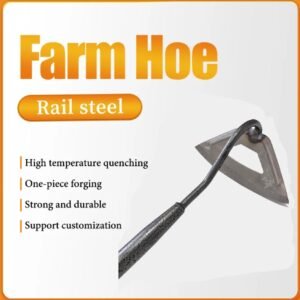
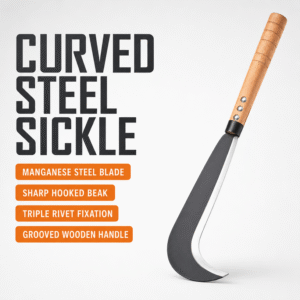
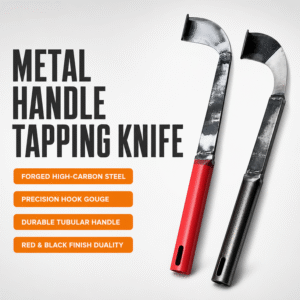
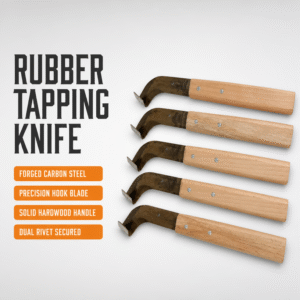
A garden digging spade is a foundational tool for professional agriculture, landscaping, and land maintenance operations. For your business, it is not a seasonal product, but a long-term revenue driver with stable demand across multiple industries. When you supply a reliable garden digging spade, you deliver durability, efficiency, and predictable performance—qualities that professional buyers depend on to protect productivity and margins. This tool category continues to perform strongly in B2B markets due to its wide application and consistent reorder potential.
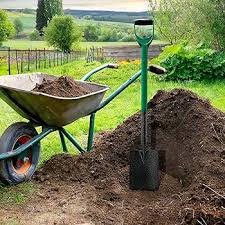
Professional applications that create continuous demand
Garden digging spades are used daily in agricultural field preparation, planting, soil turning, and drainage maintenance. In landscaping projects, they support bed shaping, edging, leveling, and transplanting tasks. Municipal and infrastructure teams also rely on garden digging spades for green area maintenance and light excavation work.
Because these applications occur year-round, demand remains stable rather than seasonal. As a result, garden digging spades offer predictable turnover and reduced inventory risk for importers, wholesalers, and distributors.
Blade material and durability fundamentals
The blade is the working core of a garden digging spade. High-carbon steel is commonly selected due to its excellent hardness, wear resistance, and impact strength. Proper heat treatment ensures the blade maintains rigidity for penetration while retaining enough flexibility to resist cracking under stress.
Consistent material composition across production batches ensures uniform performance. For bulk buyers, this consistency reduces inspection costs and safeguards brand reputation in competitive markets.
Blade geometry and digging efficiency
Blade shape directly influences digging speed and user control. A well-designed garden digging spade features optimized curvature, appropriate thickness, and a sharpened edge to penetrate soil efficiently.
Additionally, balanced blade width allows effective soil lifting without excessive resistance. This efficiency improves productivity for professional users, which is a key factor in repeat purchasing decisions.
Surface finishing and corrosion resistance
Professional tools are frequently exposed to moisture, fertilizers, and outdoor storage conditions. Polished or coated blade surfaces reduce soil adhesion and simplify cleaning, improving working efficiency.
Moreover, corrosion-resistant finishes protect the spade during transport and storage. Uniform surface quality across shipments enhances perceived value and strengthens buyer confidence.
Handle materials and ergonomic performance
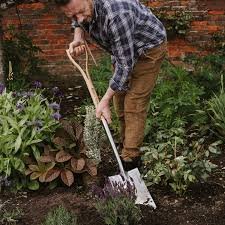
Handle construction significantly affects comfort and operational efficiency. Wooden handles provide natural shock absorption and traditional handling feel. Fiberglass or reinforced composite handles offer moisture resistance and extended service life.
Proper handle length and diameter improve leverage and reduce operator fatigue. These ergonomic considerations are critical for professional users who rely on garden digging spades for repetitive tasks.
Blade-to-handle joint reliability
The connection between blade and handle is a critical stress point. Reinforced sockets and precise assembly prevent loosening and breakage during heavy use.
Reliable joints improve safety, reduce downtime, and minimize after-sales issues. For your business, this reliability translates into fewer complaints and stronger long-term buyer relationships.
Manufacturing consistency and quality control
Garden digging spades are produced using controlled forging or precision stamping processes to ensure uniform blade dimensions. Heat treatment stabilizes mechanical properties, while standardized assembly guarantees repeatable quality across large orders.
Quality control typically includes hardness testing, dimensional checks, and handle pull tests. These measures ensure each unit meets professional-grade expectations.
Packaging solutions for bulk logistics
Packaging plays a vital role in protecting garden digging spades during transportation. Bundled packing or reinforced cartons prevent blade damage and handle abrasion.
Optimized stacking improves container utilization, reducing freight cost per unit. Clear labeling supports efficient warehouse handling and downstream distribution.
Bulk purchasing value for professional buyers
From a commercial perspective, garden digging spades deliver strong value. Broad application ensures steady demand, while bulk purchasing lowers unit cost and improves pricing flexibility.
Stable production capacity allows buyers to plan inventory with confidence, supporting long-term supply agreements and predictable sales cycles.
OEM customization for brand differentiation
OEM cooperation allows you to customize garden digging spades to match your brand positioning. Options include blade coating, handle finish, markings, and packaging design.
Private labeling strengthens brand recognition and helps your product stand out in crowded markets without changing its proven functional design.
ODM development for market-specific needs
ODM services enable deeper adaptation to regional or professional requirements. Blade size, thickness, or handle length can be adjusted based on soil conditions or usage habits.
This flexibility allows you to offer tailored solutions that competitors may not provide, strengthening your value proposition and buyer loyalty.
Adaptability across global markets
Garden digging spades perform reliably across diverse regions. In agriculture-focused markets, durability and cost-performance balance are critical. In landscaping and municipal sectors, ergonomics and finish quality carry more weight.
Maintaining core quality while adjusting specifications allows you to serve multiple markets efficiently without expanding product complexity.
Total cost of ownership advantage
Professional buyers evaluate tools based on lifetime value. A durable garden digging spade reduces replacement frequency, lowers downtime, and improves labor efficiency.
As a result, buyers experience lower total operating costs, which encourages repeat orders and long-term cooperation.
Sustainability through long service life
Durable tools contribute to sustainability by reducing waste and resource consumption. A long-lasting garden digging spade aligns with responsible sourcing expectations in modern B2B procurement.
Stable manufacturing partnerships also support efficient production planning and reduced environmental impact.
After-sales stability and operational efficiency
Consistent quality minimizes warranty claims and customer complaints. This stability protects margins and reduces administrative workload.
Reliable performance strengthens trust across your distribution network, accelerating reorder decisions and expanding long-term cooperation.
Strategic role in a professional tool portfolio
Including garden digging spades in your product lineup strengthens your catalog with a universally demanded tool. It complements agricultural and landscaping equipment, supporting cross-selling and higher average order values.
This strategic positioning enhances your competitiveness and market reach.
Long-term cooperation and scalable growth
Reliable manufacturers support your growth through scalable capacity, consistent quality, and transparent communication. As order volumes increase, production efficiency improves and costs decrease.
This scalability strengthens your supply chain resilience and supports sustainable expansion.
Final value perspective for B2B buyers
The garden digging spade is a dependable, high-utility tool that delivers durability, efficiency, and consistent performance. For importers, wholesalers, distributors, and brand owners, it represents a stable, high-demand product that supports long-term profitability. By focusing on material quality, manufacturing control, and bulk procurement advantages, you secure a professional-grade solution that reinforces buyer trust and builds a strong foundation for continued B2B growth.