Bolo vs Panga: Which Blade Details Actually Differ by Model?
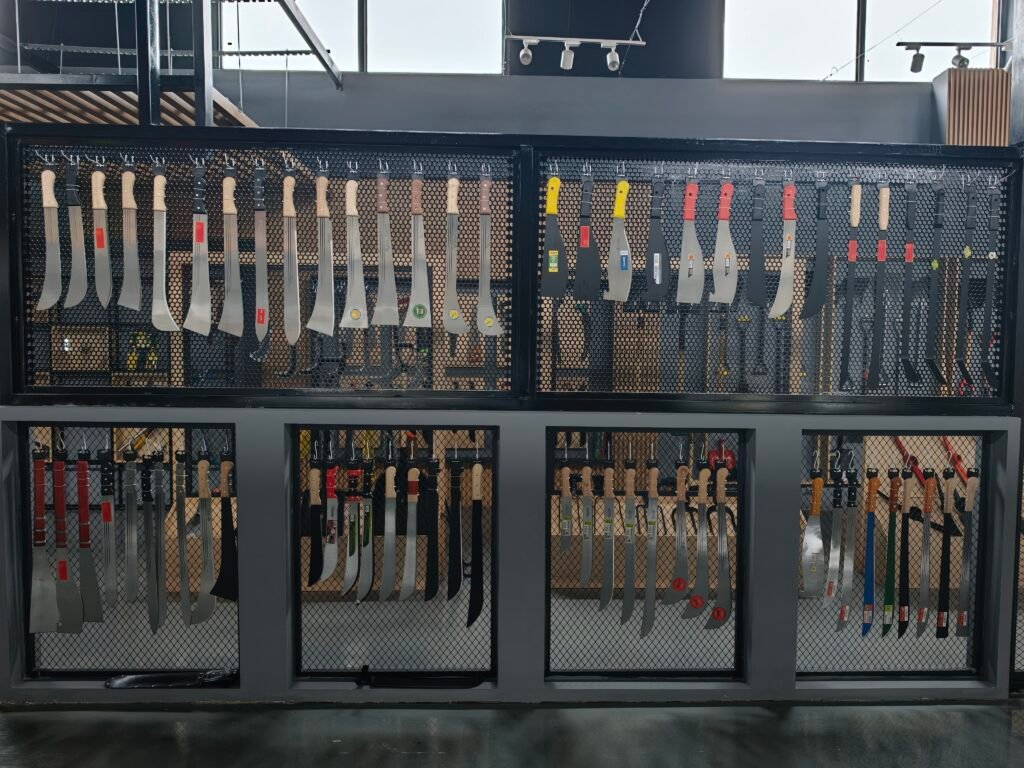
One supplier offers a bolo with a wide front section. Another shows a panga with a similar belly. Are they functionally identical?
Not necessarily. Both names can describe broad cutting tools, but commercial examples vary within each group. Their labels cannot tell a buyer every detail.
The useful question is which measurements and handling differences exist between the two offered models. Compare finished samples before treating them as substitutes.
Why Names Alone Do Not Separate These Blades
Bolo is associated with Philippine cutting-tool traditions. Export catalogs often use “bolo machete” for compact, forward-weighted examples.
Panga is associated with African cutting tools. Some catalog patterns show a deep belly or an upturned end.
Neither tradition collapses into one factory drawing. Regional tools and modern exports include different lengths, tips, and handles.
A broad tip does not automatically prove a blade is a bolo. A raised tip does not guarantee every buyer will recognize a panga.
Some sellers combine both terms in a product title. Treat that as a marketing description until you inspect the actual blade.
If local buyers ask for one name, ask to see the product they currently accept. Their sample is a stronger guide than an abstract definition.
For wholesale sourcing, use the names to shortlist models. Use drawings, measurements, and sample approval to identify what will be purchased.
Avoid saying bolos and pangas are mutually exclusive categories. Avoid saying they are interchangeable because they both cut vegetation.
A market can use a label broadly while still preferring a very specific handle and blade profile.
Request a Wholesale Quote:Whatsapp : (+86 13383021196) E-mail : gemlight@ganzhedao.com
Measure Where the Blade Gets Wider
Lay each blade flat with the handle aligned to the same starting point. Photograph them at the same scale beside a ruler.
Record blade length from handle junction to tip, plus total tool length. A nominal “18-inch” listing may refer to different dimensions.
Measure blade width near the handle, at the center, and at the widest forward point. Mark those exact locations on a drawing.
Look for the start of any widening. Two blades can share a maximum width but distribute metal differently along their lengths.
Inspect the edge curve. One model may have a pronounced belly; another may retain a straighter working section.
Check the spine and tip. An upturned point, rounded end, or broader nose changes how the tool looks and reaches material.
Ask whether the final section of the edge is sharpened. Do not assume that a visible tip serves as a cutting edge.
Measure thickness at specified points, not only at the base. Weight can change even where the visible outline looks nearly identical.
If the buyer has a drawing, overlay outlines only when both are printed at actual size. A tilted website photograph distorts proportions.
Check Weight, Grip, and Working Feel
Finished unit weight is useful, but it cannot describe balance by itself. Ask users how the two tools feel in controlled use.
A forward-heavy blade may favor some chopping work. It may also tire users who prefer repeated, lighter swings.
Compare grip length, shape, surface, and handle fastening. A different handle can alter how a familiar blade behaves.
Evaluate the blades on the actual vegetation and working motion. Do not use one isolated cut to declare a universal winner.
Ask workers whether they need reach, controlled close cuts, or stronger chopping. Their answers narrow the practical choice.
Confirm steel grade and edge condition separately from pattern. Neither a bolo nor a panga name guarantees specific material quality.
If durability is a concern, describe the failures already observed. Bent tips, loose handles, and edge wear need different checks.
Do not specify an unsupported hardness target merely to make one quotation appear better. Ask for evidence against agreed requirements.
A sheath or guard must fit the real blade outline. A standard straight sheath might not fit a broad or raised tip.
Request a Wholesale Quote:Whatsapp : (+86 13383021196) E-mail : gemlight@ganzhedao.com
Put Model Differences Into the Quote
Use a comparison sheet with one column for each offered model. List dimensions, profile, handle, material, finish, edge, and packing.
Ask suppliers to supply the same views and measurement points. Missing values should remain blank until clarified, not be guessed from photographs.
Separate base offers from alternatives. If the tender asks for a panga pattern, label any bolo proposal as a deviation requiring approval.
Request one finished sample of each candidate. A loose blade cannot show grip fit or how the edge is delivered.
Let intended users evaluate the candidates, and record concrete objections. “Feels different” should prompt a closer comparison of balance and handle.
Identify each accepted sample by a unique code. Tie that code to the written drawing and any production revisions.
State acceptable tolerances and pre-shipment inspection requirements. Otherwise, the second batch might no longer match the approved first batch.
Do not promise that a chosen model fits every market. A tool accepted by one importer may be rejected by another’s users.
Which Model Should a Buyer Order?
Choose the model that matches the end user’s task and approved local reference. A broad label is not a substitute for market testing.
If both samples work, compare price only after aligning edge finish, handle, protection, and packing. Then choose the better commercial fit.
If neither matches, request a revised drawing before the next sample. Do not commit to bulk production based on a near match.
For a repeat order, preserve model identity. Check any proposed factory change against the same reference, even if the product name stays unchanged.
Bolo versus panga is therefore a model comparison, not a simple naming verdict. The measurable differences deserve the purchase order space.
Send the two candidate photographs or a local reference tool with your inquiry. We can compare the actual blade and handle requirements before quoting.
Request a Wholesale Quote:Whatsapp : (+86 13383021196) E-mail : gemlight@ganzhedao.com