Quick Answer
Plan a mixed-machete pallet from actual packed cartons, not bare blade lengths. Record each SKU’s carton dimensions, gross weight, units and required quantity, then trial-stack the proposed mix. Check overhang, stability, loaded height and weight against carrier and receiving limits. Label every carton and link each pallet ID to an actual per-SKU manifest so buyers can inspect and reconcile the load.
Key Takeaways
- Blade length alone cannot determine packed carton footprint.
- A trial-stacked pallet reveals issues a spreadsheet may miss.
- A pallet ID needs an actual per-SKU carton manifest.
Request a Wholesale Quote:Whatsapp : (+86 13383021196) E-mail : gemlight@ganzhedao.com
Which Packed Data Must Be Collected?
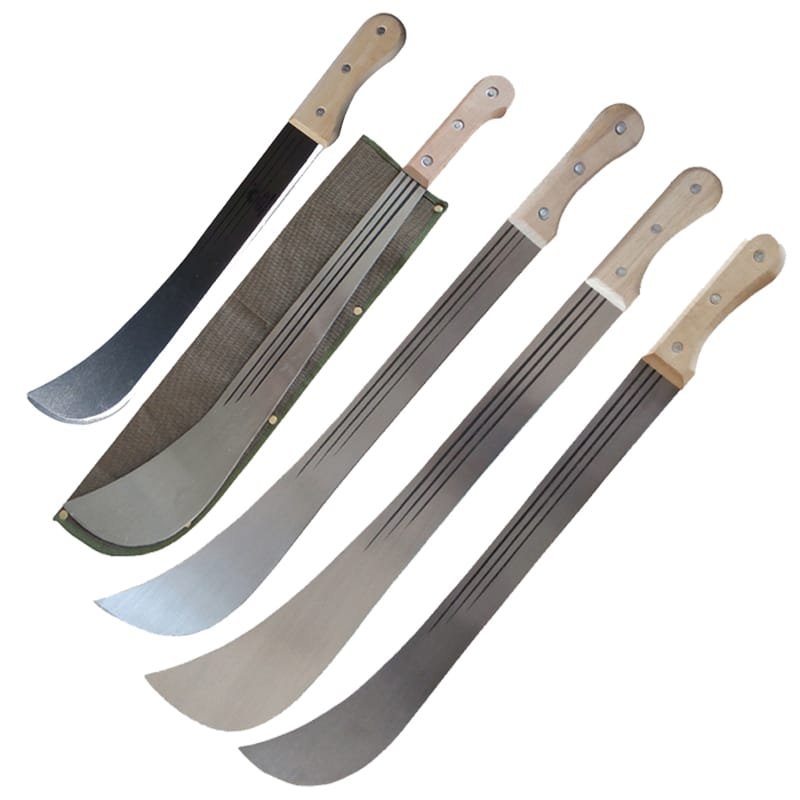
Get final carton length, width, height, gross weight and units per carton for every technical SKU. Include guards, sheaths, retail sleeves and inner packs in these measurements. A hooked tip or longer handle may change the box even when nominal blade lengths match.
State quantities by SKU and count partial cartons separately. Obtain pallet size, construction and empty weight from the chosen packing plan, then confirm route and destination requirements with the carrier.
| Item | Needs verification | Buyer action |
|---|---|---|
| Each packed SKU | Carton L × W × H, gross weight and count | Measure production-intent cartons. |
| Pallet structure | Footprint, empty weight and stack suitability | Confirm with packer and carrier. |
| Shipment | Loaded height, weight and receiving access | Trial-stack and weigh. |
How Do Buyers Test a Stable Mixed Load?
Plan carton footprints and orientation before stacking. Keep heavy cases from crushing lighter retail packs and do not allow long cartons to bridge unsupported gaps. Protect hooked tips from piercing adjacent boxes. Separate SKUs by layer or clear zone where receiving accuracy matters.
Photograph a trial-loaded pallet. Measure its actual gross weight and height, check wrap and straps, forklift clearance and any carrier overhang limit. If cartons change, repeat the layout: a small height change can remove a whole layer.
How Should Counts and Labels Be Reconciled?
Put SKU, revision, unit count and lot on cartons. Give each pallet an ID linked to a manifest of actual cartons by SKU and, where necessary, their layers and destinations. Record replacements after packing, not just planned counts.
Keep labels readable through wrap and leave inspectors access to every SKU’s sampling locations. At receiving, reconcile pallet IDs, cartons, packing list and purchase order before mixing stock. Ask the forwarder whether any wooden pallet treatment or marking is required on the actual route; handle material is a separate issue.
What Should the Mixed-Pallet RFQ Include?
RFQ checklist:
- SKU quantity and carton count: expose partial cases and mix.
- Final packed size and gross weight: calculate actual capacity.
- Pallet type and route: check transport requirements.
- Stack layout and trial photo: verify support and stability.
- Loaded weight, height and equipment limits: prevent handling surprises.
- Pallet IDs and per-SKU manifest: trace shipment to receiving.

Buyer FAQ
Can nominal blade length set pallet capacity?
No. Use final protected cartons and the loaded layout.
Can two SKUs share a pallet?
Yes, if stable and clearly identified in the manifest.
Do wood handles trigger pallet rules?
Product components and wooden packaging need separate checks.
Request a Wholesale Quote:Whatsapp : (+86 13383021196) E-mail : gemlight@ganzhedao.com