Quick Answer
Distributors should compare actual finished machete profiles against the main jobs and customer habits in their selling area, not select solely by pattern name. Trial a small set of distinct blades with local users, including bush, bolo, panga or cane forms where relevant. Record handling, task fit, price acceptance and maintenance, then stock only models with a clear role and controlled specifications.
Key Takeaways
- Machete style names and preferred shapes vary by region.
- Equal nominal lengths do not imply equal profiles or handling.
- Local trials do not establish demand across every district or season.
Define Work and Customer Groups First
Document crops, vegetation, clearance and row spacing. Ask farmers and retailers to show tools that users actually reorder. Separate harvesting, clearing and maintenance work as well as retailer, worker and tender needs.
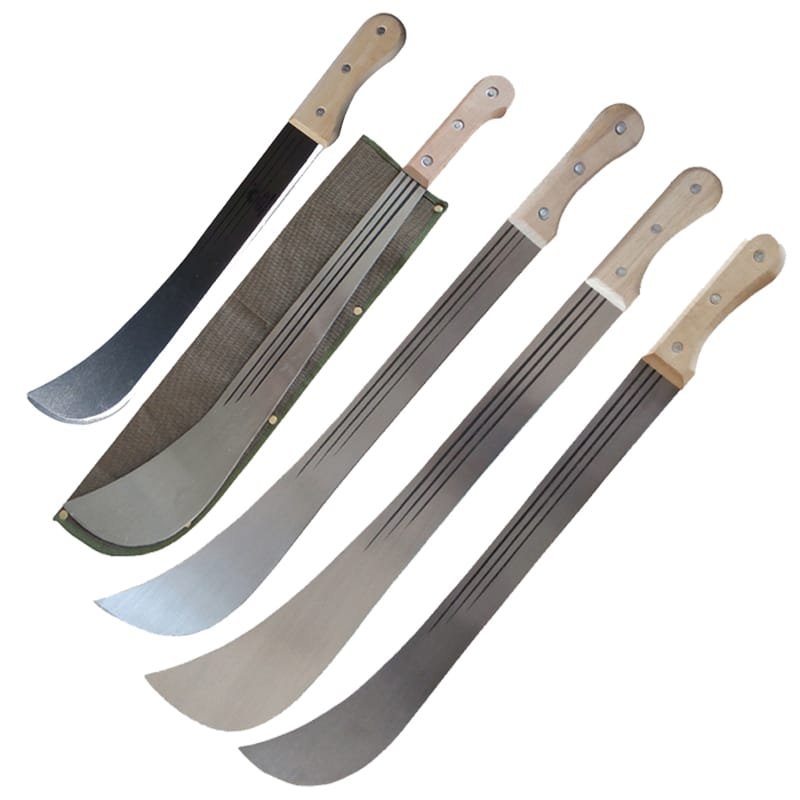
Keep local names as market signals, but photograph and measure the reference blade. A name such as panga or cutlass does not specify one universal outline.
Request a Wholesale Quote:Whatsapp : (+86 13383021196) E-mail : gemlight@ganzhedao.com
| Pattern candidate | Feature to verify | Local trial question |
|---|---|---|
| Bush or straightback | Actual width, length and balance | Can users control routine clearing? |
| Bolo-style | Forward width and finished handle | Does it suit the intended cut over time? |
| Panga | Local reference and complete outline | Is the named profile recognized and usable? |
| Cane knife | Tip, hook and cutting sequence | Does it assist crop cutting or gathering? |
Compare Finished Samples, Not Catalog Names
Compare blade and overall length, selected width and thickness points, tip, edge, assembled weight and grip. Similar labels can cover distinct tools. Obtain finished samples of different profiles rather than color variants of one blade.
Ask suppliers to quote any alternative shape separately and label it clearly. The machete style overview illustrates terminology overlap, not a mandatory design for your market.
Test Demand Without Multiplying SKUs
Have representative workers trial each sample on its intended task. Record control, repeated-use fatigue, sharpening needs and crop clearance separately; ask retailers whether customers would buy it at the proposed price.
Choose a core model for the largest confirmed task. Add another only where it serves a distinct job. Track repeat purchases and returns by SKU through the relevant selling cycle; an interesting free sample is not proof of retail demand.
Request a Wholesale Quote:Whatsapp : (+86 13383021196) E-mail : gemlight@ganzhedao.com
How Should Buyers Specify the First Range?
RFQ checklist:
- Target crops and customer group: filter proposals by actual use.
- Local reference photos and dimensions: clarify regional naming.
- Model-specific profile and handle: make samples reproducible.
- Finished edge, coating and accessories: compare complete tools.
- Target price and quantity per SKU: reveal viable stocking choices.
- Approved sample, lot and label rules: prevent wrong-model repeat deliveries.

Buyer FAQ
Should every market carry all four patterns?
No. Choose models for confirmed tasks and price acceptance.
Is panga a fixed dimensioned profile?
No. Ask for the local reference, drawing and finished sample.
When should a second pattern enter the range?
When it serves a distinct job and demand justifies the added stock.
Request a Wholesale Quote:Whatsapp : (+86 13383021196) E-mail : gemlight@ganzhedao.com