Quick Answer
Compare named steel grades and finished machetes, not the labels “carbon steel” and “stainless steel” alone. Test comparable blade profiles on the intended crops, then assess corrosion care, sharpening, storage and landed cost. Ask for material evidence linked to the model and lot. Neither category guarantees better cutting, toughness or maintenance-free use without a specific design and conditions.
Key Takeaways
- Carbon steel and stainless steel each cover multiple grades with different properties.
- A hardness reading at one location cannot establish steel identity.
- Stainless steel is not immune to staining under every storage condition.
- Request a Wholesale Quote:Whatsapp : (+86 13383021196) E-mail : gemlight@ganzhedao.com
What Do the Material Names Establish?
“Carbon steel” and “stainless steel” are material families, not exact chemistry, edge life or finished hardness. Ask each supplier for a named grade or agreed composition and the finished model it covers.
Record coating, varnish or oil separately. An attractive protected blade may not reveal its underlying grade. Require lot-linked declarations and, where justified, a suitable chemistry test method.
A retailer’s blade-material guide introduces categories; its generalizations should not replace evidence for an offered product.
Which Finished Tool Fits the Farm Task?
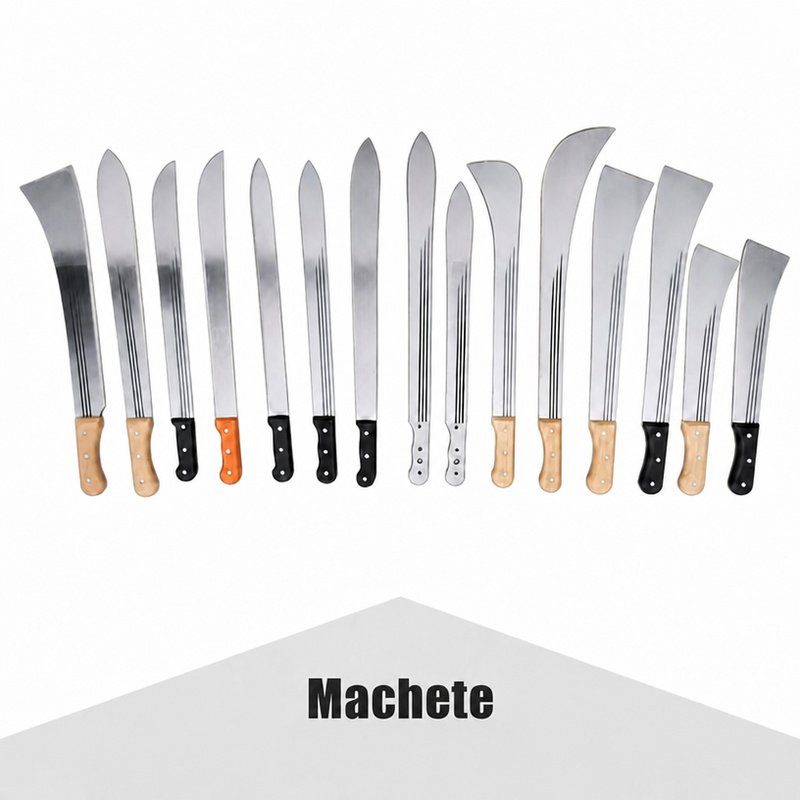
Specify whether crews cut flexible growth, cane or woody brush. Compare blade outline, thickness, balance, handle and edge finish before attributing any field preference to steel.
Use comparable workers, vegetation and starting edges. Note handling after repeated work and local sharpening practicality; record any contact with wire or stone separately.
A short field trial can screen task fit. It cannot prove lifetime durability or universally superior corrosion behavior.
| Known item | Needs verification | Buyer action |
|---|---|---|
| Claimed steel family | Grade, chemistry and lot link | Request declaration and suitable testing. |
| Finished blade | Profile, edge, treatment and handling | Trial matched production-intent tools. |
| Corrosion protection | Coated face, exposed edge and storage | Open comparable packed samples. |
| Distribution cost | Cleaning, sharpening and returns | Compare cost per usable tool. |

What Maintenance and Landed Costs Matter?
Check exposed cutting edges, rivet areas and storage conditions. Carbon-steel options may include transport oil or varnish; a stainless option still needs proper cleaning and storage.
Include edge finishing, guards, cartons, retailer preparation and returns in the delivered-cost comparison. Document stains under equivalent storage conditions rather than contrasting unrelated photographs.
If both candidates pass, consider a limited market trial and track returns by exact model and grade. Avoid advertising any blade as maintenance-free without support.
What Should the Material RFQ Specify?
RFQ checklist:
- Farm job and approved blade drawing: hold geometry constant during comparison.
- Named grade or chemistry range: replace vague material labels.
- Heat-treatment and test evidence: identify relevant properties and lot.
- Finished edge and handle: compare the assembled tool workers receive.
- Protection and packed condition: make arrival appearance comparable.
- Sample approval and change control: prevent silent substitutions on repeat orders.
Request compliant base quotes and separately labeled alternatives.
Buyer FAQ
Is every stainless machete maintenance-free?
No. Grade and exposure matter, and cleaning and storage remain important.
Can hardness prove a claimed steel grade?
No. It describes a measured property at a location, not full chemistry.
Should the cheapest unit price win?
Not before comparing delivered, usable tools and channel costs.
Request a Wholesale Quote:Whatsapp : (+86 13383021196) E-mail : gemlight@ganzhedao.com