
Sugarcane Machete Wholesale: The Complete 2026 Sourcing Guide for Importers
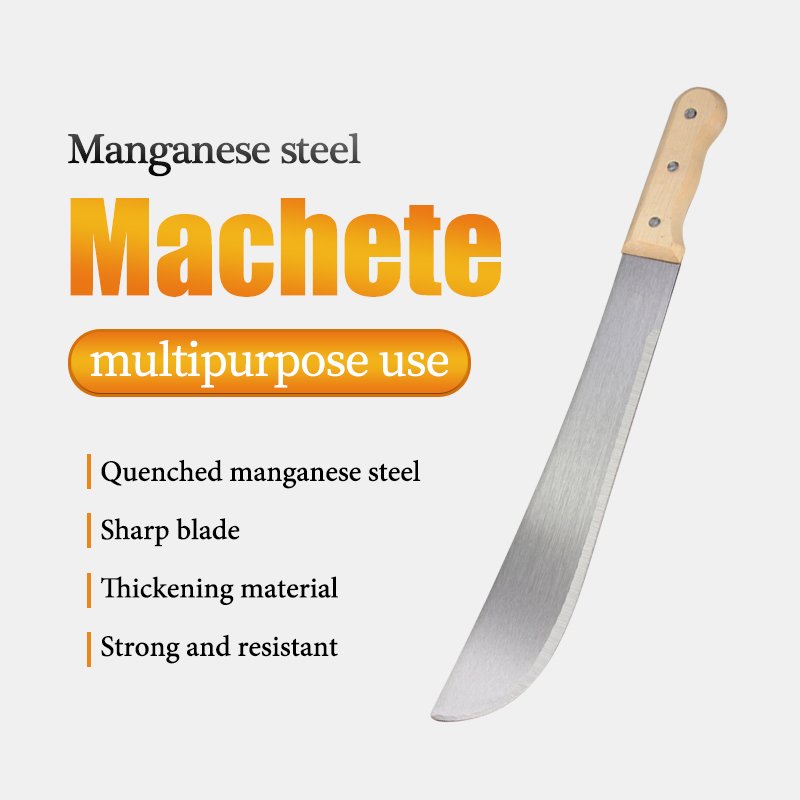 Gemlight M205 sugarcane machete — one of the most-shipped wholesale SKUs to Latin American importers in 2025.
If you sell agricultural tools into Latin America, the Caribbean, West Africa, or Southeast Asia, the sugarcane machete is almost certainly one of your top-3 SKUs — and also the item where a bad supplier will hurt you the fastest. A poorly heat-treated blade can crack after two weeks of cane harvesting, and one bad container ruins a distributor relationship you spent years building.
We’ve been manufacturing sugarcane machetes for over 30 years in Dingzhou, China, and shipped to importers in more than 50 countries. This guide is what we wish every buyer knew before requesting the first quotation — blade steel, MOQ math, hidden costs, and the 8-point checklist we use ourselves when auditing raw-material suppliers.
By the end of this article, you’ll be able to:
- Recognize a properly forged cane machete blade in 60 seconds
- Estimate landed cost per unit before you even ask for a quote
- Avoid the three most common OEM mistakes new importers make
💡 TL;DR — Sugarcane Machete Wholesale Quick Facts
- MOQ: 500 pcs for stock designs / 3,000 pcs for OEM
- FOB price range: 2.40–4.50 per unit depending on volume
- Best steel: 65Mn high-carbon spring steel, HRC 48–52
- Container capacity: ~13,000 pcs (20′ GP) / ~30,000 pcs (40′ HQ)
- Lead time: 20–25 days for stock designs / 35–45 days for OEM
- Best-selling blade lengths: 18″ (Latin America) · 20–22″ (Africa)
1. What Is a Sugarcane Machete? (And Why It’s Different)
A sugarcane machete (also called a cane machete or machete de caña in Spanish-speaking markets) is purpose-built for one job: severing thick, fibrous cane stalks close to ground level with a single downward chop. Compared to a general-purpose Latin or bush machete, three things are different:
- Blade profile: Straighter spine, weight concentrated toward the tip for better swing momentum
- Blade thickness: Typically 1.8–2.2 mm — thicker than a bush machete (1.5 mm) to survive impact with dense cane and occasional rock strikes
- Blunt or squared tip: Not designed for piercing; the flat tip makes it safer to carry in a scabbard during long harvest days
Cane machetes are sold in massive volumes across Brazil, Colombia, Cuba, the Dominican Republic, India, Thailand, Kenya, and the Philippines. Global harvest-season demand typically peaks March–June (Northern Hemisphere) and September–November (Southern Hemisphere), which drives your PO cycle.
Wholesale reality check: Importers who source only “general Latin machetes” and try to sell them into cane-growing regions usually see 15–25% return rates. Buying a purpose-built cane profile matters.
2. Sugarcane Machete Blade Anatomy: What Matters at Wholesale
Here’s the honest breakdown of what your end customer will notice, and what your supplier is trying to skimp on.
Steel grade
What to ask your factory: Request the mill test certificate for the raw coil. If the supplier can’t produce one, walk away.
Heat treatment
Cheap suppliers skip proper tempering to save 8–15% on energy costs. The blade looks identical but fails within weeks. Two field tests you can run on samples:
- Flex test: A properly tempered 20″ cane machete should flex 15–20° from the tip and return straight. If it stays bent, temper is too soft. If it snaps, temper is too hard/brittle.
- Edge retention chop test: 50 clean chops through 2″ bamboo. A good blade retains a workable edge; a poor one will need re-sharpening.
Handle
- Hardwood (beech, birch, hardwood composite): Traditional, preferred in Latin America and Africa. Cost: low. Failure mode: cracking in dry climates.
- Injection-molded polypropylene: Preferred in humid Southeast Asia. Cost: +8–12% vs wood. Failure mode: UV degradation after 2–3 years of sun exposure.
- Rubber-overmold TPR: Premium tier. Cost: +25–35%. Excellent grip when wet with cane juice or sweat. Growing demand in commercial plantation segments.
Handle attachment matters more than material. Insist on three-rivet through-tang construction — two-rivet handles are the #1 warranty complaint we see from distributors.
3. MOQ, Price Bands, and Landed Cost Math
Realistic 2026 numbers from Chinese factories with in-house forging (not trading companies):
Landed cost example (5,000 pcs, US East Coast)
Typical wholesale-to-retailer price in the US/EU sits at 8–14∗∗,andend−consumerretailat∗∗18–29. That gives distributor margins in the 50–65% range if you buy at the 5K tier.
4. OEM vs Stock: Which Is Right for Your Brand?
Buy stock (factory catalog design) if:
- Order size < 3,000 pcs
- You’re testing a new market
- End customers are price-sensitive commodity buyers
- You don’t have brand recognition yet in the destination country
Go OEM (Original Equipment Manufacturer, your brand) if:
- Order size ≥ 3,000 pcs
- You want to protect margins with brand differentiation
- You have retail shelf presence or an established DTC store
- You want to lock competitors out with unique blade geometry or logo
What OEM typically covers at a Chinese factory:
- Blade laser-etched or acid-etched logo (usually free above 3,000 pcs)
- Custom handle color / rubber overmold pattern
- Custom blade length (14″/16″/18″/20″/22″/24″ are standard, other sizes need tooling)
- Retail-ready blister packaging or printed sleeves (setup fee $200–600)
- Custom master carton print with your barcode
Common mistake: New importers ask for “full customization” without realizing tooling fees for a new blade profile can hit 1,500–4,000. Start with stock blade + custom handle + custom logo — that alone makes a shelf-differentiated product at zero tooling cost.
5. The 8-Point Supplier Audit Checklist
Before you wire the 30% deposit, verify all eight:
- Real factory, not a trading company. Ask for the business license (营业执照) and check the registered scope includes 农具制造 (agricultural tool manufacturing). Video-call the workshop unannounced.
- Years in the specific category. Blade forging expertise doesn’t transfer from kitchen knives or scissors. Look for 10+ years in machete/farm tool production specifically.
- Raw material certificates. 65Mn coil should come with a mill certificate. No cert = mystery steel.
- In-house heat treatment. Outsourced heat treatment is where 80% of quality failures originate.
- QC sampling protocol. A serious factory does AQL 2.5 (major) / 4.0 (minor) sampling on every batch and can show you the QC report.
- Export experience to your specific region. Ask for reference customers in your country. Blade laws and import quirks vary dramatically (e.g. UK requires age-verification for blade sales, Canada bans certain lengths).
- Packaging drop-test data. Master cartons should survive a 1-meter drop with no blade damage. Ask for the drop-test report.
- Written OEM protection. Get a signed NNN agreement (Non-Disclosure, Non-Use, Non-Circumvention) before sharing your artwork or blade design.
6. Top 4 Wholesale Sugarcane Machete Models Compared
 Inside our forging workshop — 65Mn spring steel blades produced for the sugarcane machete wholesale market.
Below are four workhorse cane machete profiles we produce at scale — the same models shipped to importers in Brazil, Colombia, Kenya, and the Philippines this year.
All four use 65Mn high-carbon spring steel, forged and heat-treated in-house, with three-rivet through-tang construction. Full OEM (logo, handle color, custom packaging) available from 3000 pcs.
👉 Ready to compare specs and get a quote? These models are designed specifically for sugarcane harvesting — send us your target market and order quantity, and we’ll respond within 12 hours with a spec sheet, FOB pricing, and lead time.
7. Sugarcane Machete Shipping, Packaging & Compliance
Container math (18″ cane machete, standard export packing):
- 1 × 20’GP container: approx. 12,000–14,000 pcs
- 1 × 40’HQ container: approx. 28,000–32,000 pcs
- Lead time (stock design): 20–25 days after deposit
- Lead time (OEM with custom packaging): 35–45 days after artwork approval
Compliance quick-reference:
- HS code: 8201.40 (machetes and similar hand cutting tools)
- US import duty: Currently 0% under most FTA statuses (verify with your customs broker)
- EU CE marking: Not required for hand tools without moving parts, but REACH compliance on handle materials is expected
- Blade length restrictions: UK 3+ inch blades require age verification at retail. Australia bans certain designs in NSW/VIC. Always check destination-country rules before shipping.
Packaging tip: Individual PE sleeves + master carton with 25 or 50 pcs is the standard. Retail-ready blister packaging adds ~$0.35/unit but improves sell-through 20–40% in supermarket/hardware retail channels.
8. FAQ
Q: What’s the minimum order quantity for wholesale sugarcane machetes? A: For stock designs, MOQ starts at 500 pcs per model. For OEM (custom logo or handle color), MOQ is typically 1,000–3,000 pcs depending on customization depth. Sample orders of 1–20 pcs are always accepted for quality verification.
Q: How long does production take? A: Stock designs ship in 20–25 days after deposit. Full OEM orders take 35–45 days including artwork approval, tooling adjustments, and production. During peak season (Jan–March and July–September) add 7–10 days.
Q: Can I combine multiple machete models in one container? A: Yes. Most importers mix 3–6 SKUs per container (different blade lengths, handle types, or product lines like machete + sickle + hoe). This is the most cost-efficient way to stock-check a new market.
Q: What’s the difference between a cane machete and a panga machete? A: A cane machete has a straighter blade with weight balanced toward the tip, designed for downward chopping motion on tall stalks. A panga machete has a distinct curved belly and drop-point tip, designed for slashing through thick African bush vegetation. If your customers harvest sugarcane or corn, choose cane. If they clear bushland, choose panga.
Q: Do you provide OEM logo and private label services? A: Yes. We offer laser etching, acid etching, and handle branding at no charge for orders above 3,000 pcs. Custom retail packaging (blister, printed sleeve, custom master carton) is available with a one-time setup fee starting at $200.
Q: How do I verify the blade quality before placing a bulk order? A: Always order a sample set (5–10 pcs) before the first bulk PO. Run the two field tests described in Section 2 (flex test + 50-chop edge retention). Sample fees are refunded against your first production order.
Ready to Source Your Next Container of Sugarcane Machete Wholesale Stock?
 Gemlight factory in Dingzhou, Hebei — three decades of specialised sugarcane machete wholesale production.
At Gemlight, we’ve been forging sugarcane machetes in Dingzhou, Hebei since 1990 — three decades of doing one thing well. We ship to importers in 50+ countries, offer full OEM/ODM services, and can put a sample in your hands within 7 working days.
- 📩 Get a free quotation → (12-hour response)
- 🔧 Browse all machete models →
- 🏭 See inside our factory →
About the Author
Gemlight Cutting Tools Editorial Team — 30+ years of sugarcane machete manufacturing experience, supplying importers and distributors in over 50 countries. This guide draws directly on our own QC data, container shipment records, and customer feedback from Latin America, Africa, and Southeast Asia.