1. Field Experience Insight: What a Survival Machete Must Deliver
From long exposure to dense jungle paths and remote agricultural terrain, one fact becomes clear. A survival machete is not defined by appearance but by how it performs under constant resistance. In humid forests and overgrown plantations, vegetation is not soft and predictable but tangled, fibrous, and highly resistant.
A reliable machete must move like a natural extension of the arm. It should clear, slice, and push through thick growth in a single controlled motion. If repeated strikes are required, efficiency drops quickly in real survival or field conditions.
2. Blade Material Reality: Why Steel Choice Decides Performance
In extreme outdoor environments, blade material determines survival efficiency more than design. Manganese steel is widely trusted because it balances hardness and impact resistance. This is especially important when the blade is exposed to continuous chopping stress.
Through proper heat treatment such as quenching and tempering, the blade maintains sharpness while resisting cracking or deformation. This stability becomes essential when cutting sugarcane, bamboo, or thick jungle vines where resistance changes constantly during work.
3. Manufacturing Strength Perspective: Why Production Reliability Matters
For global agricultural markets, especially in Africa and South America, consistency of supply is just as important as product design. A survival machete is only valuable when it is available in stable quality and volume across seasons.
Gemlight operates with more than 30 years of production experience and multiple manufacturing lines covering over 130 machete series. With large-scale export experience across more than 150 countries, production stability supports both small distributors and large wholesale buyers without interruption risk.
4. Technical Breakdown: Why 14 Inches Is a Practical Choice
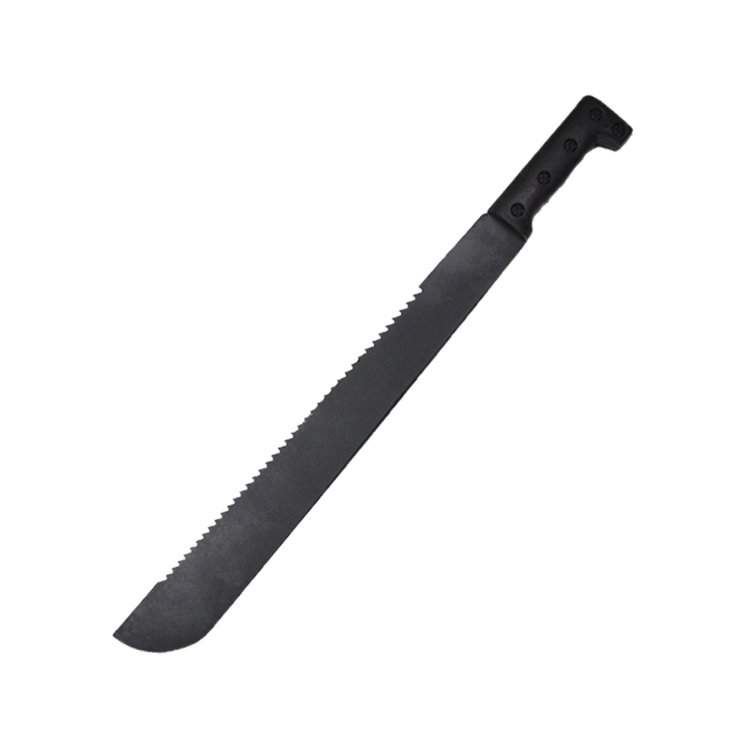
A 14-inch survival machete represents a practical balance between control and power. Longer blades may increase fatigue during extended field movement, while shorter blades reduce cutting reach and efficiency in dense vegetation.
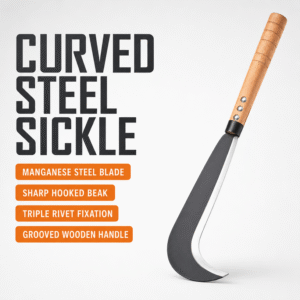
A manganese steel blade provides consistent cutting strength, while a hardwood handle ensures a stable grip even in wet or humid conditions. This combination is designed for long working sessions in agricultural or jungle environments where control is critical.
5. Functional Value: Real Performance in Survival Conditions
A survival machete is not limited to cutting vegetation. In real field situations, it is used for clearing paths, preparing shelter materials, and handling agricultural tasks when other tools are not available. Its value increases when it can adapt to multiple working conditions.
Proper weight balance is essential for reducing fatigue. When the tool is well balanced, users can maintain steady rhythm and control during extended clearing work. This directly improves efficiency in dense and demanding environments.
6. Procurement Perspective: Choosing a Reliable Long-Term Supplier
For importers, distributors, and wholesale buyers, selecting a survival machete is also a supply chain decision. Product stability, production capacity, and customization flexibility directly affect long-term business performance.
Gemlight supports OEM and ODM services, allowing customization of blade design, handle material, and packaging based on different market requirements. This flexibility supports expansion in diverse regions such as Africa and South America where field conditions and user expectations vary widely.