1. The Legacy of the Latin Machete: Heritage Meets Function
The Latin machete is more than just a tool—it’s a timeless symbol of productivity and self-reliance. With origins traced back to early agricultural societies in Central and South America, this style of machete has become a trusted blade for generations of farmers, foresters, and outdoor professionals around the world.
Unlike other regional machetes, the Latin style machete features a straight blade with a uniform width and slight tapering near the tip. This design offers excellent balance, allowing the user to perform long cutting motions with control and efficiency. From clearing sugarcane fields in the Caribbean to maintaining rural paths in West Africa, the Latin machete is a workhorse in environments where precision and endurance are required.
Key to its success is its simplicity and versatility. A standard Latin machete is equally effective at slicing brush, harvesting crops, and even chopping light wood. Its practical utility has made it one of the most widely adopted machete types across tropical and subtropical regions.
Over the decades, this blade style has earned a reputation for its effectiveness in:
- Land preparation and weeding
- Sugarcane harvesting and banana plantations
- Trail cutting and garden maintenance
- Survival training and military use
From government tenders to independent tool dealers, buyers around the globe choose the Latin machete for its legacy of functionality. Today, its demand continues to grow—especially among wholesale buyers seeking durable tools with high performance and broad user appeal.
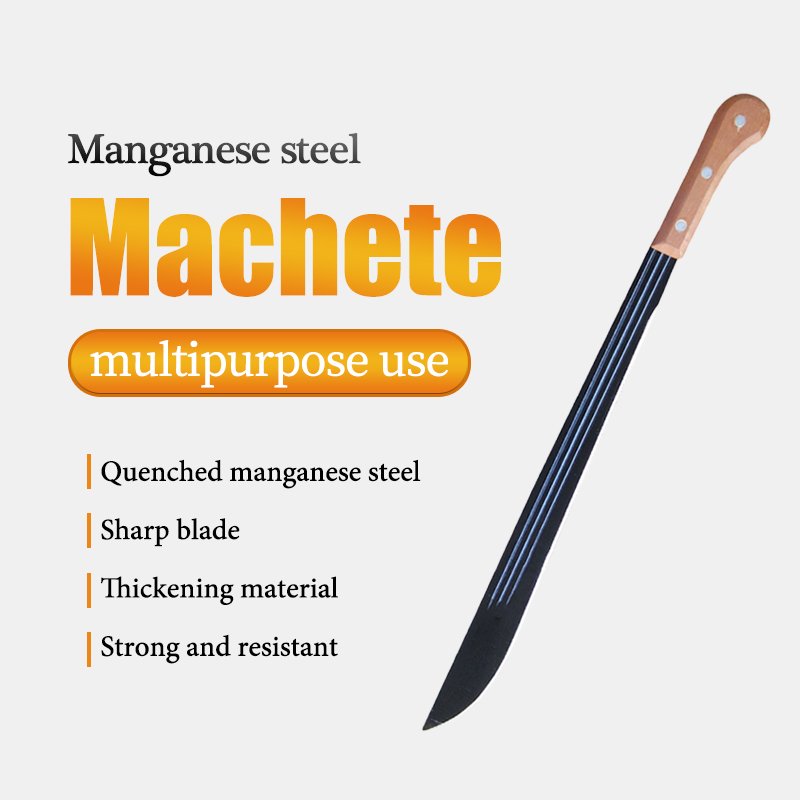
2. Choosing the Right Latin Style Machete wholesale for Your Market
When sourcing Latin style machete products for resale, one of the most important factors is aligning the specifications with your local market’s needs. Not all machetes are equal—and selecting the wrong type can impact sales and customer satisfaction.
Blade length is a major consideration. Latin machetes typically range from 14 inches to 24 inches, with 18″, 20″, and 22″ being the most popular. In regions where users need to swing through thick bush or cane, longer blades are preferred. In areas focused on gardening or household use, shorter blades offer better control.
Blade material and hardness also vary by supplier. The best-performing machetes are made from high-carbon steel that is heat-treated for a balance of hardness and flexibility. Proper quenching ensures the blade holds an edge during long days in the field.
Handle design is another key feature. You can find:
- Hardwood handles, riveted for strength and comfort
- Plastic or polypropylene (PP) handles, preferred in humid environments
- Full-tang styles, where the blade extends through the entire handle for durability
Different countries show different buying behaviors. For example:
- In West Africa, users prefer 18” Latin machetes with wood handles
- In Central America, 20” or 22” blades with anti-rust coating perform best
- In Southeast Asia, plastic-handled machetes are favored due to the wet climate
Resellers and distributors often look for machetes that are not only durable but easy to transport. The flat and stackable design of Latin machetes makes them ideal for bulk shipping and shelf display.
Understanding these regional insights ensures your Latin types machete inventory aligns with buyer expectations—reducing complaints and maximizing reorder potential.
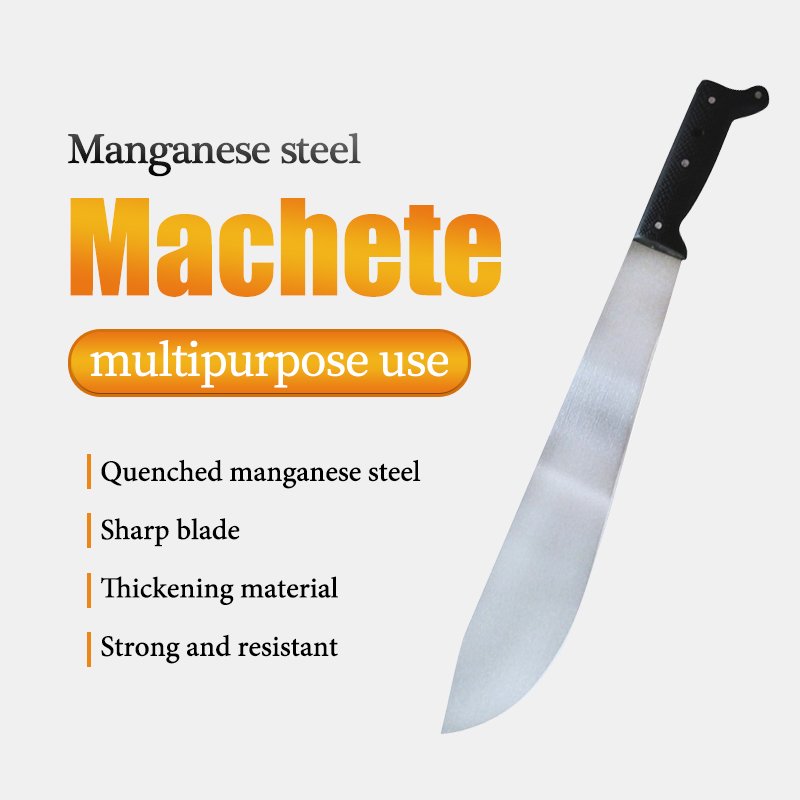
3. Latin Machete for Sale: Gemlight Factory’s Forged Excellence
At Gemlight, we specialize in manufacturing Latin machetes for sale that meet the highest standards of industrial strength, user comfort, and export readiness. As a leading factory located in Hebei, China, we combine traditional forging techniques with modern machinery to supply thousands of machetes monthly to markets across Africa and South America.
Our Latin machete line is forged from high-carbon steel, hardened through professional quenching and tempering. Every blade undergoes full polishing to reduce corrosion and increase aesthetic value, then sharpened to meet cutting efficiency tests before packaging.
Key Specifications:
- Blade length options: 14″ / 16″ / 18″ / 20″ / 22″ / 24″
- Steel: 60Mn or T65 high-carbon steel
- Hardness: HRC 47–52
- Surface: Mirror polish, paint coating, or anti-rust treatment
- Edge: Double-sharpened or single-bevel grind
Our handle options include:
- Riveted hardwood, sanded and lacquered for a firm grip
- Plastic injection-molded PP handles, UV- and slip-resistant
- Custom color and texture for branded OEM production
Gemlight’s factory advantage:
- 4 production lines ensuring consistent output
- OEM & ODM capability with private label and custom designs
- MOQ as low as 1000 pcs per model for new buyers
- Fast lead time: 25–30 days per container
- Multi-language support for export documentation
We already serve clients in Ghana, Nigeria, Brazil, and Honduras, supplying national distributors, hardware chain stores, and rural resellers. Many buyers value our ability to deliver both standard Latin machete for sale models and custom sizes with engraved logos and branded packaging.
If you’re seeking a trustworthy machete manufacturer who can provide cost-effective pricing, stable supply, and long-term support, Gemlight is your strategic partner.

4. Latin Machete vs Other Styles – What Makes It the Universal Choice?
In the global market for cutting tools, many blade styles exist: Panga machete, Parang, Bolo, Kukri, and more. Yet the Latin machete remains the top-selling format for a simple reason—its balance between function, affordability, and user versatility.
Compared to curved styles like Panga or Kukri, the Latin machete’s straight-edge design provides:
- Easier sharpening with standard bench tools
- Better storage in sheath or shelf due to flat geometry
- Predictable cutting patterns for inexperienced users
- Simpler blade control in confined spaces or urban use
For hardware importers, the logistics advantage is clear. Latin machetes are:
- Easier to stack and pack into cartons or containers
- Lower in shipping volume per unit compared to hooked machetes
- Ideal for bundling with hatchets, hoes, and other tools in retail kits
Distributors also report fewer returns or user complaints when using Latin-style blades. This is due to their safe, straight form and uniform weight, which suits both right- and left-handed users.
Whether your market is focused on farm tools, outdoor gear, emergency kits, or survival equipment, the Latin machete is a universal SKU that offers high sales turnover with repeat demand.
At Gemlight, we can help you test models, brand your line, and find the perfect balance between quality and margin. Let’s forge your success—blade by blade.